Ukraine Is Turning the Tide: Drones, Diplomacy, and the Race to End the War Before Winter
For the first time since the 2023 counteroffensive, Russia ended a calendar month having lost more territory than it gained. Ukraine's $113 million drone logistics campaign is strangling Russian supply lines, and Kyiv believes a diplomatic window to end the war before winter is open, but closing.
The Milestone That Changes the Calculus
For the first time since the 2023 counteroffensive, Russia ended a calendar month having lost more territory than it gained. That milestone, confirmed by Ukrainian open-source monitoring group DeepState on June 1, is not an accident. It is the product of a deliberate, layered Ukrainian strategy combining drone warfare, supply-line interdiction, and careful diplomacy, all converging at what Kyiv believes is a genuine window to end the war before the onset of another winter.
The numbers on the ground are striking. According to DeepState, Russian forces captured just 14 square kilometers of Ukrainian territory during May, the lowest monthly rate of Russian advance in three years, and what analysts consider the worst month for the Russian army in terms of territorial gains since October 2023. Meanwhile, the Institute for the Study of War reported Russian forces suffered a net loss of 116 square kilometers in April alone, and were averaging only 2.9 square kilometers of advance per day in the first third of 2026, compared to 9.76 square kilometers in the same period in 2025.
The Drone That Changed the Equation
The single most consequential development behind this reversal is Ukraine's rapidly expanding campaign of medium-range drone strikes targeting Russian logistics far behind the front lines. The strategy, which began in earnest in early April, has a new formal name: Logistical Lockdown.
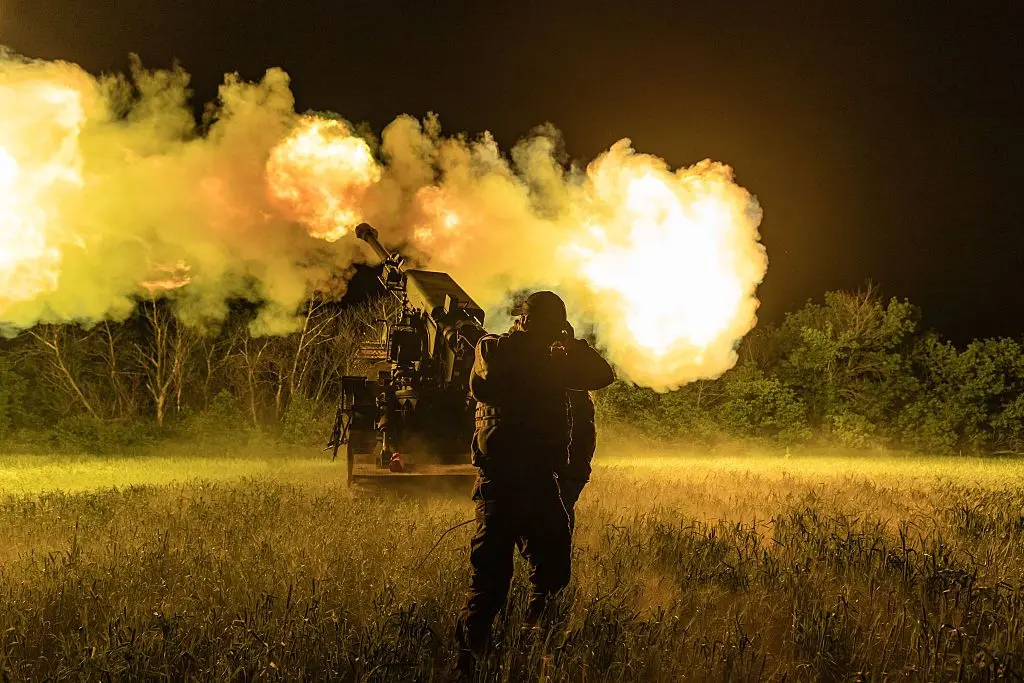
Ukrainian forces have significantly expanded their medium-range strike capabilities, regularly hitting Russian military targets 20 to 300 kilometers behind the front line, both inside Russia and in occupied Ukrainian territories, striking air defense systems, command centers, and FSB facilities. The explicit new focus is on destroying Russian supply trucks and strangling the logistics chains that keep Russian assault units fed, fueled, and armed.
The results have been measurable. Open-source monitoring group Tochnyi geolocated 55 strikes on Russian logistics vehicles in April and 130 in May, a number that was increasing on a daily basis at the time of reporting. Ukrainian military intelligence sources cited by the Ukrainian Security and Cooperation Center put losses at 125 Russian trucks hit on key logistics routes, with over 80 destroyed or burned out.
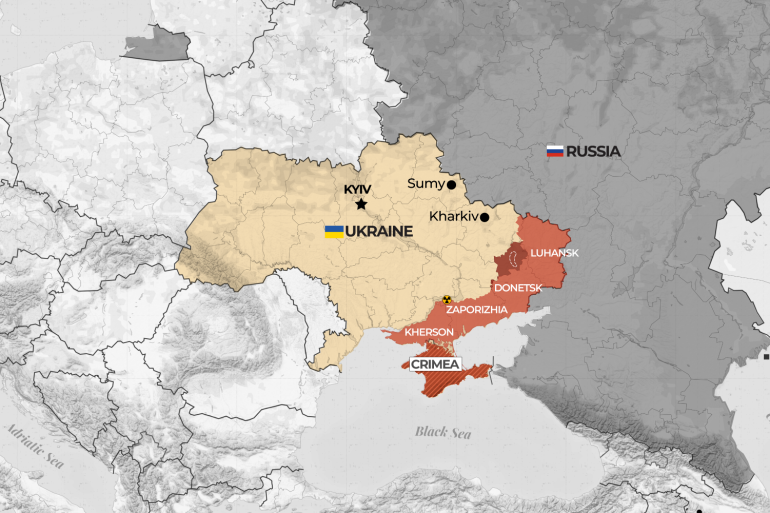
The effects are rippling outward from the battlefield into occupied civilian life. Russia's collaborationist governor of occupied Kherson Oblast issued a decree in late May restricting non-essential traffic along the R-280 highway, the critical "Novorossiya" logistics route linking Rostov-on-Don with occupied Crimea, citing Ukrainian drone threats. Filling stations in Sevastopol ran out of gasoline, with diesel only sporadically available, while long lines formed at fuel stations in occupied Melitopol and Mariupol as supplies ran low and prices surged.
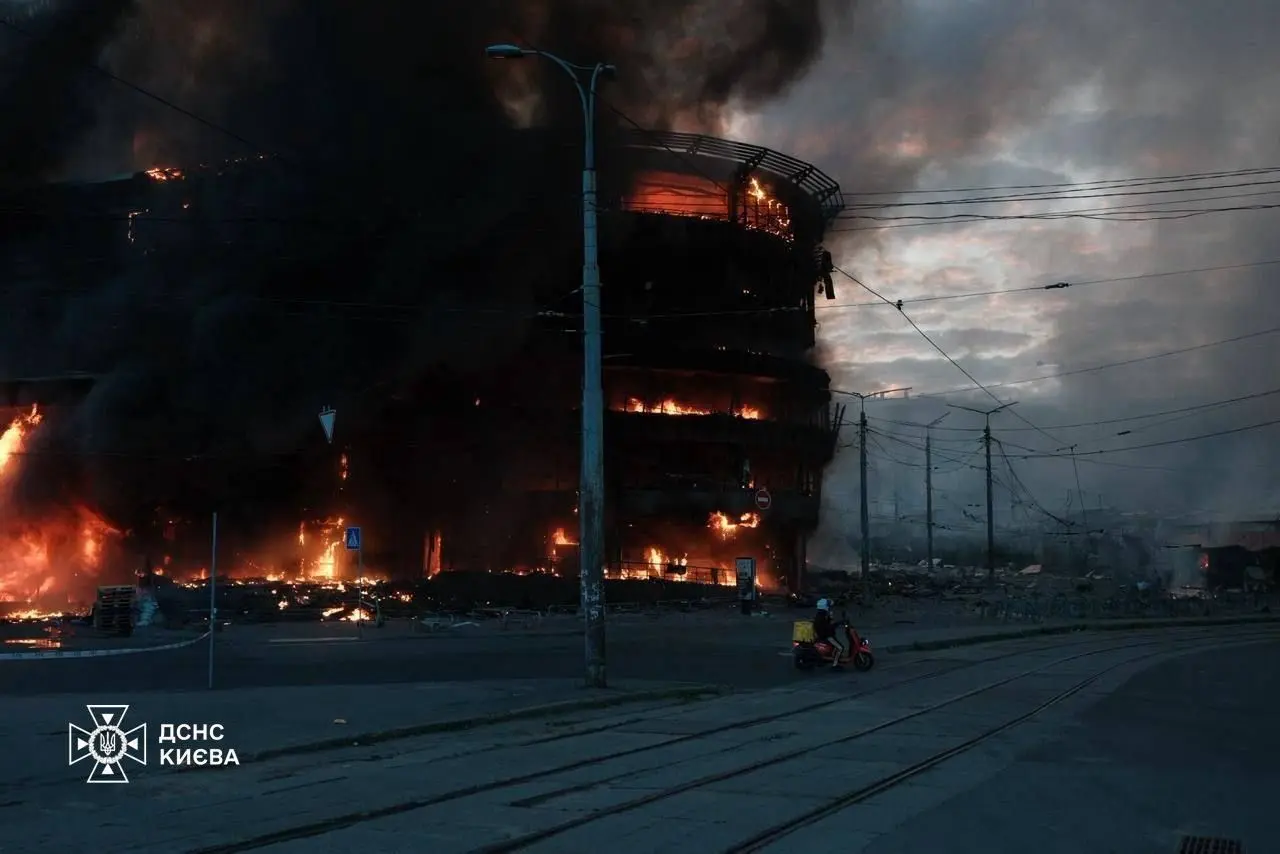
Ukraine's preceding campaign against Russian air defense systems has compounded Moscow's vulnerability. Ukraine destroyed twice as many Russian radars and air defense assets in April as in autumn 2025, creating widening gaps in Russia's air defense network that weaken both frontline logistics and rear infrastructure. This campaign connects directly to the broader pattern documented in our full January-May 2026 war analysis, which tracked how Ukraine's drone strikes on Russian energy infrastructure have damaged roughly 20% of Russia's refining capacity.
Fedorov's $113 Million Bet
On May 27, Ukrainian Defense Minister Mykhailo Fedorov formalized the campaign into a national program. "Our goal is to increase the pressure on the Russians in the rear even further and prevent them from carrying out active assault operations," Fedorov said, announcing an additional 5 billion hryvnias, roughly $113 million, directed to units carrying out medium-range strikes. Fedorov said Ukrainian forces have quadrupled the destruction of Russian logistics, warehouses, equipment, command posts, and supply routes through medium-range strikes, adding that "a clear pattern is already visible: the more Russian logistics are destroyed, the fewer assaults occur on the front line."
The program involves centralized procurement tenders for new medium-range strike systems, with competitive pressure among manufacturers, in order to scale what had been a piecemeal campaign into a systemic strategic effect. The day before Fedorov's announcement, Ukraine's 412th "Nemesis" Brigade announced a large-scale hunt for Russian logistics in southern Ukraine using previously unpublicized strike drones, publishing footage of loitering munitions striking multiple Russian vehicles along the R-280.
Rob Lee acknowledged the difficulty of measuring the campaign's full impact but said it will "clearly have some effect on Russia's ability to conduct offensive operations." Anton Zemlianyi of the Ukrainian Security and Cooperation Center went further, arguing that if the tempo of strikes continues to increase, Ukraine could potentially cut off supplies to specific front sectors, creating conditions to launch localized counteroffensive operations.
A Diplomatic Window, Closing With the Leaves
None of this is happening in a vacuum. Kyiv is reading the battlefield shift as a rare opening for diplomacy, and senior officials are saying so out loud.
On June 1, Presidential Office Head Kyrylo Budanov, speaking at the Architecture of Security Forum in Kyiv, said that ending the war before winter 2026 is a realistic goal. "The president has tasked us with trying to end this war as quickly as possible," Budanov said. "I can confirm that this is indeed his goal, to bring hostilities to an end as soon as possible, preferably before winter." He described the aim as "absolutely right, timely, and well considered," and said a range of factors suggests Russia could agree to a certain proposal to halt hostilities. He also confirmed that U.S. envoys Steve Witkoff and Jared Kushner had plans to visit Kyiv and Moscow in the near future, and said "certain processes are ongoing, though they are not fully public."
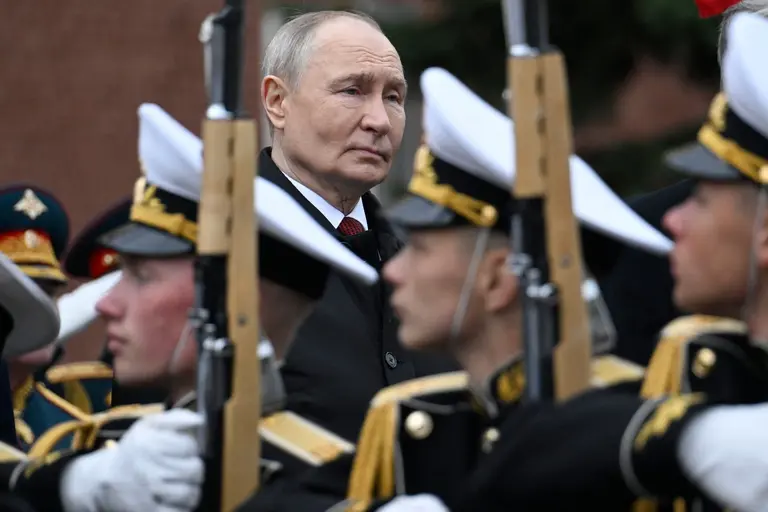
Budanov's remarks echoed comments President Zelensky made the previous day in an interview with CBS News. Zelensky said that from December 2025, Russia began losing the initiative on the battlefield, and that he had shared this assessment with American partners in January. The Ukrainian president argued that Russia's military campaign has lost momentum while Ukraine has expanded operations deep inside Russian territory, particularly targeting oil and energy facilities. Zelensky stressed that sustained international pressure on Putin, including strengthening rather than lifting sanctions, would be essential to making diplomacy work.
The diplomatic picture, however, remains complicated. The latest trilateral talks involving Ukraine, Russia, and the U.S. took place in mid-February, and a follow-up was canceled after U.S.-Israeli strikes on Iran shifted Washington's attention to the Middle East. U.S. Secretary of State Marco Rubio acknowledged in late May that peace talks have effectively stalled. Ukraine maintains that freezing the current front line is the most realistic basis for a ceasefire, while Moscow continues to insist on Ukrainian withdrawals from parts of the Donbas as a precondition for any settlement, a demand Kyiv has flatly rejected. For context on how this stalemate developed, see our analysis of whether Putin is showing signs of war fatigue.
A Turning Point, Not Yet a Victory
It would be premature to declare that Ukraine has definitively reversed the war's trajectory. Russia still controls large swaths of occupied territory, and ISW has cautioned that Russian infiltration tactics are being used in part to create the perception of continuous advances and support Kremlin information warfare efforts. Retired Australian Major-General Mick Ryan has warned that the second half of the year, particularly the fall months, will be the real test of how much Ukraine's military effectiveness has genuinely improved in 2026, as that period historically sees the fiercest fighting.
DeepState analysts also noted positive command changes on the Ukrainian side as contributing factors, including a new Defense Minister in Fedorov, a new commander of Operational Command East, and a wave of capable corps and brigade commanders taking up posts while problematic figures have been reassigned.
What is clear is that the convergence of the drone logistics campaign, the Logistical Lockdown program, the slowing of Russian advances, and the diplomatic signals from Kyiv and Washington represents something different from earlier phases of the war. Whether or not it constitutes a true turning point, both sides increasingly appear to know that the summer and fall ahead will decide whether the war ends at a negotiating table or grinds on into another winter. As DeepState put it plainly: "The war is entering a new phase."
Frequently Asked Questions
For the first time since the 2023 counteroffensive, Russia ended a calendar month having lost more territory than it gained. DeepState confirmed Russian forces captured just 14 square kilometers in May 2026, the lowest monthly rate in three years. ISW reported a net Russian loss of 116 square kilometers in April. Russia launched over 7,000 assaults in May, up 37.5%, yet produced no significant territorial results, with soldiers often attacking in pairs or alone.
Logistical Lockdown is a formal Ukrainian military program announced May 27, 2026 by Defense Minister Fedorov, backed by roughly $113 million. It targets Russian supply trucks and logistics chains 20 to 300 kilometers behind the front using medium-range strike drones. Monitors recorded 55 drone strikes on Russian logistics vehicles in April and 130 in May. Russia's governor of occupied Kherson Oblast restricted traffic on the R-280 highway in response, and fuel shortages emerged in Sevastopol, Melitopol, and Mariupol.
The Hornet is a medium-range strike drone by Perennial Autonomy, founded by former Google CEO Eric Schmidt. It costs $5,000, carries a 5-kilogram warhead, and has a range of up to 200 kilometers with semi-autonomous targeting. Ukraine's Azov Corps added Starlink satellite communications, extending its range and improving jamming resistance. Rob Lee of the Foreign Policy Research Institute confirmed this was Azov's own initiative.
Yes. On June 1, Budanov said ending the war before winter is a realistic goal, describing it as "absolutely right, timely, and well considered." Zelensky said in a CBS News interview that Russia has been losing the initiative since December 2025. Budanov confirmed U.S. envoys Witkoff and Kushner planned to visit Kyiv and Moscow, and said diplomatic processes were ongoing though not fully public.
Talks have effectively stalled. Trilateral talks between Ukraine, Russia, and the U.S. last took place in mid-February 2026. A follow-up was canceled after U.S.-Israeli strikes on Iran. Rubio acknowledged in late May that talks have stalled. Ukraine proposes freezing the current front line, while Russia insists on Ukrainian withdrawals from parts of the Donbas, a demand Kyiv has rejected.
Kai Tutor | The Societal News Team
Follow Us!
It helps decentralize our presence across the web and it's completely free!
Instagram ➤
Youtube ➤
Substack ➤
X.com ➤
Telegram ➤
TikTok ➤