Russia-Ukraine War Update: Full Analysis January-May 2026
Ukraine's surprise southern offensive reclaimed 400 km2, Russia's losses hit an all-time monthly record, drone warfare escalated to new extremes, and a U.S.-brokered ceasefire collapsed within hours. The most complete update of the war so far in 2026.
The Battlefield at the Start of 2026
More than four years into Russia's full-scale invasion, the war in Ukraine has entered one of its most consequential phases. The opening months of 2026 have brought a surprising Ukrainian battlefield resurgence, a deepening Russian manpower crisis, a dramatic escalation in drone warfare on both sides, a major shift in the Western aid picture, and the first substantive but fragile diplomatic contact in years.
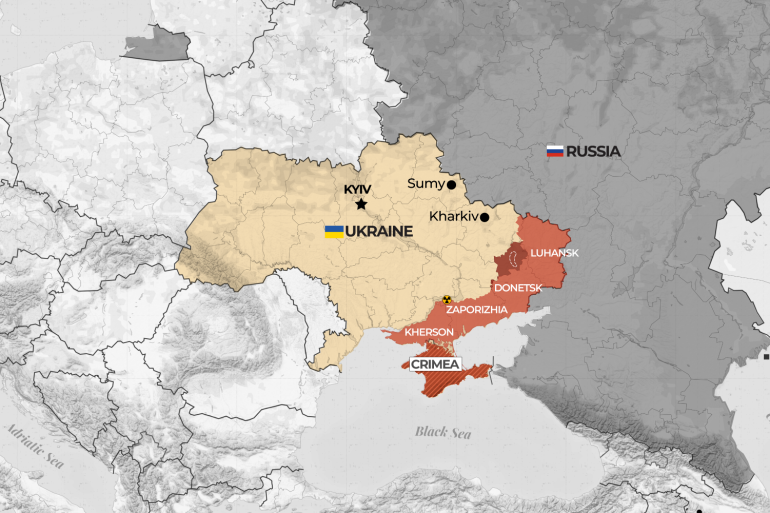
When the new year began, Russia held an imposing territorial position. By the January 2026 assessment, Russia had captured 2,171 square miles of Ukrainian territory in 2025 alone, roughly 0.93% of Ukraine including Crimea, at an average monthly rate of 171 square miles of gain. Russian forces controlled approximately 20% of Ukraine's internationally recognized territory, including Crimea, the Donbas, and adjacent regions. The war appeared to be grinding slowly in Moscow's favor.
Ukraine's energy grid was in a dire state. Ukraine's available generating capacity had fallen from 33.7 gigawatts at the start of the full-scale invasion to approximately 14 gigawatts as of January 2026, resulting in blackouts of up to four days in parts of the country. Russia had by that point carried out more than 1,100 attacks on Ukrainian infrastructure in 2025 alone, roughly equal to the combined total of the previous two years, causing an estimated $5.8 billion in damages to the rail network.
Yet the picture was more complicated than Russian territorial tallies suggested. Russian forces had already lost more than 790,000 killed or injured by a spring 2025 NATO estimate, and over 23,000 pieces of military equipment were confirmed destroyed, including nearly 14,000 tanks and armored vehicles.
Ukraine's Surprise Southern Counteroffensive
The defining battlefield development of early 2026 was one that few analysts had anticipated: a significant Ukrainian counteroffensive launched in the south in late January. While the Kremlin was preparing its spring-summer campaign aimed at the "fortress belt" in Donetsk Oblast, Ukrainian units unexpectedly attacked in the south along the border between Zaporizhzhia and Dnipropetrovsk oblasts.
The results were striking. Ukrainian forces began limited counterattacks in early February 2026 that liberated multiple settlements in the Oleksandrivka and Huliaipole directions in Dnipropetrovsk and Zaporizhzhia oblasts. The Institute for the Study of War (ISW) observed evidence to assess that Ukrainian forces liberated roughly 200 square kilometers in those areas, losing 35 square kilometers in other areas during the same timeframe, for a net gain of 165 square kilometers in February.
The Ukrainian General Staff reported that February 2026 marked the first time since 2024, when Ukraine had conducted its Kursk operation, that Ukrainian forces regained control of a larger area than Russian troops captured during the same period. By early March, Ukraine's commander-in-chief Oleksandr Syrskyi confirmed that since the counteroffensive began, Ukrainian forces had restored control over more than 400 square kilometers of territory in the Oleksandrivsk sector.
The gains also had strategic ripple effects. Russia's Dnepr group effectively halted its offensive near Orikhiv and south of Zaporizhzhia as a result. The broader front, however, remained contested and difficult. Russia continued to press hard on Donetsk, particularly around Pokrovsk, Kupiansk, and Kostiantynivka, and maintained pressure across multiple axes. In the four-week period from April 14 to May 12, Russian forces recorded a net loss of 45 square miles, about twice the size of Manhattan, representing a reversal from the previous period in which Russia lost only a single square mile. By mid-May 2026, the front had stabilized once again into attritional fighting across dozens of settlement lines.
Russia's Growing Manpower Crisis
Perhaps the most consequential strategic development of early 2026 has been the emergence of a clear and worsening Russian manpower problem. For the first time since the invasion began, losses systematically outpaced recruitment.
The Ukrainian Presidential Office reported that Russia suffered 316 casualties for every square kilometer it captured in the first three months of 2026, compared to 120 casualties per square kilometer in 2025, a near-tripling of the cost of territorial gain. In March 2026, Russian losses reached a record 35,000 personnel in a single month, according to Ukrainian security officials, with drone operations responsible for a substantial proportion of those casualties. The Kremlin had aimed to recruit between 1,100 and 1,150 personnel per day in 2026, but actual figures fell to around 940 per day, a shortfall that Ukrainian analysts warned could become critical if sustained.
Russian forces lost just under 130,000 troops killed and wounded during the first four months of 2026, with the two spring months of March and April setting grim records of more than 70,000 Russian soldiers killed or removed from combat. Drones remained the primary strike platform responsible, accounting for roughly 90% of reported results.
| Period | Est. Russian Casualties (Killed/Wounded) | Daily Recruitment Rate | Casualties per km2 Gained |
|---|---|---|---|
| Q1 2025 | ~20,000 killed (Finance Ministry data) | ~1,100/day (on target) | ~120 |
| Q1 2026 | 89,000+ killed or seriously wounded | ~940/day (below target) | 316 |
| March 2026 | ~35,000 (monthly record) | Falling short by ~5,000-6,000/month | Record high |
| April 2026 | ~35,000+ | Recruitment deficit widens | Elevated |
The recruitment system itself is showing signs of strain. Around 40% of new Russian personnel are now drawn from what Ukrainian officials described as "vulnerable population groups," including prisoners and those in significant debt, incentivized through amnesties or financial relief. Just before the new year, Putin signed laws expanding military conscription, allowing year-round drafting and authorizing the use of reservists to guard critical infrastructure. Notably, the share of ethnic Russians among the dead is rising, as is the number of recruits and casualties linked to Moscow and St. Petersburg, cities the Kremlin has long tried to shield from the trauma of front-line losses.
Based on Russian Finance Ministry data, Russian authorities paid compensation to families of around 25,000 killed soldiers in the first quarter of 2026, compared to around 20,000 in Q1 2025 and almost 10,000 in Q1 2024, a trajectory that illustrates the accelerating human cost to Russia.
The Drone War Escalates
If 2024 established drone warfare as central to this conflict, 2026 has elevated it into the defining technological feature of the war. Both sides have dramatically expanded their unmanned aerial capabilities, but Ukraine's long-range drone campaign has taken on an entirely new strategic dimension.
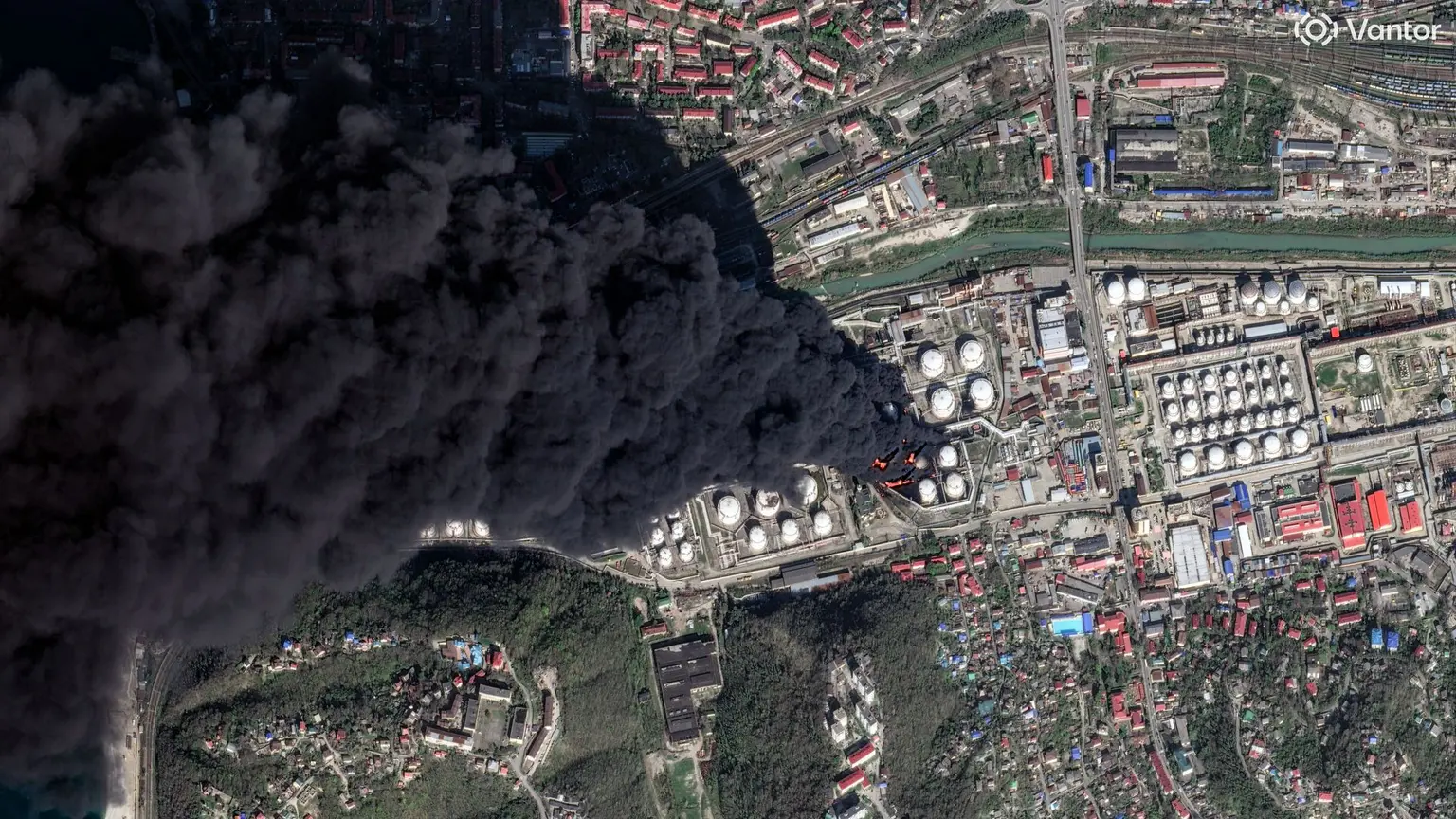
Ukraine's enhanced firepower has enabled large-scale attacks on Russian military production sites and energy infrastructure, including multiple targets located more than a thousand kilometers from the Ukrainian border. According to Bloomberg, around a quarter of Russia's entire landmass and more than 70% of the Russian population are now within reach of Ukrainian drones. Ukraine's bombing tactics are also evolving from broad targeting toward more methodical, repeated bombardment of key logistics hubs, as illustrated by a series of attacks on the oil terminal facility at the Russian Black Sea port of Tuapse, which was struck on four separate occasions in late April and early May.
Russia launched more than 8,000 drones in April 2026 alone, the highest monthly total on record since the start of the full-scale invasion. Russia's approach has been to overwhelm Ukrainian air defenses through mass, coordinating drone swarms with cruise and ballistic missiles. Over a two-day period in mid-May, Russia launched 675 attack drones and 56 missiles primarily at Kyiv, of which Ukraine claimed to have intercepted 652 drones and 41 missiles.
At least 40% of Russia's oil export capacity was halted following Ukrainian drone attacks on all three of Russia's major western oil export ports: Novorossiysk on the Black Sea and Primorsk and Ust-Luga on the Baltic Sea, as well as a disputed attack on a major pipeline and the seizure of tankers. Ukrainian drones also struck the Kremniy El factory in Bryansk, one of Russia's largest military microelectronics producers, killing six people according to the Ukrainian General Staff. Ukraine further extended its deep strike reach by attacking gas facilities in Russia's Orenburg region, more than 1,500 kilometers from the Ukrainian border, in retaliation for Russian attacks that killed civilians.
A security expert quoted by the Kyiv Independent assessed that "Ukraine has clearly gained an ability to inflict pain on Russia in a way they couldn't previously," and that this capability is now a permanent feature of the conflict.
The Shifting Aid Landscape
The geopolitics of Western support have undergone a fundamental transformation since the return of President Donald Trump to the White House in January 2025. The United States has dramatically curtailed its financial assistance, while Europe has stepped decisively into the breach.
In cumulative terms, Europe has now clearly overtaken the United States as Ukraine's main backer, allocating more than $235 billion in military, financial and humanitarian aid between January 2022 and February 2026, compared to roughly $135 billion from the United States. The Kiel Institute for the World Economy found that European countries increased new military aid to Ukraine by 67% in 2025, while new U.S. support declined by 99%.
On the U.S. side, the picture is mixed. The NDAA for fiscal year 2026, signed by Trump in December 2025, allocated $400 million in military assistance for Ukraine through the Ukraine Security Assistance Initiative and required immediate Congressional notification should intelligence support to Ukraine be suspended. However, no major new funding packages have been approved under the Trump administration, and U.S. engagement has been primarily channeled through diplomatic rather than military means.
Diplomacy, Ceasefire, and the Peace Impasse
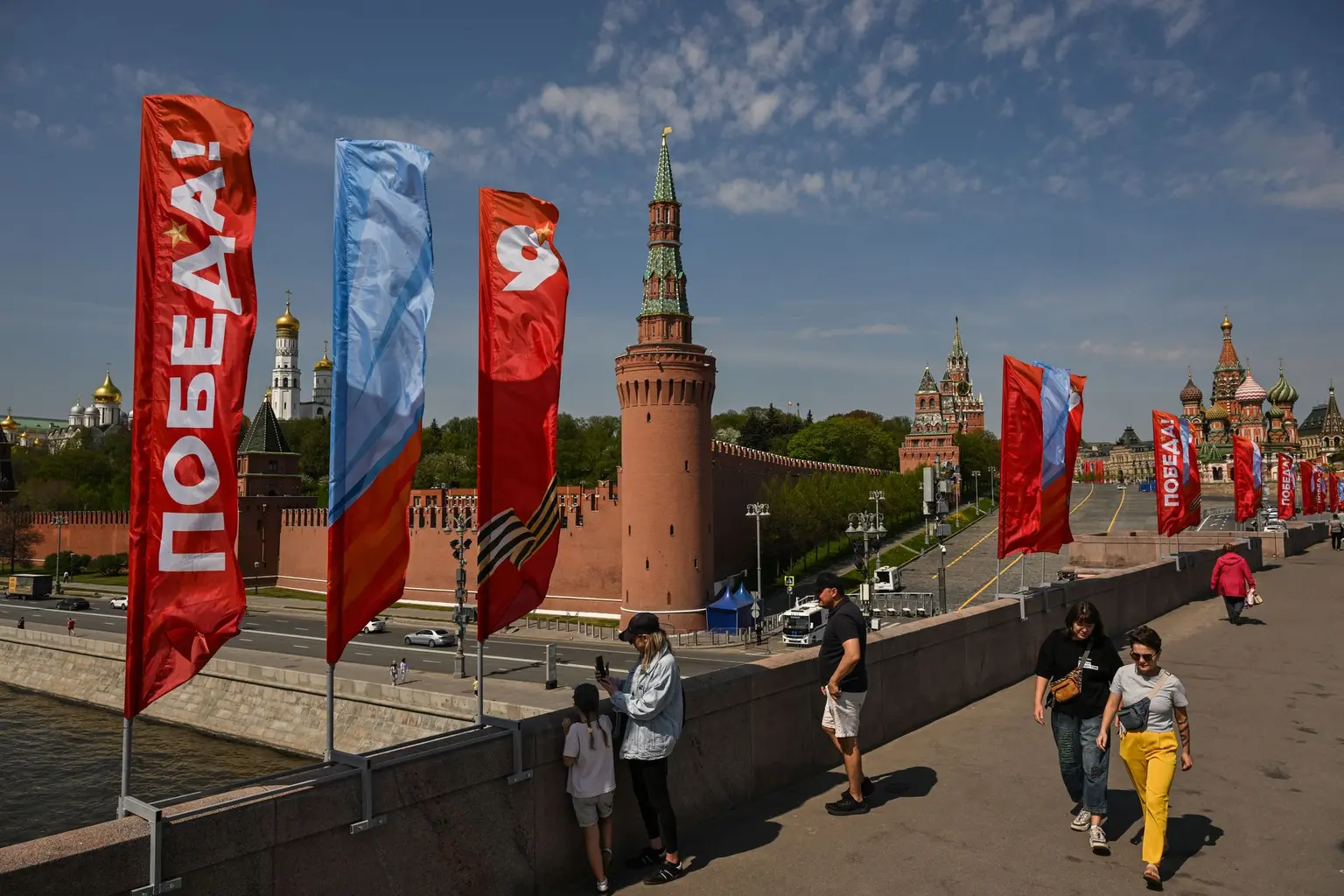
The most dramatic diplomatic development of 2026 came in early May, when President Trump brokered a temporary ceasefire coinciding with Russia's Victory Day celebrations. Trump announced a three-day ceasefire from May 9 to 11, which he described as potentially the "beginning of the end" of the conflict, including a suspension of all kinetic activity and an exchange of 1,000 prisoners by each country. Both Ukrainian President Zelenskyy and Russian presidential aide Yuri Ushakov confirmed the agreement.
The ceasefire was limited and fragile from the start. The Kremlin stressed the truce was for three days only. Ushakov stated: "It is understandable that the American side is in a hurry. But the issue of a Ukrainian settlement is far too complex, and reaching a peace agreement is a very long way with complex details."
The latest round of U.S.-brokered talks concluded without a significant breakthrough. While the parties reached near-consensus over a ceasefire monitoring mechanism, they remain deadlocked over the core issue of territory. Kyiv maintains that a comprehensive ceasefire must precede any peace agreement. Zelenskyy has repeatedly rejected any arrangement that would require surrendering Ukrainian territory.
Secretary of State Marco Rubio was unusually candid about the stalemate, saying U.S. mediation efforts had not led to a "fruitful outcome," telling reporters that "unfortunately right now, those efforts have stagnated." The Kremlin, meanwhile, reiterated that it was too early to provide specifics, while spokesperson Dmitry Peskov claimed progress in the peace process was making "the completion approaching," a claim Zelenskyy flatly rejected.
| Diplomatic Area | Russia's Position | Ukraine's Position | Current Status |
|---|---|---|---|
| Ceasefire | Short-term pauses only; rejects mutual full ceasefire | Wants full ceasefire before any talks | Deadlocked |
| Territory | Demands recognition of all occupied lands | Refuses any territorial concessions | Deadlocked |
| Security Guarantees | No NATO membership for Ukraine | Requires binding Western security guarantees | No agreement |
| POW Exchange | Agreed to 1,000-for-1,000 swap (May 2026) | Welcomed; 205 exchanged on May 15 | Ongoing |
| U.S. Role | Welcomes U.S. mediation; resists pressure | Relies on U.S. to hold Russia accountable | Stalled |
Assessment: Where the War Stands
As of mid-May 2026, the war has reached a moment of genuine strategic uncertainty, more so than at any point in the previous two years.
Russia retains significant territorial advantages and continues to exert pressure across the front, particularly in Donetsk. But its military machine is showing cracks that were not visible a year ago. The manpower deficit is real and worsening. The economic cost of Ukraine's energy strikes is accumulating. The Russian army's territorial gains are coming at a dramatically higher cost in blood.
Ukraine, for its part, demonstrated in early 2026 that it retains the capacity for surprise and initiative. The southern counteroffensive, though limited in geographic scope, had outsized strategic effects, halting Russian momentum in Zaporizhzhia and forcing Moscow to divert attention and resources. Ukraine's drone warfare capability has matured into a genuine strategic instrument, reaching targets that would have been inconceivable even a year ago.
Frequently Asked Questions
In early 2026, Ukraine launched a surprise counteroffensive in the south along the Zaporizhzhia-Dnipropetrovsk border, recapturing over 400 square kilometers by March. Russia simultaneously suffered record manpower losses, with 35,000 casualties in March alone outpacing its recruitment rate for the first time since the invasion began.
Russian forces lost just under 130,000 troops killed and wounded in the first four months of 2026, according to Ukrainian military assessments. March 2026 set a single-month record with approximately 35,000 casualties. Russia's losses now outpace its recruitment rate, creating a structural manpower deficit.
U.S. President Donald Trump brokered a three-day ceasefire from May 9 to 11, 2026, coinciding with Russia's Victory Day celebrations. Both sides agreed to halt kinetic activity and exchange 1,000 prisoners each. Ukraine offered to extend the ceasefire but Russia refused, and fighting resumed immediately, with Russia launching over 200 drones at Ukraine.
Europe has overtaken the United States as Ukraine's primary backer, allocating over $235 billion in cumulative aid by February 2026 versus roughly $135 billion from the U.S. The EU approved a 90 billion euro loan for 2026-2027, two-thirds of which is earmarked for military support. U.S. new military aid declined by 99% under the Trump administration.
Ukraine's long-range drone campaign has become one of the war's most consequential fronts. In April 2026, at least 21 strikes hit Russian energy infrastructure. Ukrainian drone strikes have damaged or destroyed roughly 20% of Russia's refining capacity since early 2024, and can now reach targets over 1,500 kilometers from the Ukrainian border, covering about a quarter of Russia's entire landmass.
Kai Tutor | The Societal News Team
Follow Us!
It helps decentralize our presence across the web and it's completely free!
Instagram ➤
Youtube ➤
Substack ➤
X.com ➤
Telegram ➤
TikTok ➤