Is Putin Getting Tired of Russia's War in Ukraine?
Mounting military losses, economic strain, and shifting rhetoric suggest the Kremlin is quietly searching for an exit, but on its own terms.
A Shift in Tone
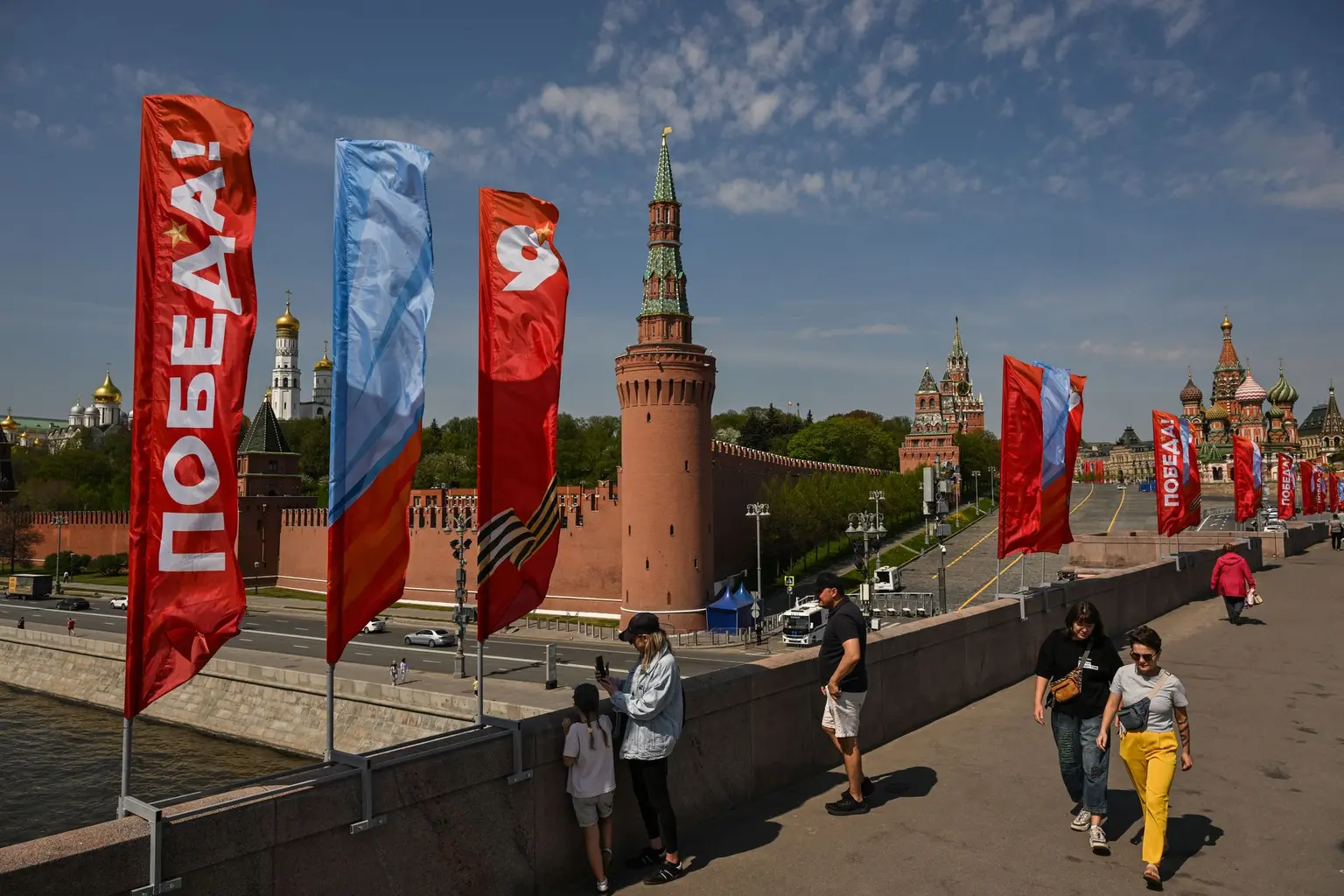
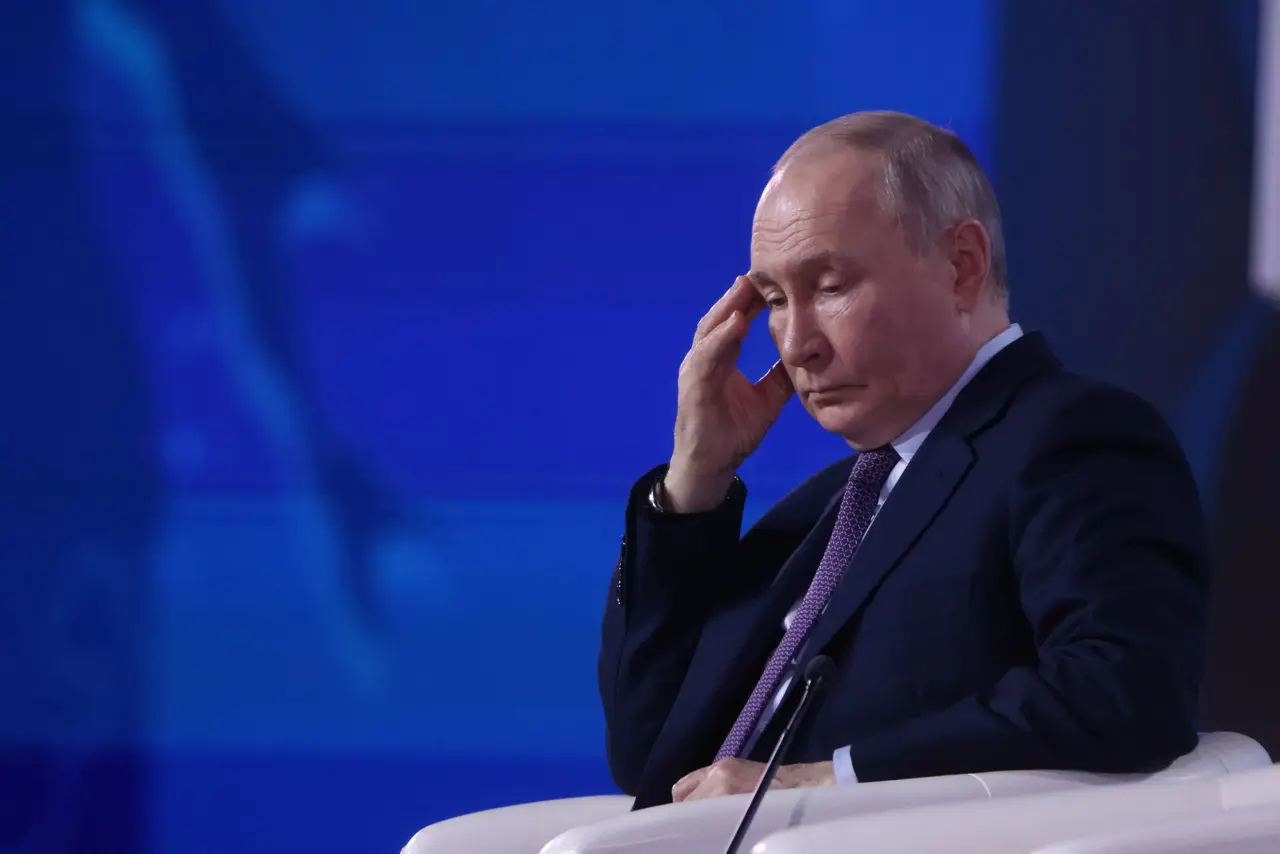
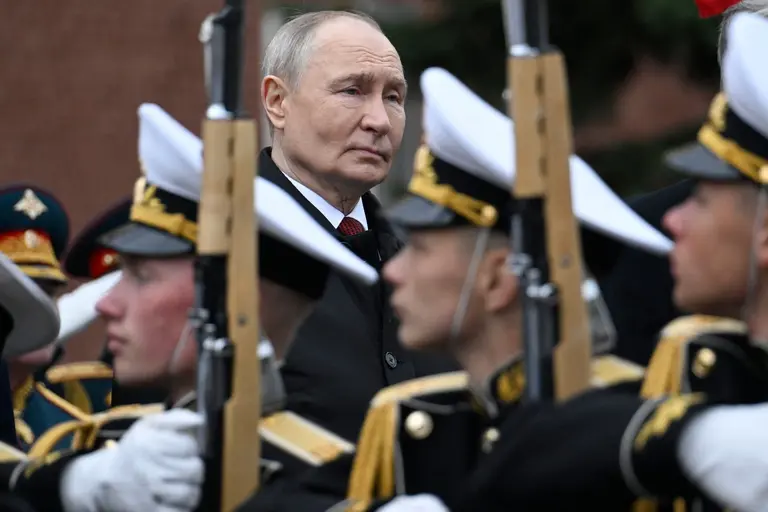
After more than four years of full-scale war, something unusual happened in Moscow on May 9, 2026. Standing before the smallest Victory Day parade of his rule, one stripped of tanks and ballistic missiles with their absence papered over with video screens, Vladimir Putin told reporters something he had never said before: "I think the matter is coming to an end."
The words landed with unusual force. For nearly four and a half years, Putin had maintained a posture of maximalist certainty: Russia would prevail, Ukraine would capitulate, and the West would eventually tire of the conflict before Moscow did. Now, in a single sentence, that certainty appeared to soften.
He also, in what analysts noted as a striking departure, referred to Ukrainian President Volodymyr Zelensky as "Mr. Zelensky." That may sound trivial. It is not. In previous public appearances, Putin routinely described his Ukrainian counterpart as a "neo-Nazi drug addict." The change in language was deliberate, and observers noticed.
The analysis presented here is drawn from reporting by the Kyiv Independent, Al Jazeera, CNN, the Center for Strategic and International Studies (CSIS), EUvsDisinfo, The Bell, the Public Opinion Foundation of Russia, the UK FCDO, and former U.S. Ambassador to Russia Michael McFaul. Where expert assessments differ, multiple perspectives are presented.
The Architecture of a Personalist War
To understand what Putin's words mean, and what they don't, it is essential to first understand how Russia's system of power actually works.
Russia is not governed by a cabinet, a parliament, or a consensus-driven process. It is a personalist autocracy: a system in which political authority is concentrated almost entirely in the hands of one man. This reality has one direct and consequential implication: Russia's war continues because Putin personally wants it to continue. The inverse is also true. It will end when, and only when, Putin decides it should.
That dynamic helps explain why U.S. President Donald Trump, who placed ending the Ukraine war at the center of his 2024 campaign, even claiming he could halt the fighting within 24 hours of taking office, has so far failed to produce any meaningful diplomatic breakthrough. Trump's approach, centered on dealmaking, sanctions relief, and economic incentives, collided with a fundamental obstacle: Putin himself.
Despite the U.S. floating significant concessions, including discussions about sanctions relief and de facto recognition of Russia's occupation of Crimea, Moscow has not moved closer to ending the war. Putin has rejected proposals requiring meaningful compromise while continuing to insist on terms Ukraine considers unacceptable: territorial concessions, recognition of occupied lands, and addressing what the Kremlin calls the "root causes" of the conflict, a euphemism for Ukraine's sovereignty itself.
The war, as yet, does not directly threaten Putin's personal wealth or his grip on power. That calculus, analysts say, is what ultimately governs the Kremlin's decisions.
Four Years of Attrition: What the Numbers Say
The battlefield situation Russia faces today is radically different from the one its leadership envisioned when it launched the full-scale invasion in February 2022. Putin expected a rapid collapse of Ukrainian resistance. Russian forces advanced toward Kyiv, Kharkiv, and southern Ukraine on the assumption the government would quickly fall. Instead, they were pushed back.
Since then, the war has hardened into a grueling war of attrition along a largely static front line, and Russia has paid an extraordinary price for minimal gains.
According to a January 2026 report from the Center for Strategic and International Studies (CSIS), Russian forces have suffered approximately 1.2 million total casualties since 2022, with an estimated 325,000 killed. CSIS authors Seth Jones and Riley McCabe concluded: "No major power has suffered anywhere near these numbers of casualties or fatalities in any war since World War II."
Those losses continue to compound. Ukrainian forces killed or wounded an estimated 35,000 Russian personnel per month in early 2026. Daily casualty rates have frequently exceeded 1,000 to 1,200 personnel, according to open-source intelligence assessments. For context, one independent analysis noted that Russian fatalities in Ukraine are estimated to be more than 17 times greater than Soviet losses during the decade-long war in Afghanistan.
David Marples, a distinguished professor at the University of Alberta, summarized the manpower crisis bluntly: "Russia is losing more troops than it can replace without opting for full conscription." The Kremlin has instead relied on a patchwork of prisoners, short-term contract recruits, foreign fighters from North Korea, and financially incentivized volunteers. Some Russian regions have reportedly offered enlistment bonuses exceeding 2 million rubles (roughly $20,000), representing years of average Russian income.
Ukraine's Drone Campaign: The War Comes Home
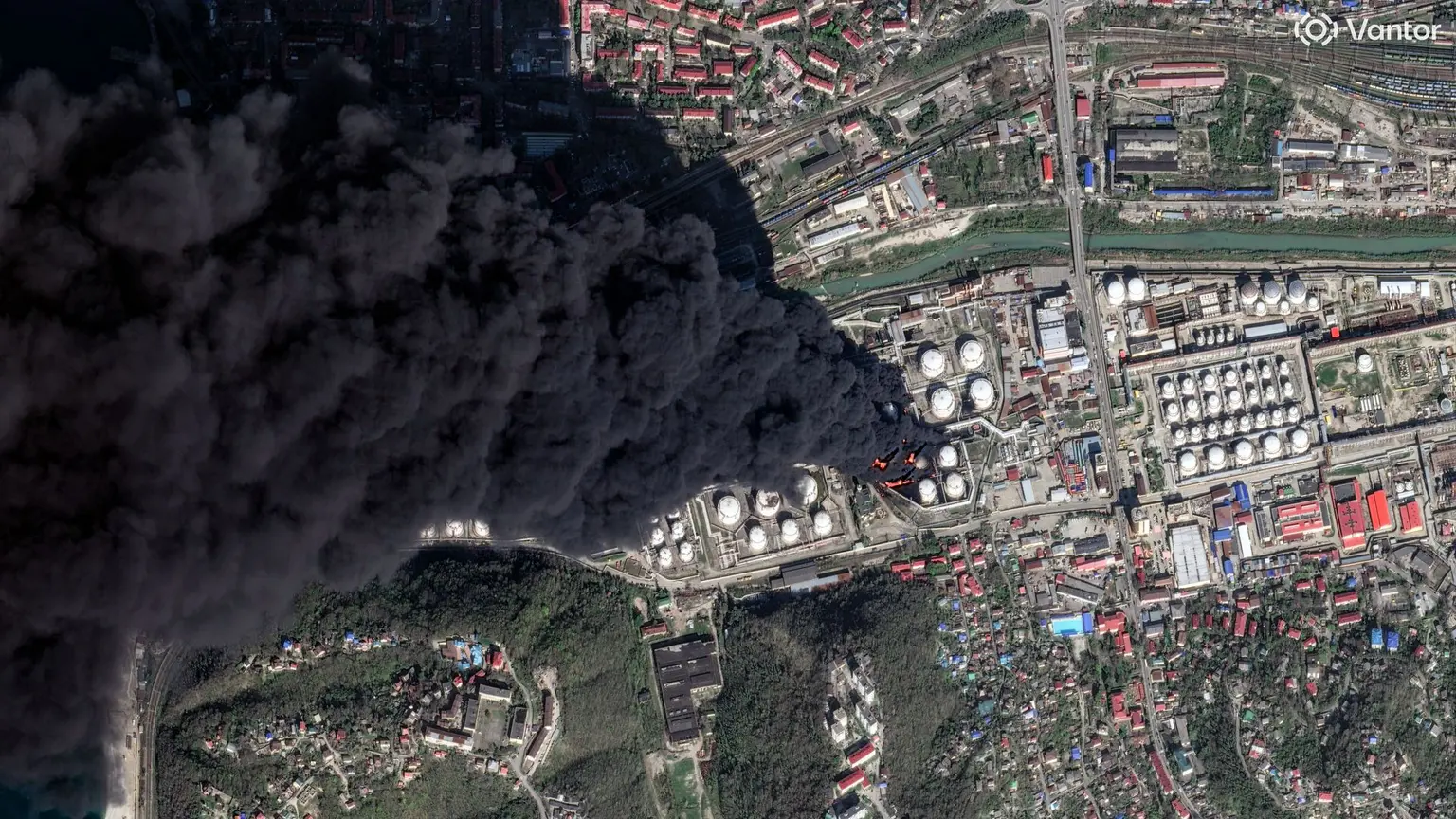
One of the more consequential shifts in the conflict over the past year has been Ukraine's expansion of its long-range drone campaign deep into Russian territory. Almost nightly, Ukrainian drones have targeted oil refineries, military airfields, ammunition depots, and industrial facilities inside Russia itself.
Marples noted that "Ukrainian drones are hitting Russian oil refineries with regularity, which is far more effective in slowing Russia's economy than sanctions are."
The psychological and symbolic toll has been equally significant. Just days before Russia's Victory Day parade, the single most important event on Putin's political calendar, a Ukrainian drone struck a building in Moscow itself. Authorities subsequently shut down mobile internet services in Moscow and St. Petersburg starting May 5, citing fears of further Ukrainian strikes. The internet cuts, combined with other security measures, produced an unusual spectacle: the Kremlin negotiating with Washington to help ensure its own parade could proceed safely. Trump announced a temporary ceasefire around the event, while Zelensky formally issued an order "allowing" the parade to proceed without Ukrainian strikes.
The image of the parade itself spoke volumes. For the first time in recent memory, there were no tanks or missile systems rolling through Red Square. Military hardware was displayed only on giant screens. Troops from North Korea marched alongside Russian forces, a tribute to an alliance born of desperation. CNN's analysis called it "a startling humiliation to the literal fortress of the Kremlin," noting that Zelensky's public decree "authorizing" the parade amounted to pointed political theater that did not reflect the posture of a side that feels it is losing.
The Economy Under Strain
If the battlefield picture has been grim, the economic one is not much more encouraging for Moscow, at least over the medium term.
For much of 2023 and 2024, Russia appeared to confound Western expectations of economic collapse. Defense spending fueled growth, and energy revenues provided a cushion against sanctions. But by 2026, those buffers are visibly eroding.
EUvsDisinfo's March 2026 analysis described the situation plainly: what once looked like resilience is proving fragile. Factories are running at full capacity with no room to expand. Labor shortages, driven in part by battlefield deaths and emigration of skilled workers, have become acute. The Russian Central Bank Chief publicly acknowledged in April 2026 that "we have truly never lived in such a shortage" of workers.
Manufacturing has declined at its fastest rate since March 2022. Economic growth slowed to 0.6 percent in 2025. High interest rates, maintained to control inflation and protect the ruble, have stifled private investment. The government's National Wealth Fund faces the imminent depletion of its liquid assets by the end of 2026, potentially forcing deeply inflationary domestic borrowing to cover a ballooning structural deficit.
A surge in oil revenues in March 2026, driven partly by rising prices linked to Trump's confrontation with Iran, provided temporary relief. But few analysts expect short-term windfalls to offset the deeper structural damage: a private sector hollowed out by sanctions, hundreds of thousands of educated professionals who have left the country, and a military-industrial complex consuming resources that might otherwise drive civilian productivity.
Perhaps most alarmingly for the Kremlin's long-term position, the UK's senior military advisor to the OSCE warned in a May 13 statement that Russia's war-dependent economy creates a dangerous feedback loop. As the civilian economy weakens, the Kremlin relies more heavily on defense spending to sustain output and political control, making it harder, not easier, to disengage from the war without triggering internal economic and political costs.
Fear and the Internet Kill Switch
One of the clearest indicators of the Kremlin's internal anxiety has emerged not on the battlefield but online. Following the killing of Iranian leadership and the capture of Venezuelan President Nicolas Maduro, two events that visibly unsettled authoritarian governments watching closely, Russian authorities intensified their crackdown on internet access.
Since May 2025, Russia has experienced recurring internet shutdowns across multiple regions. In March 2026, authorities began cutting off mobile internet and public Wi-Fi in Moscow itself. According to Russian independent outlet The Bell, control over internet infrastructure has shifted to the Second Service of the FSB, the branch responsible for counterterrorism and "protecting the constitutional order." Previously, technical divisions had overseen internet regulation. The shift to politically oriented security structures signals a new level of internal concern about information control.
The share of Russians who say people around them feel anxious has risen to 53%, according to Russia's pro-government Public Opinion Foundation, seven percentage points higher than in August 2024, when Ukraine launched its surprise incursion into Russia's Kursk Oblast. That figure, even accounting for the unreliability of polling in authoritarian states, is a notable data point.
Former U.S. Ambassador to Russia Michael McFaul noted in a May 8 analysis that Russia holds State Duma elections in September 2026 and that "the machinery used to deliver Kremlin-friendly results is coming under strain." Economic pressures, including layoffs and delayed wages, are weakening the incentive structures the state uses to coordinate electoral turnout, while its own crackdown on digital communications is undermining the tools used to manage the process.
What Putin's Words Actually Signal
All of this context is essential to understanding what Putin's May 9 remarks do and do not mean.
Analysts are broadly aligned that the shift in tone is real, but that it reflects tactical recalibration rather than a change in strategic objectives.
Russia's core negotiating demands remain unchanged. Moscow still insists on Ukrainian territorial concessions, recognition of occupied territories, and the elimination of what it calls the "root causes" of the conflict. Russia continues to launch mass missile and drone attacks on Ukrainian civilian infrastructure even as it speaks of peace, including a mass attack on May 14 that killed and injured dozens in Kyiv, just days after Putin's conciliatory remarks.
Putin's suggestion that he would be willing to meet Zelensky in a third country, floated for the first time, came with an immediate qualifier: only after a peace treaty had already been finalized. "A meeting in a third country is also possible, but only after a peace treaty aimed at a long-term historic perspective is finalised," he said. "This should be a final deal, not the negotiations." In other words, the offer was not an offer to negotiate at all.
His preferred European interlocutor, he suggested, should be former German Chancellor Gerhard Schröder, a figure widely discredited in European capitals for his sustained proximity to Putin. The immediate reaction in Europe was reportedly cool.
Kremlin spokesman Dmitry Peskov, when pressed on May 12 about whether Putin's remarks meant the war would soon end, declined to discuss timelines. "At this point, we cannot talk about any specific details in this context," he said.
Russia's Negotiating Position vs. Its Actions
| Area | What Russia Says | What Russia Does |
|---|---|---|
| Peace talks | Open to negotiations; war "coming to an end" | Rejects mutual ceasefire proposals; demands pre-agreed terms |
| Territorial demands | Seeks a "long-term historic" settlement | Insists on Ukrainian recognition of all occupied territories |
| Civilian targeting | Claims it does not target civilians | Mass missile attack on Kyiv, May 14, killing dozens |
| Ceasefires | Declared unilateral pauses around Victory Day | 140+ strikes recorded within hours of its own declared ceasefire |
| Zelensky meeting | Willing to meet "in a third country" | Only to ratify a pre-finalized deal, not to negotiate one |
Lough pointed to a potentially significant internal development: reports that Russia's presidential administration has already begun preparing domestic messaging to frame any future settlement, on whatever terms, as a Russian victory. "This suggests that the Kremlin is thinking seriously about finding a way out," he said.
But the framing matters enormously. Roos put it directly: "He knows that Russian society increasingly wants an end to the war, but largely on terms that do not feel like defeat. The Kremlin may be reassessing the management of the war, but not yet its core objectives."
The Gap Between Words and Actions
Perhaps the most important data point of all is the simplest one: Russia launched a mass missile attack on Ukraine on May 14, just days after Putin's conciliatory statements. Dozens of civilians were killed or injured in Kyiv.
That juxtaposition encapsulates the essential tension in assessing where Russia actually stands. The words have softened. The bombs have not.
For all the mounting strain, the staggering casualty figures, the economic deterioration, the anxious public, the scaled-back parade, the internet blackouts, the drone strikes reaching Moscow itself, Russia's war machine continues to operate. Putin has not abandoned his maximalist demands. He has not agreed to a genuine ceasefire. He has not accepted any framework that would require meaningful compromise.
What has changed is the narrative. The Kremlin appears to be preparing its domestic audience, and perhaps itself, for the possibility that the war ends without the total subjugation of Ukraine it once anticipated. That is a significant shift. But it is a shift in messaging, not yet in behavior.
Kai Tutor | The Societal News Team
Follow Us!
It helps decentralize our presence across the web and it's completely free!
Instagram ➤
Youtube ➤
Substack ➤
X.com ➤
Telegram ➤
TikTok ➤