A War-Built Industry With No Legal Name: Ukraine Moves to Regulate Its Private Military Boom
Private firms already train drone pilots, clear minefields, and shoot Russian drones out of the sky. Zelensky wants legislation passed by end of 2026. The debate is not whether to allow private military activity, but how a state at war should govern an industry it already depends on.
An Industry That Exists Everywhere Except on Paper
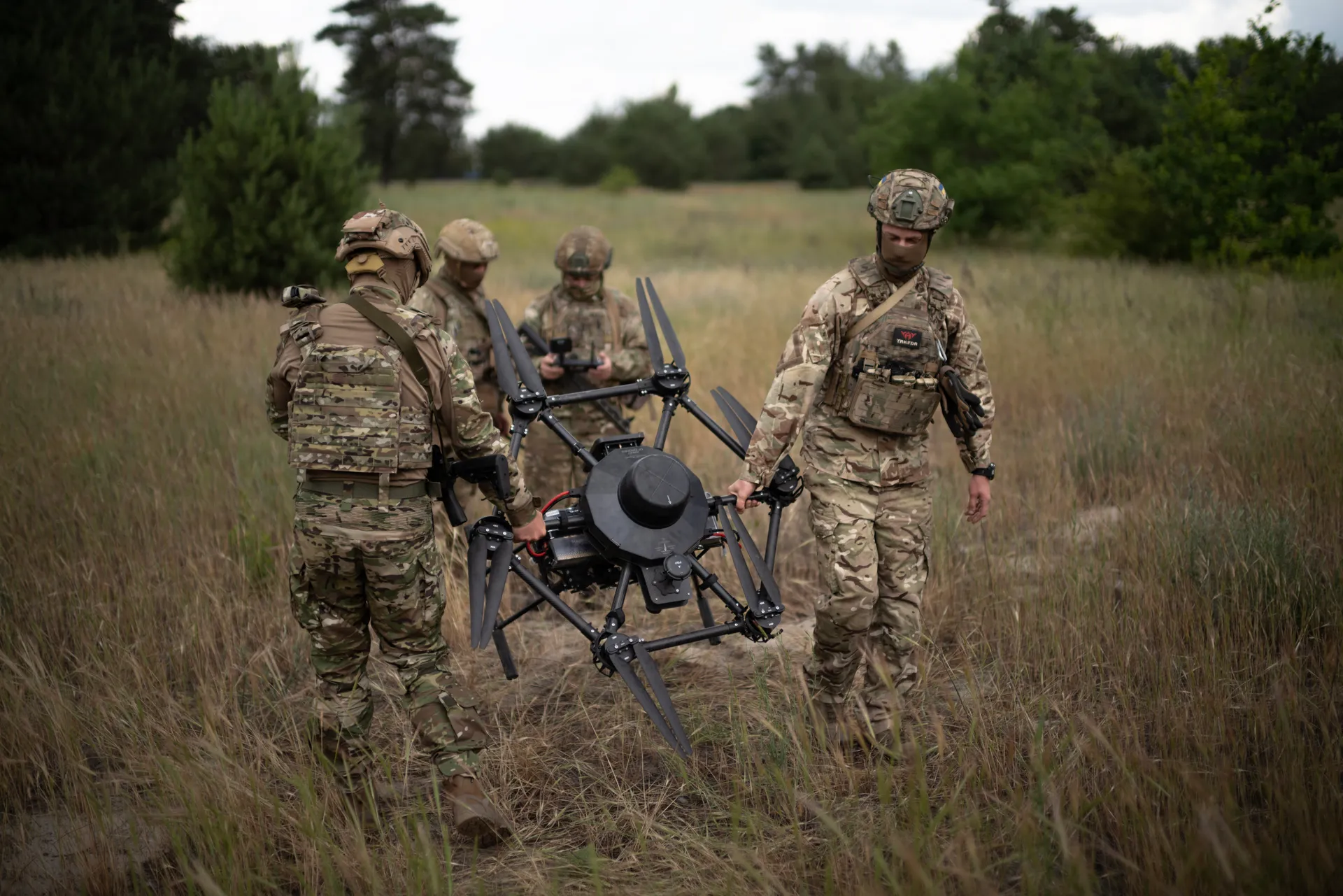
Ukraine has spent four years building one of the world's most battle-tested defense ecosystems. Private firms now train drone pilots, clear minefields, repair and upgrade weapons, write targeting software, and even shoot Russian drones out of the sky. What they cannot do is legally call themselves what many of them functionally are: private military companies.
That contradiction, a thriving war-fueled industry operating in a category that does not formally exist under Ukrainian law, has finally become too large to ignore. President Volodymyr Zelensky has ordered officials to draft legislation regulating private military companies, and he wants it passed before the end of 2026. The push reframes a question once considered politically toxic in Ukraine: not whether private military activity should be allowed, but how a state at war should govern an industry it already depends on.
Ukrainian law prohibits armed formations outside state control and has never recognized PMCs as a legal category. Yet the activities associated with them carry on every day under ordinary commercial licenses, permits, and contracts. Drone schools, logistics and cybersecurity firms, demining teams, risk-management providers, and defense consultancies operate openly, many of them working hand-in-glove with the Armed Forces.
Much of that work is already governed by existing rules. Import and export of military and dual-use goods fall under Ukraine's state export-control system; work with explosives is overseen by the National Police and the State Labor Service; security services have long been licensed by the Interior Ministry. According to Tetiana Kebkalo, managing director of Omega Consulting Group, a defense-services firm that bills itself as Ukraine's first PMC, almost everything these companies do is permissible today. The one clear exception, she says, is the provision of armed security services.
Omega itself illustrates how the sector has lived in a gray zone. Registered in Ukraine in 2012 and founded by former French Foreign Legionnaire Andrii Kebkalo, the company worked mostly abroad before the full-scale invasion. "We could have opened the company somewhere in Cyprus," Kebkalo said. "But we wanted it to be a Ukrainian brand."
What Zelensky Actually Proposed
In his evening address on May 6, 2026, Zelensky said he had instructed the Interior Ministry, intelligence agencies, government officials, and the Presidential Office to develop "the most optimal format" for regulating private military companies, with adoption targeted for this year. He framed it less as a wartime measure than as postwar economic policy.
Interior Minister Ihor Klymenko described the goal as a "transparent and controlled model" for specialized security and protection services that would comply with Ukraine's Constitution. Crucially, officials have emphasized that the framework is not about legalizing private armies inside Ukraine. The model being weighed would create state-regulated companies, registered in Ukraine and licensed to provide defined military, security, and training services, largely oriented toward foreign clients.
For Kebkalo, the substance matters more than the label. "The key question is not whether a law on private military companies will allow new types of activities," she said, "but whether it will create a transparent mechanism for state control and legal regulation of existing practices."
A Stigma Rooted in the Post-Soviet Decades
Repeated efforts to regulate the sector have failed. At least four draft laws touching on private military or defense-service activity have been introduced over the years, and none have cleared parliament. The most recent, draft law No. 11214 on "International Defense Companies," was registered in April 2024. The Defense Ministry backed it only with reservations, warning it clashed with the Constitution and with Ukraine's laws on defense and intelligence.
Serdiuk attributes the long stalemate to inexperience and stigma. Ukraine, he argues, has little tradition of regulating private military activity after decades of rigid Soviet structures. "We do not have a long tradition," he said. "Our state has existed for 35 years."
International frameworks offer only partial guardrails. The nonbinding Montreux Document sets out good practices for states using private military and security companies in conflict, and the Switzerland-based International Code of Conduct Association monitors firms that voluntarily adopt human-rights standards. Both depend on national legislation and political will, leaving global PMC oversight fragmented. Western regulation has itself struggled with accountability: the U.S. firm Blackwater became globally notorious after its contractors killed 17 civilians in Baghdad's Nisour Square in 2007, and the contractors later convicted were ultimately pardoned by President Donald Trump in 2020.
The Economic Logic: Veterans, Exports, and Lost Tax Revenue
What has changed is the economic stakes. Ukraine now fields an estimated 880,000 to 1 million active military personnel, roughly five times the prewar figure and about 6% of the national workforce. The Veterans Affairs Ministry has projected that veterans and their close families could eventually reach around six million people. Reintegrating that population into a war-battered civilian economy may be one of the largest demobilization challenges in modern European history.
Supporters argue a licensed PMC sector solves two problems at once. It would give veterans a legal market for skills that have no civilian equivalent, and it would capture revenue currently lost offshore. Despite the ban, Ukrainian fighters have long been recruited by foreign firms that train personnel in Ukraine but register elsewhere, in Bulgaria for instance, depriving Kyiv of tax income and oversight alike.
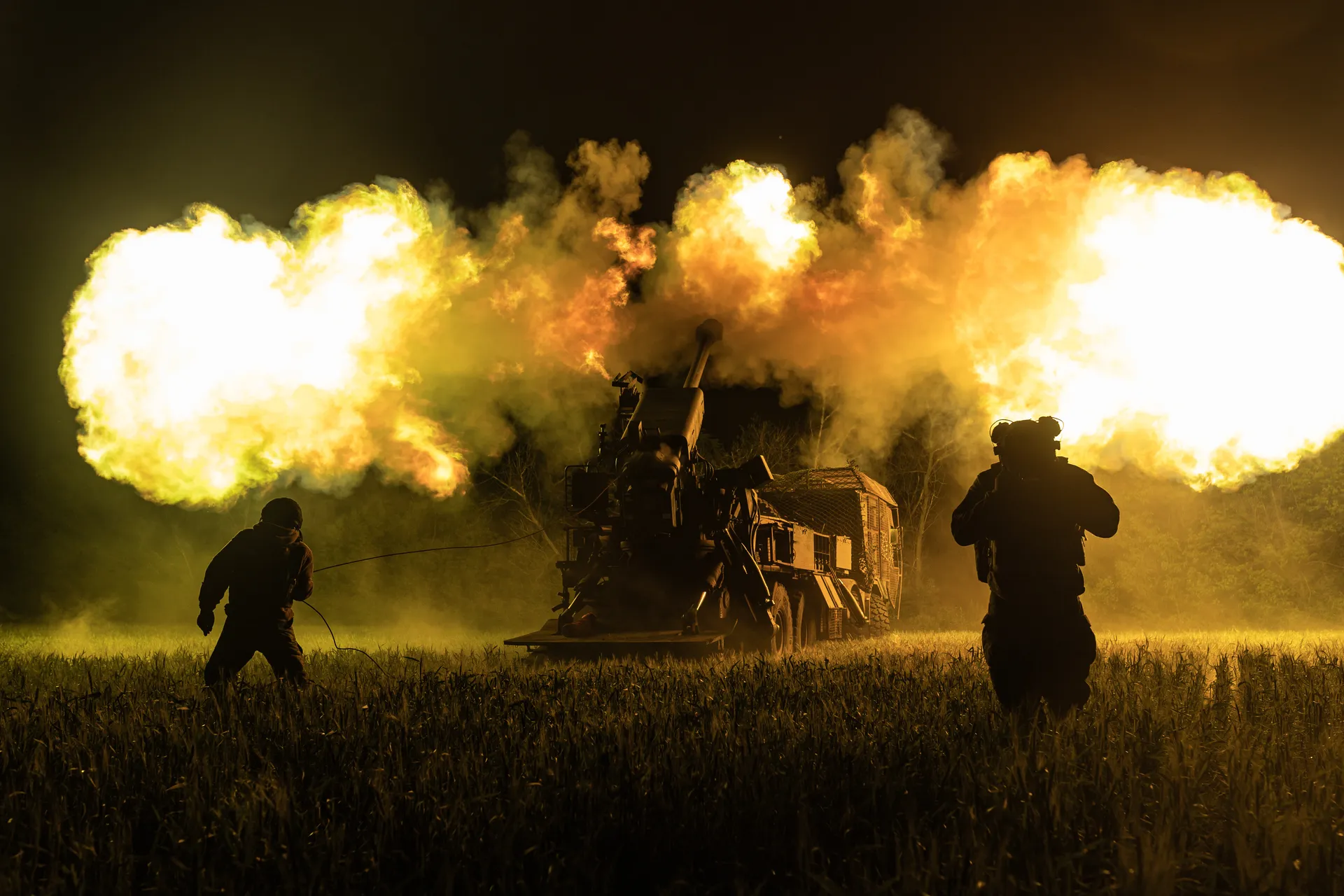
For Serdiuk, exports are the only sustainable path as wartime financing tightens. "There is only one path left: exports," he said. "And then this becomes a source of income for the national economy." Hardware sales alone, he argues, are not enough. "A launcher, radar, missiles, all the hardware gets sold abroad. But then comes the service layer: installation, maintenance, integration, operator training. You cannot export these systems if foreign militaries do not know how to use them."
Kevin Leach, a former Canadian Army instructor and ex-OSCE ceasefire observer who now heads the Ukrainian nonprofit Sabre Training Advisory Group, says the widest gap between Ukrainian and Western forces lies in adapting to drone-centric warfare. "When they smarten up, NATO militaries are going to be clawing for people with experience out here," he said, predicting that English-speaking Ukrainian veterans with Western training will "be able to write their own ticket working around the world." This transformation in drone warfare connects directly to the broader battlefield developments we covered in our June 1 analysis of Ukraine's Logistical Lockdown campaign.
Already Testing the Model: Private Guns Guarding the Sky
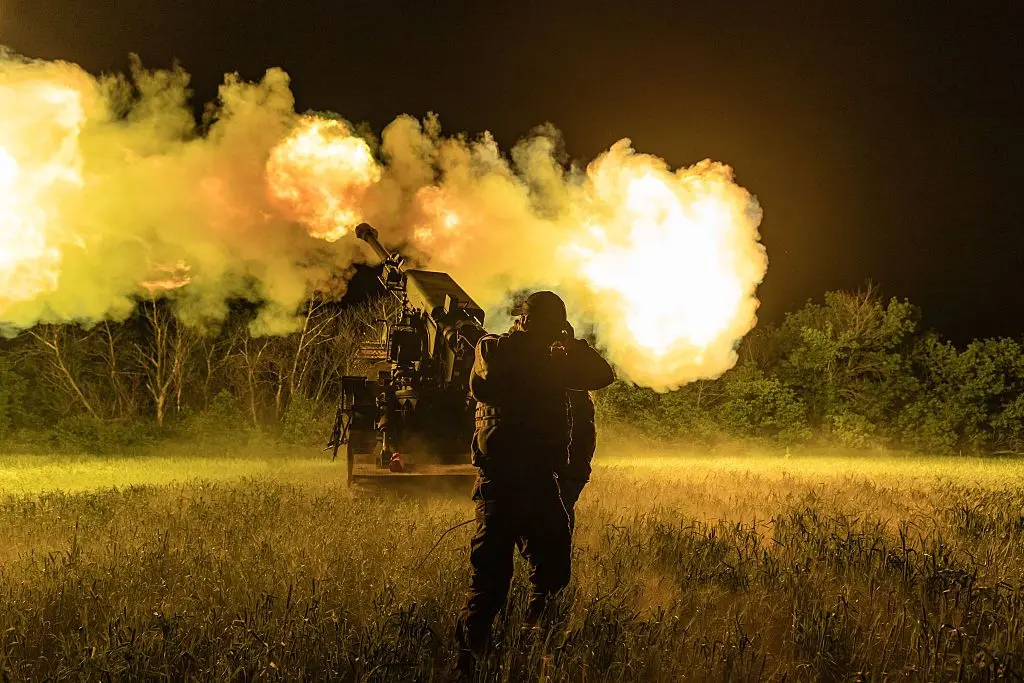
Ukraine is not waiting for a law to experiment with a larger private role in defense. Since November 2025, the Defense Ministry has allowed companies, including operators of critical infrastructure, to form their own air defense units, integrated into the Air Force's unified command-and-control system and armed with weapons temporarily transferred by the ministry.
The program has moved from concept to combat with unusual speed. In March 2026, Defense Minister Mykhailo Fedorov reported the first interceptions: a private firm's air defense group had downed several Russian Shahed and Zala drones over Kharkiv Oblast. By June, the ministry said 30 companies had been granted authorized status to conduct air defense activities, drawn from more than 40 applicants, with units operating in Kharkiv and Odesa oblasts. Fedorov described the arrangement as a way to "scale air defense capabilities without additional burden on frontline units" and explicitly as the opening of a new market. His stated 2026 goal: detect 100% of aerial threats and destroy 95% of them.
The air defense pilot is, in effect, a live preview of the debate's central tension: how far private actors can be folded into state security functions while remaining under genuine state control.
Where Lawmakers Will Have to Draw the Line
The hardest definitional question, in Serdiuk's view, is where defense services end and direct combat begins. "There is a fundamental difference between helping another state acquire a capability and directly participating in combat yourself," he said. Under that logic, drone instruction, logistics, software integration, maintenance, and tactical training would count as defense services, while companies putting boots on the ground in foreign wars would face far stricter rules. "In one case, the final shot is fired by the army of a foreign state," he said. "In the other, the shot is fired by you."
Kebkalo remains skeptical that lawmakers yet grasp those distinctions. She recalls earlier proposals detached from both international law and operational reality, including notions that PMCs might stockpile heavy weapons in Ukraine and deploy abroad independently. "To be honest, they will never adopt a law that properly regulates these companies until they understand what such companies actually do," she said.
She also warns that bringing large state-owned firms into a newly legal market could "create unfair competition that subsequently may lead to corruption." If a law does pass, she expects its core function to be establishing clear rules of the game: defining PMC status, operating procedures, oversight, and liability, likely with a dedicated licensing process or special state permit.
For broader context on where Ukraine stands militarily and diplomatically as this debate unfolds, see our full January-May 2026 war analysis.
Frequently Asked Questions
Ukraine has spent four years building a thriving defense-services industry that trains drone pilots, clears minefields, repairs weapons, and shoots down Russian drones, all under ordinary commercial licenses because PMCs have no legal category under Ukrainian law. Zelensky ordered legislation in May 2026 to create a transparent regulatory framework, targeting passage by end of 2026, framed as both wartime governance and postwar economic policy to create a legal market for up to 1 million veterans.
In his May 6, 2026 address, Zelensky ordered the Interior Ministry, intelligence agencies, and Presidential Office to develop the optimal regulatory format for PMCs with adoption targeted for 2026. He framed it primarily as postwar economic policy: "Our export of security, after this war and for veterans, must be a real business opportunity," arguing that leading countries already let their citizens work in private military structures.
Yes. Despite having no legal category under Ukrainian law, a thriving defense-services sector operates openly under ordinary commercial licenses. Since November 2025, the Defense Ministry has allowed private companies to form air defense units integrated into the Air Force command system. By June 2026, 30 companies had been granted authorized status, with units having already shot down Russian drones over Kharkiv Oblast.
The main concern is that legalization could allow wealthy patrons to build private armies. Ukraine has memories of oligarch-linked security structures from the post-Soviet era. In 2021, the Security Service raided a training camp seizing military-grade weapons amid suspicions of oligarch ties. Critics also point to Russia's Wagner Group as a cautionary example of how the PMC label can obscure state-directed violence. At least four draft PMC laws have failed in parliament.
Since November 2025, Ukraine's Defense Ministry has allowed private companies to form air defense units integrated into the Air Force's unified command system with ministry-transferred weapons. In March 2026, a private firm made the first interceptions, downing Russian Shahed and Zala drones over Kharkiv Oblast. By June 2026, 30 companies had authorized status, with units in Kharkiv and Odesa oblasts. Defense Minister Fedorov described it as opening a new market while reinforcing national defense.
Kai Tutor | The Societal News Team
Follow Us!
It helps decentralize our presence across the web and it's completely free!
Instagram ➤
Youtube ➤
Substack ➤
X.com ➤
Telegram ➤
TikTok ➤