How Ukraine's Deep-Strike Drone War Is Grinding Down Russia's Oil Machine
On June 18, 2026, Moscow woke to its largest drone attack since the invasion began. The centerpiece was an oil refinery hit for the second time in three days. The goal is not territory. It is to set fire to the financial engine of the Russian war effort.
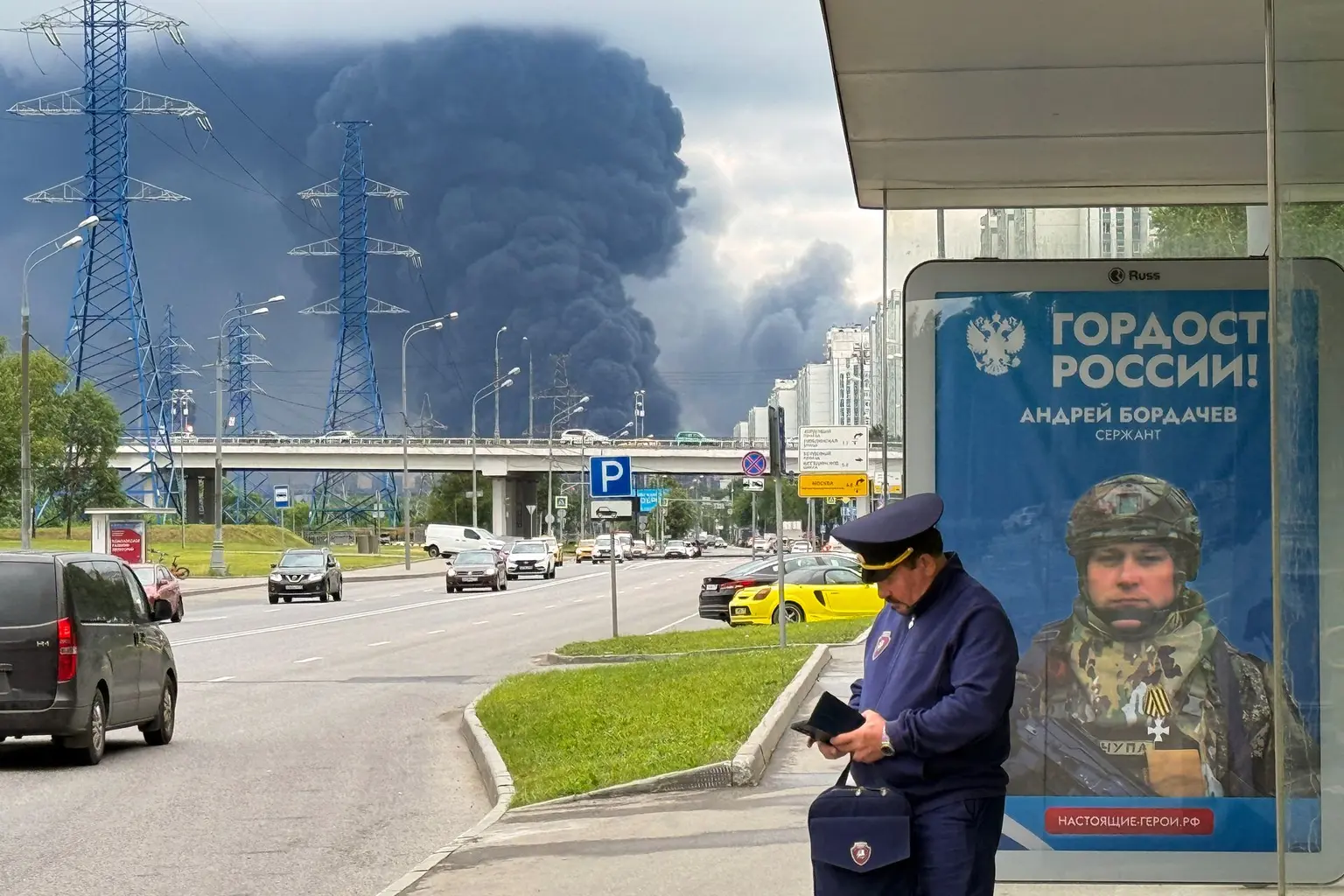
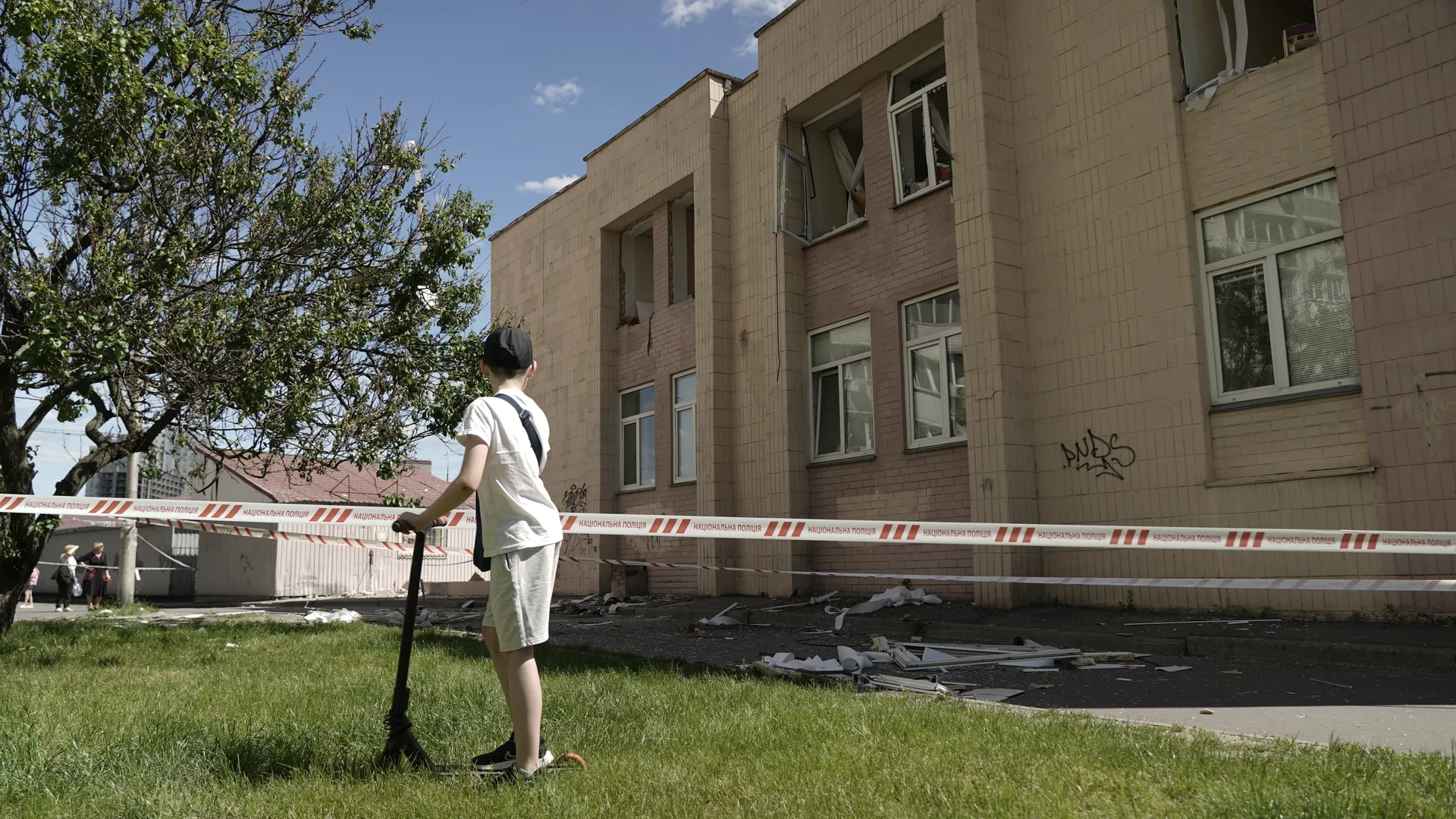
On the morning of June 18, 2026, residents of Moscow woke to explosions and a sky filling with black smoke. According to Russian authorities, air defenses intercepted at least 194 Ukrainian drones on the approach to the capital, the largest reported attack on Moscow since Russia launched its full-scale invasion in February 2022. Across the country, the Russian Defense Ministry said 555 drones were downed overnight. The centerpiece of the strike was the Moscow Oil Refinery in the Kapotnya district, hit for the second time in three days, where at least five separate fires broke out. Seventeen people, including two children, were reported injured in Moscow Oblast. Aeroflot and its subsidiary Rossiya canceled more than 170 flights and delayed over 110 others.
That single night is not an isolated spectacle. It is the visible surface of a sustained, deliberate strategy that has become, in the words of one analysis, a central pillar of Ukraine's military plan for 2026 rather than a diversionary sideshow. The goal is not territory. It is to set fire to the financial engine of the Russian war effort.
The Target That Keeps Burning
The Moscow Oil Refinery, operated by Gazprom Neft in the capital's southeastern Kapotnya district, is one of the largest in Russia. Ukraine's General Staff describes it as supplying roughly 40 percent of the Moscow fuel market and the majority of the region's gasoline, providing aviation fuel to all four of Moscow's major airports, and processing more than 12 million tons of crude per year. The facility has now been struck repeatedly in a short window. A May 17 attack halted production. A June 16 strike with long-range drones reportedly shut operations again, according to Russian industry sources cited by Reuters. Then came June 18. Ukraine's General Staff confirmed the strike and reported that a combined oil processing unit, secondary refining units, and a storage tank farm were burning. Industry sources told Reuters the Euro+ combined refining unit and secondary units were damaged.
Two Fronts in One Night
The June 18 operation was not confined to the capital. Ukraine's Special Operations Forces confirmed a separate strike on the Rostovnefteprodukt oil facility in Gukovo, in Russia's Rostov Oblast near the Ukrainian border, carried out in cooperation with a resistance movement on Russian territory known as Red Spark. Footage circulated by the independent monitoring channel Astra showed an oil depot engulfed in flames. Rostov Governor Yury Slyusar claimed the strike killed one person and injured two others. Rostov Oblast, bordering Ukraine and sitting near the Azov Sea, is a crucial logistics hub for Russian frontline operations, and its oil infrastructure has been targeted repeatedly.
The simultaneous strikes illustrate the campaign's geography: drones now reach hundreds of kilometers into Russia, hitting the capital and border regions in the same night, while partisan networks inside Russia assist with targets closer to the front.
A Campaign, Not a Series of Raids
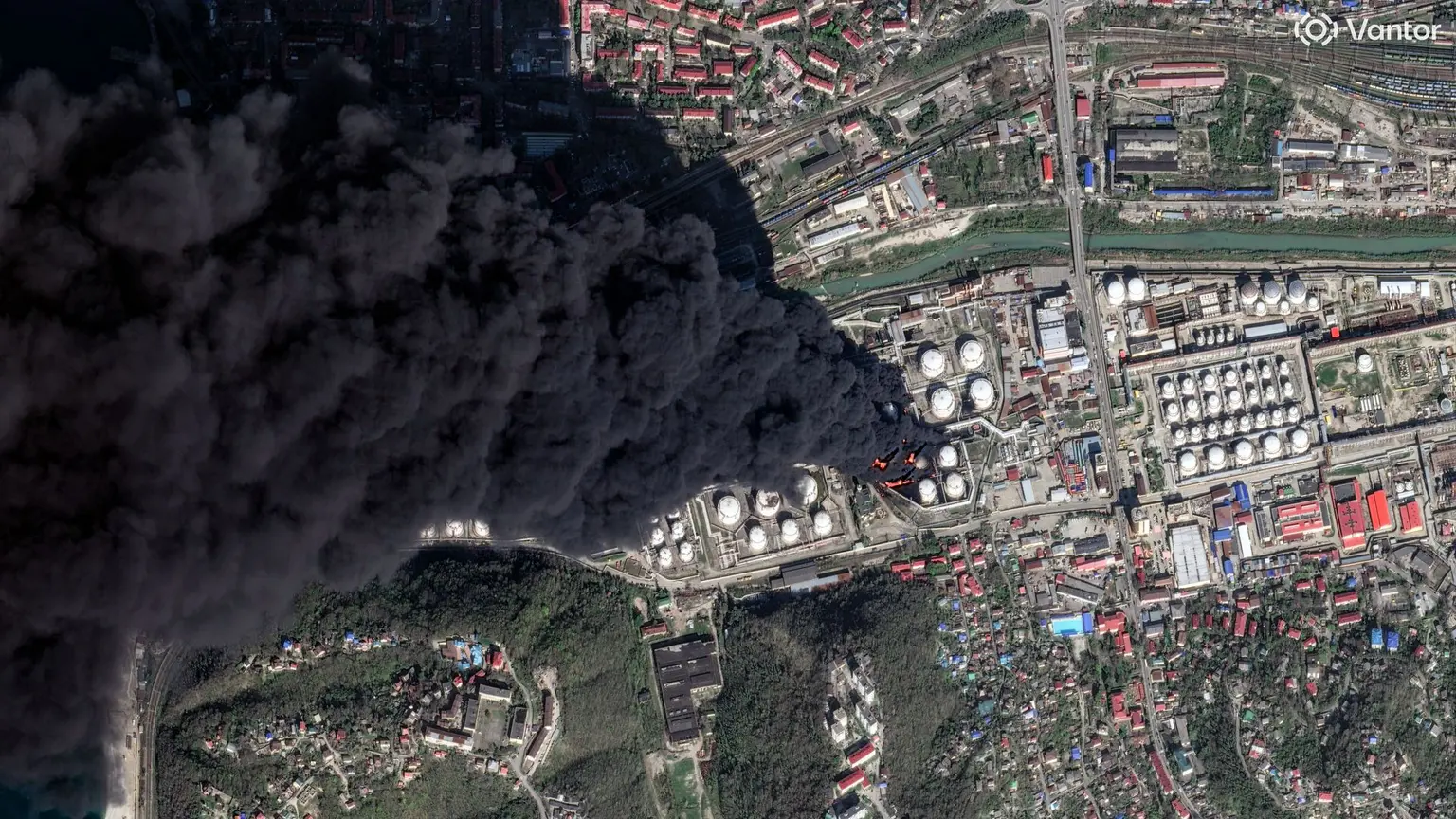
What makes June 18 significant is the trend it sits within. Ukraine's long-range drone campaign against Russian oil infrastructure escalated sharply beginning in January 2026, moving from a handful of refinery hits to a broad target set including the Baltic export terminals at Ust-Luga and Primorsk, the Yaroslavl refinery, the Lukoil refinery at Kstovo that supplies roughly 30 percent of Moscow-region gasoline, and the Black Sea port and refinery complex at Tuapse. This deep-strike strategy builds directly on the earlier waves we documented in our investigation into Ukraine's assault on Russia's energy backbone.
The intent is explicit and economic. Oil and gas revenues account for a large share of the Russian state budget, with one analysis citing oil exports at nearly 25 percent of state revenue, and the campaign aims to physically destroy the distillation towers, storage terminals, and pipeline infrastructure that keep that money flowing, with the stated objective of inducing a structural fiscal deficit in Moscow. The Adapt Institute noted a striking inflection point: in March 2026, for the first time since the invasion began, Ukraine surpassed Russia in drones launched, deploying more than 7,347 against Russia's 6,462.
The Numbers Behind the Smoke
The cumulative effect has been measurable, though analysts caution against declaring a decisive blow. In the week of March 22 to 29, 2026, Russian oil exports fell 43 percent, from 4.07 to 2.32 million barrels per day, an estimated billion-dollar revenue loss for that week alone. Reuters estimated that strikes had reduced Russian refining capacity by roughly 17 percent, or about 1.1 million barrels per day. At the height of the campaign in earlier rounds, an estimated 20 percent of refining capacity was offline, though Russia mitigated much of the damage by reactivating idle units, holding the net decline in refining volumes to a more modest single-digit percentage.
What It Does and Does Not Achieve
Caution is warranted, and the better analysts supply it. Russia retains one of the world's largest refining sectors with surplus capacity to buffer domestic supply, and it has dispersed some processing eastward beyond drone range. Tatiana Mitrova, an energy analyst, argued that fuel shortages are not proof a tipping point has been reached, since Russia has weathered shortages before, even in peacetime.
The strategic logic, then, is attrition of adaptability rather than a single knockout. Each strike forces repairs, reroutes fuel by rail from distant inland regions, deepens local shortages, and chips at export income, while Russia responds by hardening defenses. Moscow has deployed new Pantsir-SMD-E air defense systems on the rooftops of civilian buildings in the capital, a measure that did not prevent the city being struck twice in a single week.
The Wider War
The drone exchanges are escalating in both directions and feeding into diplomacy. Russian Foreign Minister Sergey Lavrov responded to the June 18 strike by promising fresh attacks on targets tied to Ukrainian combat effectiveness, a threat that represents no real change from Russia's ongoing pattern of mass missile and drone barrages against Ukrainian cities. Those barrages have grown more lethal in recent months, as we reported when Russia launched the largest aerial attack of the war on June 2.
Zelensky, for his part, used the moment to press for tighter sanctions on Russia's energy sector, shadow fleet, banking system, and weapons production, arguing that pressure must come from Ukrainians, Europeans, and Americans alike, and that ordinary Russians should come to feel that one man is waging the war while they pay the price. The strikes land against a backdrop of stalled peace diplomacy, including behind-the-scenes G7 contacts among Zelensky, Trump, and Macron, and European exploration of reopening communication channels with the Kremlin. For the fuller strategic picture of how the drone war and diplomacy intersect, see our analysis of Ukraine turning the tide through drones and diplomacy.
The morning fires over Kapotnya, in that light, are a message written in smoke. Ukraine cannot match Russia in artillery or manpower, but it has built a long-range strike capability that can reach the enemy capital at will and turn the country's most valuable export into a recurring liability. Whether that slow burn ever forces the structural fiscal crisis Kyiv is aiming for remains the open question of the 2026 war, but the direction of the campaign, and the willingness to keep hitting the same refinery until it stays down, is no longer in doubt.
Frequently Asked Questions
On the morning of June 18, 2026, Russian authorities said air defenses intercepted at least 194 Ukrainian drones approaching Moscow, the largest reported attack on the capital since the full-scale invasion began in February 2022, with 555 drones downed nationwide overnight. The centerpiece was the Moscow Oil Refinery in the Kapotnya district, hit for the second time in three days, where at least five separate fires broke out. Seventeen people, including two children, were reported injured in Moscow Oblast, and Aeroflot and its subsidiary Rossiya canceled more than 170 flights.
The goal is economic rather than territorial. Oil and gas revenues account for a large share of the Russian state budget, with one analysis citing oil exports at nearly 25 percent of state revenue. Ukraine's campaign aims to physically destroy the distillation towers, storage terminals, and pipeline infrastructure that keep that money flowing, with the stated objective of inducing a structural fiscal deficit in Moscow. The Moscow Oil Refinery alone supplies roughly 40 percent of the Moscow fuel market and provides aviation fuel to all four of the city's major airports.
The effect has been measurable. In the week of March 22 to 29, 2026, Russian oil exports fell 43 percent, from 4.07 to 2.32 million barrels per day, an estimated billion-dollar revenue loss for that week. Reuters estimated strikes had reduced Russian refining capacity by roughly 17 percent, about 1.1 million barrels per day, with up to 20 percent offline at peak. The repeatedly struck Tuapse complex saw oil loadings in May fall 91 percent year over year. Russia banned gasoline exports on April 1, 2026, and aviation fuel exports from June 1.
Analysts urge caution. Russia retains one of the world's largest refining sectors with surplus capacity to buffer domestic supply and has dispersed some processing eastward beyond drone range. Energy analyst Tatiana Mitrova argues fuel shortages are not proof of a tipping point, since Russia has weathered shortages before. The more precise framing is that the 2026 strikes matter not because they have broken Russia's oil system, but because they are increasingly exhausting that system's ability to remain adaptable under stress. The strategic logic is attrition of adaptability rather than a single knockout blow.
Russia has hardened its defenses, including deploying new Pantsir-SMD-E air defense systems on the rooftops of civilian buildings in Moscow, a measure that did not prevent the capital being struck twice in a single week. Moscow has also dispersed some refining capacity eastward beyond drone range and reactivated idle units to mitigate damage, holding the net decline in refining volumes to a more modest single-digit percentage. Foreign Minister Sergey Lavrov responded to the June 18 strike by promising fresh attacks on targets tied to Ukrainian combat effectiveness.
Kai Tutor | The Societal News Team
Follow Us!
It helps decentralize our presence across the web and it's completely free!
Instagram ➤
Youtube ➤
Substack ➤
X.com ➤
Telegram ➤
TikTok ➤