
Ukraine's Relentless Assault on Russia's Energy Backbone: Tuapse, Perm, Orsk, and the Shadow Fleet
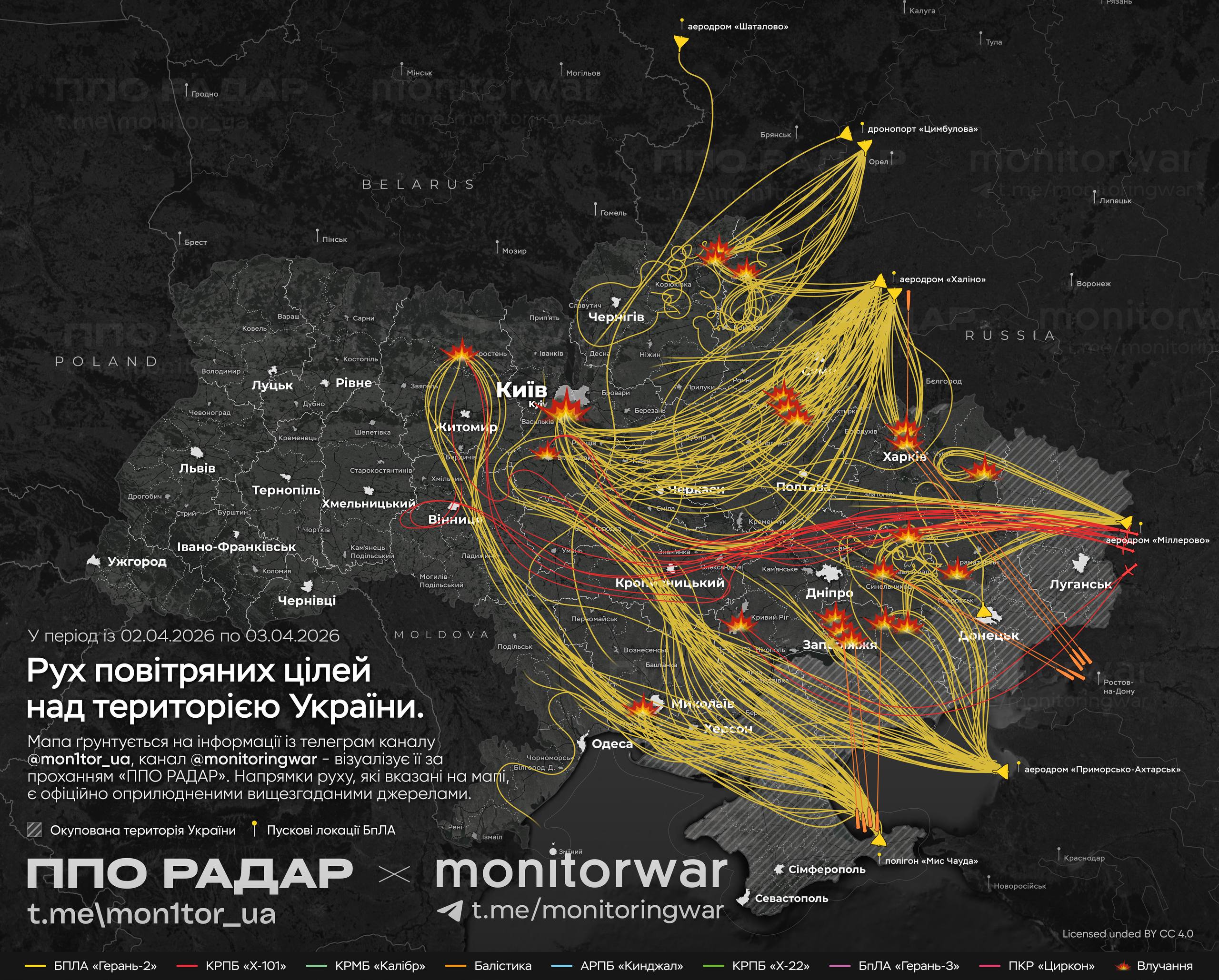
Ukraine has launched one of its most ambitious and wide-ranging campaigns against Russian energy infrastructure this week, striking oil refineries, pipeline stations, and a sanctioned oil tanker across a vast swath of Russian territory, from the Black Sea coast to the Ural Mountains over 1,500 kilometers from the front lines.
Key Strikes at a Glance
- Tuapse refinery (Rosneft, Krasnodar Krai): Hit April 16, April 20, and April 28. 24 tanks destroyed. State of emergency declared. Fire contained April 29 morning.
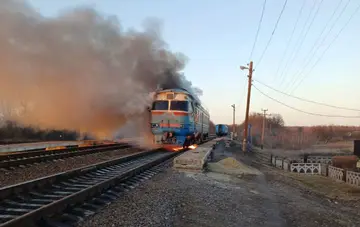
- Perm pumping station (Transneft, Ural region): Struck overnight April 28-29 by SBU Alpha unit. Massive fire. Station handles over 80% of Russia's crude pipeline output.
- Orsk refinery (Orsknefteorgsintez, Orenburg Oblast): Struck overnight April 28-29. Processes 6.6 million tons/year; supplies Russian military.
- MARQUISE tanker (Black Sea): Hit morning of April 29 by two Ukrainian naval kamikaze drones. Sanctioned by Ukraine, UK, EU, Switzerland, New Zealand, and Canada. Stern damaged.
- Russia's claim: Defense Ministry says 98 Ukrainian drones intercepted overnight April 28-29.
Tuapse: A Refinery in Ruins
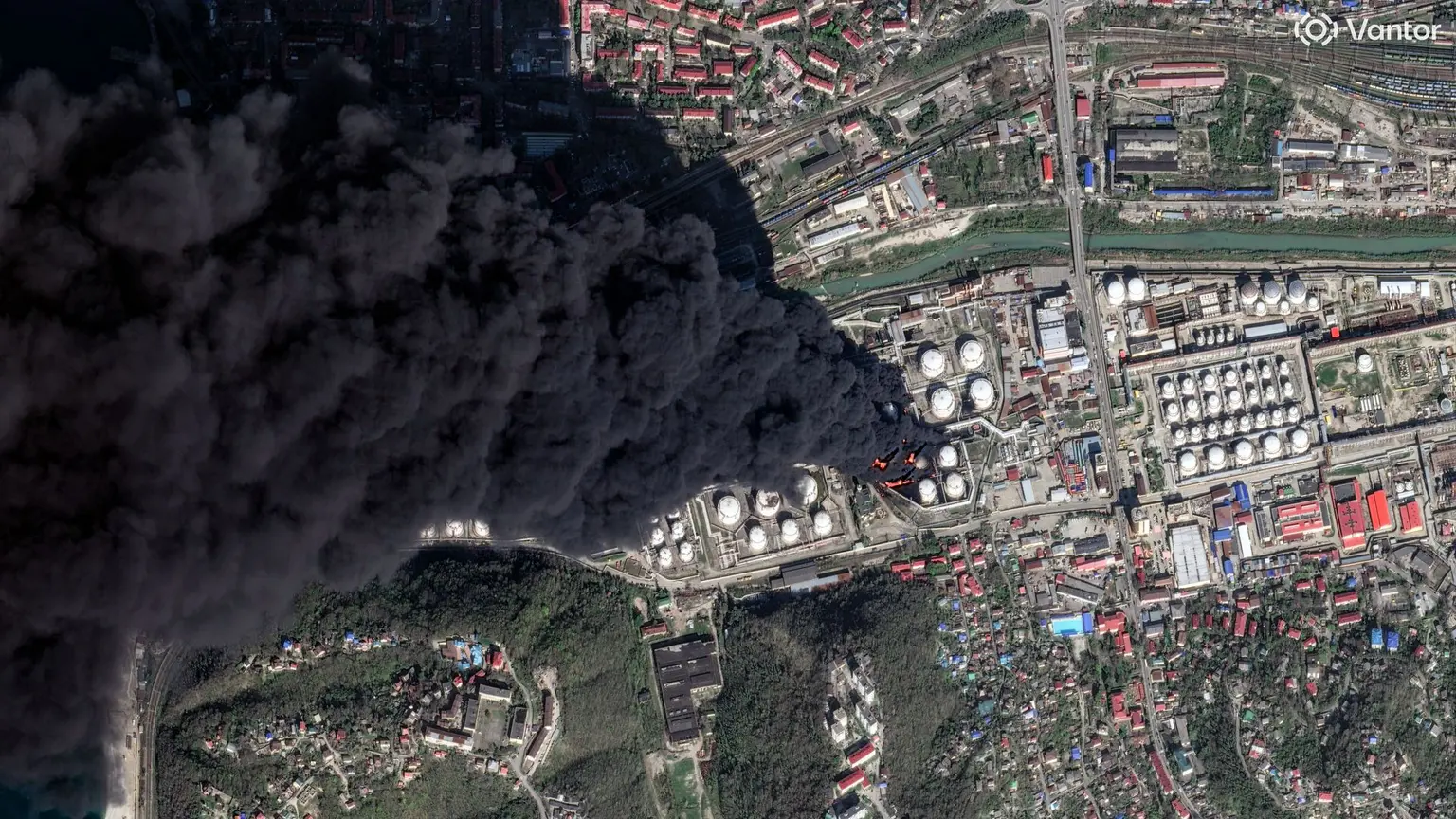
The southern Russian port city of Tuapse, home to a major Rosneft-owned oil refinery that processes roughly 12 million metric tons of oil annually, has become the epicenter of Ukraine's energy campaign. The facility has now been struck three times in less than two weeks, on April 16, April 20, and again on April 28, leaving the Black Sea town engulfed in what Russian authorities themselves have called an environmental catastrophe.
After the initial April 16 strike ignited a fire that firefighters managed to contain, Ukrainian drones returned on April 20, reigniting the blaze and compounding the damage dramatically. Ukraine's General Staff reported that the April 20 strike alone destroyed 24 oil storage tanks and damaged four more. By the time drones struck again on April 28, fires had been burning continuously for days.
The April 28 strike prompted Krasnodar Krai Governor Veniamin Kondratyev to announce evacuation measures for residents living near the refinery. Local authorities scrambled to respond: 312 personnel and 73 pieces of emergency equipment were deployed, and the fire was ultimately contained by the morning of April 29 at 7:05 a.m.
The human and environmental toll has been severe. Burning petroleum products spilled from damaged storage tanks onto nearby roads, damaging vehicles. Residents reported an "oil rain," contaminated rainfall carrying combustion byproducts, that left black films on surfaces and dark puddles in the streets. Smoke was reportedly visible from the Krasnaya Polyana mountain resort over 100 kilometers away. Local authorities acknowledged the environmental impact on April 23, admitting large quantities of combustion byproducts had been released into the atmosphere, and urged residents to limit time outdoors.
Russian President Vladimir Putin, speaking publicly about the strikes for the first time, described them as "terrorist attacks" while claiming there was no large-scale threat, a statement that stood in sharp contrast to the state of emergency declared in the Tuapse Municipal District. Putin ordered Emergency Situations Minister Aleksandr Kurenkov to fly to Tuapse personally to oversee the response.
Ukraine's General Staff said the Tuapse refinery "is involved in supplying the Russian Federation's occupation army on Ukrainian territory," framing the strikes as legitimate military operations targeting the Kremlin's war-financing capacity.
Perm and Orsk: Drones Reach Deep into Russia
On the night of April 28-29, Ukrainian drones pushed even further, striking oil infrastructure deep inside Russia's interior, in the Ural city of Perm and in Orsk in the Orenburg region, located approximately 1,400 to 1,500 kilometers from the Ukrainian border.
Perm: Pipeline Station Ablaze
Ukraine's Security Service (SBU) confirmed the strike on a major oil pumping station near Perm, conducted by its elite Alpha special forces unit using long-range drones. The target was the Perm Linear Production and Dispatch Station, owned by Russia's Transneft, the pipeline monopoly that handles more than 80% of Russia's total crude oil output.
The station serves as a critical hub for receiving, storing, and pumping oil through Russia's main export pipelines, with connections to export ports including Primorsk, Ust-Luga, Novorossiysk, and Tuapse. A massive fire broke out following the strike, with nearly all of the storage tanks, described by Russian Telegram channel Exilenova Plus as among "the largest tanks in Russia," reportedly ablaze. Witnesses described "oil rain" falling across parts of Perm, a phenomenon similarly reported in Tuapse after those earlier strikes.
Perm Krai Governor Dmitry Makhonin confirmed the attack on one of the region's industrial sites, stating that workers had been evacuated and no casualties were reported. Ukrainian President Volodymyr Zelensky published footage of the aftermath, effectively confirming Ukraine's involvement. He stated he had received a report from SBU Acting Head Major General Yevhen Khmara on what he called "Ukrainian long-range sanctions," framing the strikes as a new phase of Ukraine's campaign to degrade Russia's war-making capacity.
Transneft had previously warned oil producers in September 2025 that they may face output cuts due to the cumulative effect of Ukrainian drone strikes, a warning that now looks prescient.
Orsk: Refinery Under Attack
In the city of Orsk, Orenburg Oblast, the Orsknefteorgsintez oil refinery, one of Russia's largest, with an annual processing capacity of 6.6 million metric tons, was also struck. OSINT analysts from independent Russian Telegram channel Astra confirmed a hit on the facility, which directly supplies Russia's military and had previously been attacked in October and November 2025.
Orsk Mayor Artyom Vorobyov confirmed the attack and urged residents not to go outside. Orenburg Oblast Governor Yevgeny Solntsev acknowledged that Ukrainian drones had "attempted to attack" several industrial facilities in the region, stating that four drones were downed by Russian air defenses. Unlike Perm, no fires were immediately confirmed at the Orsk refinery, though the full extent of damage remained under assessment.
Russia's Defense Ministry reported that its air defenses intercepted 98 Ukrainian drones overnight over the territories of Astrakhan, Belgorod, Volgograd, Voronezh, Kursk, Rostov, and Saratov oblasts, as well as Russian-occupied Crimea, reflecting the unprecedented scale of the overnight drone campaign.
Shadow Fleet Tanker Struck in the Black Sea
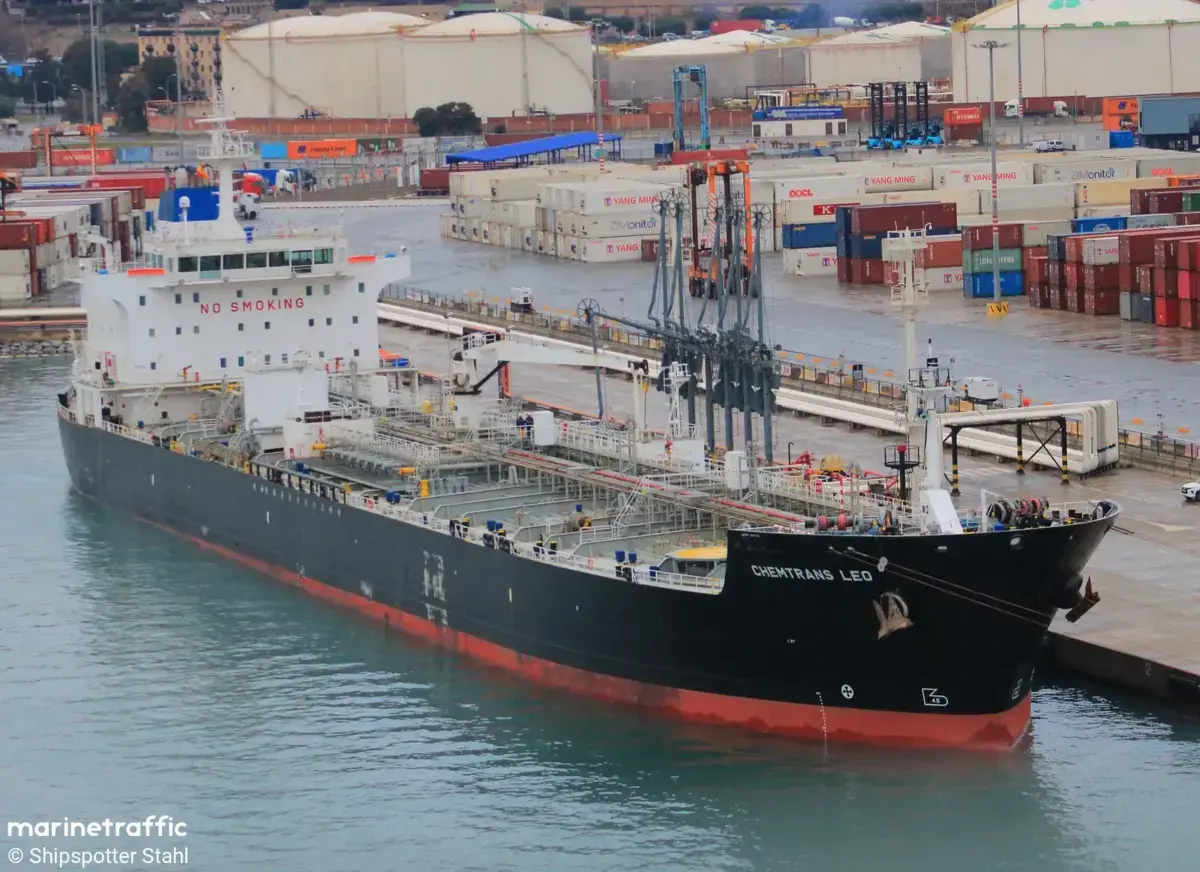
In a separate but strategically linked operation on the morning of April 29, a Ukrainian Navy unit struck the MARQUISE, a sanctioned Russian "shadow fleet" oil tanker, in the Black Sea using two kamikaze naval drones.
The MARQUISE, a Cameroon-flagged tanker with a cargo capacity of over 37,000 tons and operated by Lidoil DMCC of the UAE, was located approximately 210 kilometers southeast of Tuapse at the time of the strike, drifting without cargo and with its Automatic Identification System (AIS) signal switched off. Ukrainian intelligence assessed it was likely awaiting a ship-to-ship transfer of oil from another vessel at sea. The drones struck the vessel's stern, damaging the propeller and rudder assembly and the engine room, potentially disabling the ship.
The MARQUISE has been under sanctions from Ukraine, the United Kingdom, the European Union, Switzerland, New Zealand, and Canada. According to Ukraine's military intelligence War & Sanctions portal, the vessel has been engaged in the export of Russian-origin oil and petroleum products since December 2023, routinely employing deceptive shipping practices including operating in the Kerch Strait and visiting ports in Russian-occupied Crimea.
The strike on the MARQUISE represents an extension of Ukraine's maritime campaign beyond land-based refineries, directly targeting the vessels that physically move sanctioned Russian oil to international markets.
The Broader Strategic Picture
This week's operations fit into a sharply escalating pattern. According to analysts at the Institute for the Study of War, Ukraine has intensified its long-range drone campaign against Russian oil infrastructure in part to counter a US sanctions waiver on Russian oil temporarily renewed amid global supply disruptions linked to the ongoing conflict in the Middle East, a decision Zelensky publicly criticized. Kyiv is deliberately exploiting Russia's vast geography and its air defenses' inability to cover every corner of a country spanning eleven time zones.
Ukraine has also struck an Iskander missile storage facility in occupied Crimea this week, demonstrating that no part of Russia's military-economic infrastructure is treated as out of reach.
In Kyiv itself, a rare daytime Russian drone attack on April 28 struck a building under construction and cemetery grounds in two districts of the capital, injuring two people. Mayor Vitali Klitschko said one person received on-site treatment while another, a pedestrian injured in a car accident caused by drone debris, was hospitalized.
On the diplomatic front, President Zelensky publicly condemned Israel, accusing the country of purchasing grain stolen by Russia from occupied Ukrainian territories. "Purchasing stolen goods in all normal countries is an act that entails legal liability," Zelensky said, adding that Ukraine's intelligence services are preparing a sanctions package targeting both the ships transporting the grain and the individuals profiting from the scheme.
Sources
- Ukraine General Staff (official Telegram statements, April 28-29, 2026)
- Ukraine Security Service (SBU), Alpha unit operational report, April 29, 2026
- Kyiv Independent — Yuliia Taradiuk, April 28-29, 2026
- Kyiv Post — Julia Struck-Feshchenko, April 29, 2026
- The Moscow Times, April 20 & 29, 2026
- Al Jazeera, April 28, 2026
- RBC-Ukraine, April 29, 2026
- The Washington Times, April 29, 2026
- Interfax Ukraine, April 29, 2026
- Institute for the Study of War (ISW), ongoing Ukraine conflict analysis
- Exilenova Plus / Astra (independent Russian Telegram OSINT channels)
Kai Tutor | The Societal News Team
Follow Us!
It helps decentralize our presence across the web and it's completely free!
Instagram ➤
Youtube ➤
Substack ➤
X.com ➤
Telegram ➤
TikTok ➤