"Hide-and-Seek With Death": Inside the Battle for Pokrovsk, May 2026
Ukrainian troops in northern Pokrovsk are nearly cut off, resupplied only by drone, and forced to travel 26 kilometers on foot through Russian kill zones to reach positions 15 kilometers from the front. A full analysis of the battle and what it means for the Donetsk fortress belt.
A City That Was Supposed to Break Ukraine's East
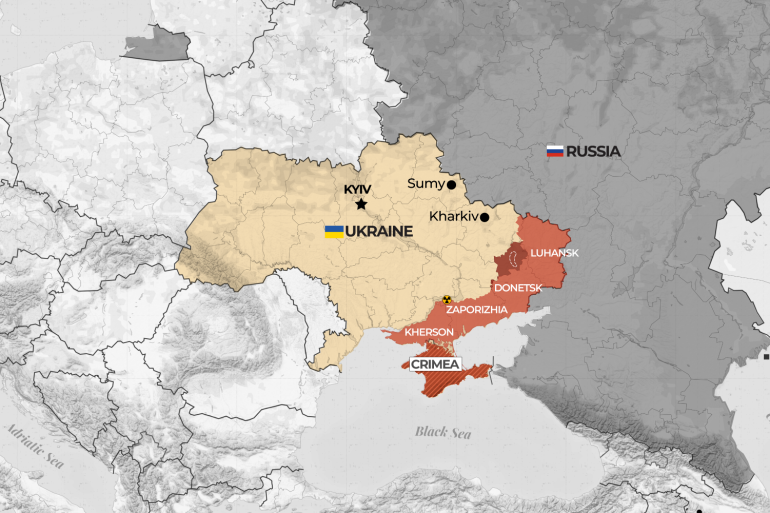
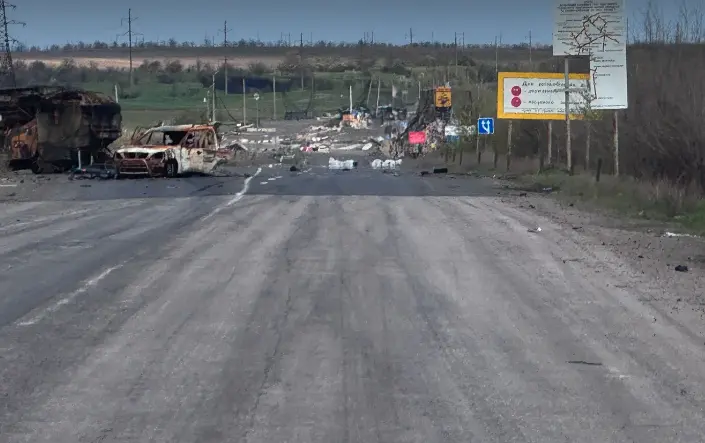
For more than a year, Pokrovsk dominated the headlines as Russia's most coveted prize in eastern Ukraine. Western analysts warned that its fall could unravel Ukrainian defenses across the entire Donetsk axis. Russia committed enormous combat power to its reduction. The city was shelled, then infiltrated, then fought over block by block until most of its 60,000 pre-war residents had long since fled to somewhere safer.
In late 2025, Russia captured the bulk of Pokrovsk and neighboring Myrnohrad. The expected collapse did not follow. Ukraine shifted its defensive geometry back into the fortress belt. Russian advances west of Pokrovsk largely stalled. The city that was supposed to crack the east open had instead become another ruin absorbing Russian manpower at staggering cost, advancing per CSIS data at an average of roughly 70 meters per day over two years of fighting. For a broader picture of how Russia's manpower crisis has developed alongside these advances, see our full January-May 2026 war analysis.
Now, in May 2026, a new and grimmer chapter is unfolding. Ukrainian troops still clinging to positions in northern Pokrovsk and around Hryshyne are fighting under conditions that Ukraine's own military has described in unusually blunt terms: nearly cut off, resupplied only by air drone, forced to move on foot for three days through territory blanketed by Russian surveillance and strike drones, in what one Ukrainian military statement called "hide-and-seek with death."
What Ukraine's 7th Corps Said and What It Means
On May 18, Ukraine's 7th Rapid Response Corps published a detailed battlefield assessment on X that offered a sobering picture of conditions north of Pokrovsk. The statement was notable for its candor. Ukrainian military communications rarely describe front-line conditions in such specific and unflinching terms.
According to the corps, Russian forces control the high ground and the city's buildings, while deploying surveillance and electronic warfare systems that dominate the skies over northern Pokrovsk and the nearby settlement of Hryshyne. Russian drone operators launch strikes from industrial areas inside Pokrovsk and mining sites near Rodynske, creating what the corps described as a roughly 25-kilometer kill zone north of the city.
Within that kill zone, armored vehicles can only move through limited sections of route sheltered under anti-drone mesh tunnels, which are themselves regularly targeted by Russian strikes. Unmanned ground vehicles sent to resupply positions are immediately destroyed by Russian first-person-view drones. The result is that troops are dropped off roughly 15 kilometers from the front and must then walk the remaining distance, not in a straight line but around 26 kilometers through tree lines and ravines to avoid detection. That journey can take up to three days.
Ukrainian infantry entering Pokrovsk, the corps said, often does so without armored support or reserves, while being "constantly detected and targeted by omnipresent drones whose launch points he cannot see."
What Analysts Say: "Should Have Been Withdrawn Months Ago"
Pasi Paroinen, an analyst with the Finland-based Black Bird Group, told the Kyiv Independent that the positions described by the 7th Corps should have been withdrawn long before now.
Paroinen added that Russian forces have already practically gained control over Pokrovsk and Myrnohrad, though they have struggled to exploit those gains and push further west. Russian attempts to infiltrate westward past Pokrovsk toward Dobropillia and nearby villages including Hryshyne have yielded only very small incremental gains against heavily fortified Ukrainian positions. ISW's May 16 assessment confirmed that Russian forces continued ground assaults in the Pokrovsk direction and Dobropillia tactical area but did not advance.
Paroinen's broader assessment was that the last three to three-and-a-half months have been "really painful for Russians," and that the kill zone around Pokrovsk is, to a large extent, already working as a defensive instrument. This is not because of the isolated holdout positions the 7th Corps described, but because of the strong Ukrainian defensive lines surrounding the city that make further Russian advance costly and slow.
The Drone War Has Rewritten the Logistics of Combat
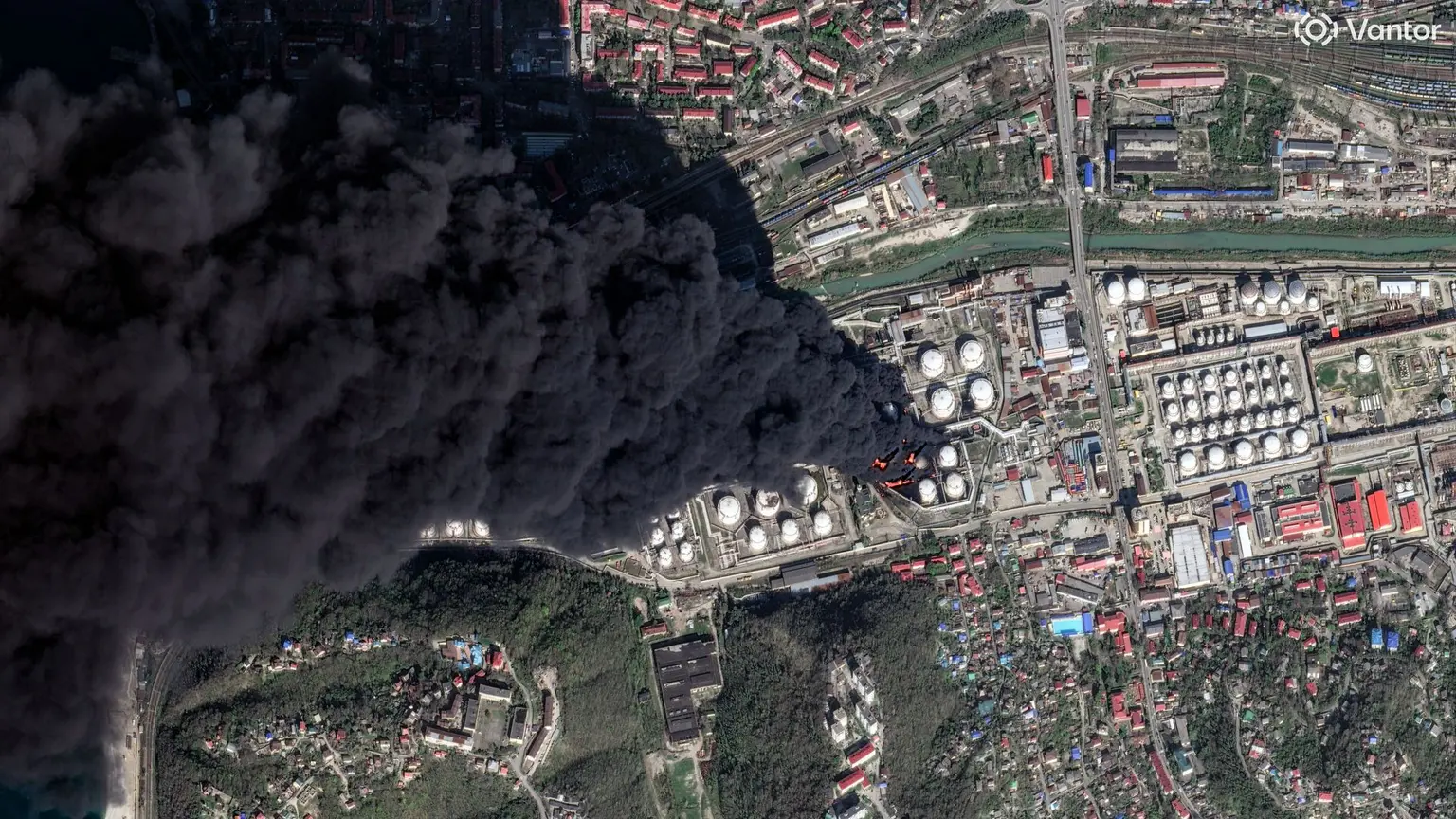
The situation in Pokrovsk is not unique. It is the most extreme current expression of a transformation in warfare that has been accelerating across the entire front. Russian drone superiority in key sectors has turned logistics, resupply, and troop rotation into some of the most dangerous activities on the battlefield. Ukraine has responded by dramatically escalating its own long-range drone campaign against Russian territory, a strategy documented in our analysis of Ukraine's assault on Russia's energy backbone.
The 12th Azov Brigade, operating on a 12 to 13 kilometer defensive line in the Hryshyne-Rodynske sector, has responded by dramatically expanding its unmanned systems battalion. In April 2026, the sector recorded 42 Russian assault attempts in a single day, none of which succeeded in breaching Ukrainian positions. The brigade's battalion commander told the New Voice of Ukraine that ground robotic systems, deployed in combat for the first time in early 2026, had already been used to destroy a key passage across an anti-tank ditch that Russian forces had been using to advance.
Heavy Russian electronic warfare saturation in the Pokrovsk-Myrnohrad sector has forced Ukrainian units to constantly adapt frequencies and tactics. ISW's May 16 assessment noted that Russian forces have also expanded a similar kill zone toward Kramatorsk, with one Ukrainian brigade spokesperson reporting that Russian forces were extending drone strike reach deeper into the Ukrainian rear, using Molniya fixed-wing FPV drones for longer-range strikes and accumulating equipment near occupied Bakhmut, potentially in preparation for future operations against the fortress belt.
The Larger Picture: What Pokrovsk's Fall Actually Meant
When Western analysts warned about Pokrovsk, they were right about its importance as a logistics hub and right that its loss would complicate Ukrainian operations in Donetsk. They were less right about what would follow. The operational collapse that was feared did not materialize.
SOFREP's May 2026 analysis put it plainly: Russia can still destroy urban centers and it can still advance, but it cannot convert destruction into decisive maneuver. Taking another ruined city only matters if it generates operational collapse afterward. So far, Russia has repeatedly failed at that conversion. Its commanders continue to tell the Kremlin they can seize the Donbas by autumn. The battlefield says otherwise.
Russia's top 2026 battlefield priority, according to sources cited by RBC-Ukraine and reported by the Kyiv Post in January 2026, was the full capture of Donetsk Oblast, with an internal Kremlin deadline of April 1, 2026. That deadline has come and gone. ISW assessed in April 2026 that Russia lacks the capability to breach the Donetsk fortress belt in 2026 at all, and that even under circumstances favorable to Moscow, capturing the fortress cities could not happen before late 2027 or early 2028. Whether this mounting pressure is shifting Putin's calculus is a question we examined separately in our analysis of signs of Kremlin war fatigue.
The Fortress Belt: What Russia Actually Needs to Win
The reason Pokrovsk mattered, and the reason the battle for Hryshyne and the northern approaches still matters, is what lies beyond it. The Donetsk fortress belt is a chain of four Soviet-era industrial cities: Kramatorsk, Sloviansk, Druzhkivka, and Kostiantynivka. They form Ukraine's last major defensive line in the east, built up over a decade, anchored by layered logistics hubs, fortified positions, and interior lines that allow Ukrainian forces to shift laterally under pressure.
Ukraine's 7th Rapid Response Corps, in the same May 18 assessment that described the dire conditions in northern Pokrovsk, also offered its own analysis of the longer horizon: "Even under these conditions, the capture of the entire Donetsk region remains a matter of years for Russia. Fighting for the Sloviansk-Kramatorsk agglomeration could last up to three years and come at the cost of massive losses for the invading forces."
Natural obstacles reinforce this assessment. The northern flank of the fortress belt is protected by the Siverskyi Donets and Oskil rivers, leaving Russian forces with only a frontal attack option from the east in that sector. The terrain throughout the belt favors defense. Russia retains the ability to advance incrementally. It does not currently possess the conditions required to convert those advances into a decisive collapse of Ukrainian lines.
Assessment: Three Days of Hide-and-Seek, Years of War
The image of Ukrainian infantrymen spending three days moving through ravines and tree lines, avoiding drone observation, skirting artillery ranging fire, carrying their own supplies because no vehicle can survive the approach, captures something essential about how this war is being fought in May 2026. It is a war of accumulation, not breakthroughs. Of meters, not miles. Of survival, not maneuver.
Russia is grinding forward. The cost at Pokrovsk in particular has been staggering: 316 casualties per square kilometer captured in the first quarter of 2026 alone, nearly three times the rate of the previous year. The drone kill zone extends 25 kilometers from the front. The fortress belt lies further still. Between the isolated Ukrainian holdouts in northern Pokrovsk and anything resembling a decisive Russian victory in Donetsk, there are years of this, years of hide-and-seek, measured in tree lines and ravines and the distance a man can walk in three days without being seen from the sky.
Frequently Asked Questions
Ukrainian troops in northern Pokrovsk are almost cut off, supplied only by drone, and must travel 26 kilometers on foot through Russian drone kill zones to reach positions just 15 kilometers from the front. Russia effectively controls the high ground and city buildings, dominating drone warfare in the area, according to Ukraine's 7th Rapid Response Corps.
Pokrovsk was Ukraine's primary logistics hub for the Donetsk axis, sitting at the intersection of major rail and highway routes. Its fall opens the approaches toward the Donetsk fortress belt, specifically the cities of Kramatorsk, Sloviansk, Druzhkivka, and Kostiantynivka, which represent Ukraine's last major defensive line in the east.
Russia captured the bulk of Pokrovsk and neighboring Myrnohrad after more than a year of grinding combat in late 2025, but the expected operational breakthrough never materialized. Ukrainian forces shifted their defensive geometry back into the fortress belt and Russian advances west of Pokrovsk have largely stalled since.
The Donetsk fortress belt is a chain of four Soviet-era industrial cities, namely Kramatorsk, Sloviansk, Druzhkivka, and Kostiantynivka, that form Ukraine's strongest remaining defensive line in the east. ISW assessed in April 2026 that Russia lacks the capability to breach the fortress belt in 2026, and that even under favorable conditions it could not do so before late 2027 or early 2028.
Kai Tutor | The Societal News Team
Follow Us!
It helps decentralize our presence across the web and it's completely free!
Instagram ➤
Youtube ➤
Substack ➤
X.com ➤
Telegram ➤
TikTok ➤