The Phantom Billions: A Case for Why the World Has Fewer People Than We Think
8.2 billion is not a count. It is a model built on incomplete data, political incentives to overreport, and compounding demographic errors. A deep investigation into whether the world's most cited statistic is wrong.
The Number Everyone Cites and Nobody Has Counted
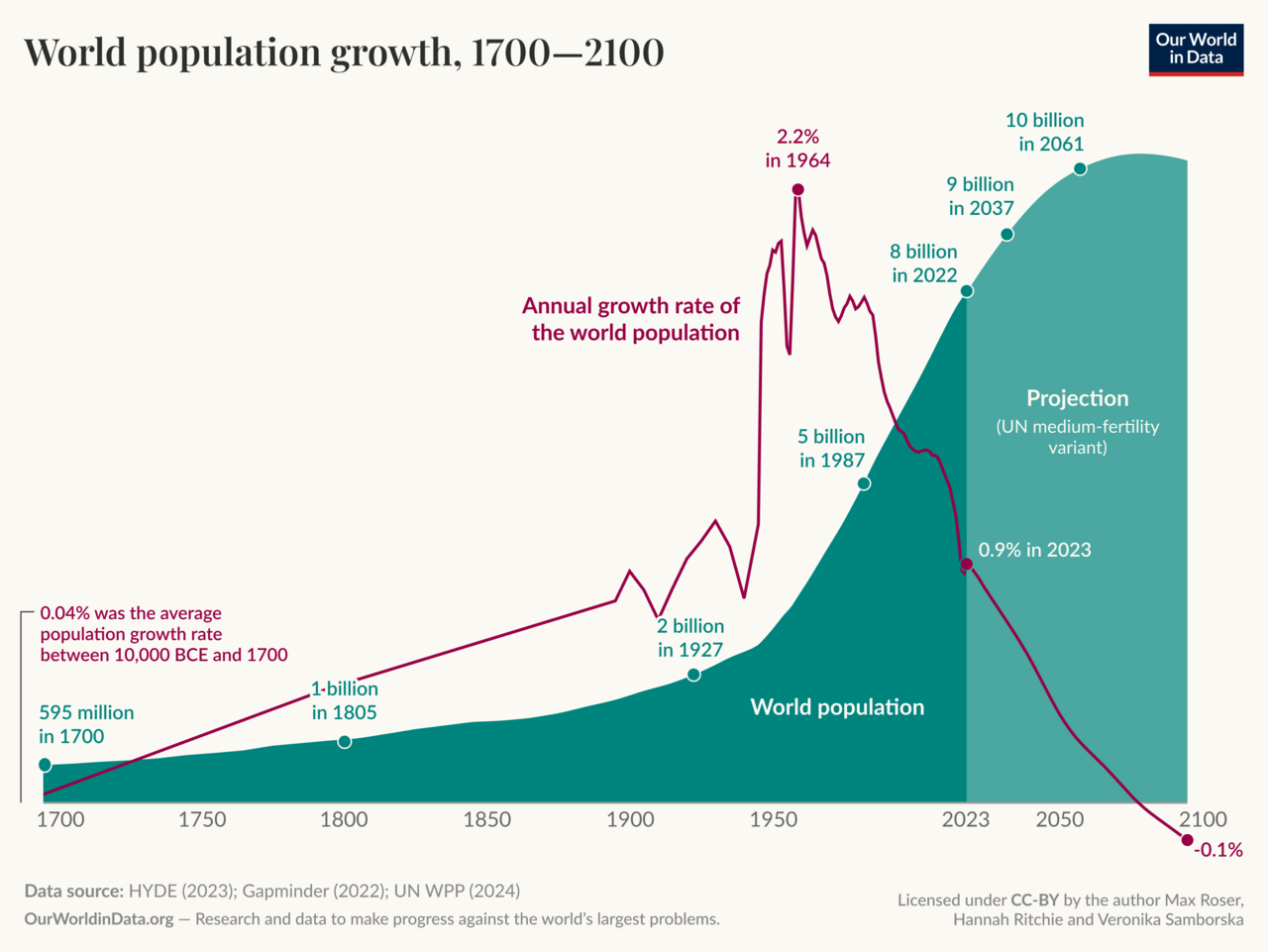
The number 8.2 billion gets repeated so often and with such confidence that it has taken on the quality of established fact. News anchors cite it. UN reports are built on it. Climate models, food security projections, and economic development strategies all flow from it. Yet no one has ever actually counted 8.2 billion people. That number is a model, an estimate assembled from census data, birth and death registrations, satellite imagery, and demographic extrapolations, each with its own margin of error, its own political pressures, and its own structural blind spots.
When you begin pulling at those threads, a serious question emerges: what if the real figure is substantially lower? This is not a fringe position. It is a question taken seriously by demographers, data scientists, and independent researchers across multiple continents, and the evidence they have assembled is both credible and deeply unsettling for anyone who assumes our foundational statistics are solid.
The Architecture of a Global Count
Before examining the case for a lower number, it is worth understanding how that number is produced. No global census exists. The United Nations Population Division compiles estimates by aggregating data from national governments, which in turn collect it through decennial or irregular censuses, civil registration systems for births and deaths, and periodic surveys. The UN then applies demographic models to fill gaps, project forward from old data, and smooth inconsistencies.
The output of this system is not a count. It is an estimate of an estimate, built on incomplete inputs, processed through models that assume their own assumptions are correct, and then cited globally as though it were a measured fact.
China's Missing Millions
The single most consequential question in global demography is the accuracy of China's population figures. China's official population stood at 1.404 billion in 2025, with a fertility rate of 0.93 children per woman, the lowest recorded birthrate since at least the proclamation of the People's Republic of China in 1949. But the debate is not about the current trajectory. It is about whether the baseline figure was ever accurate.
Yi Fuxian, an obstetrician at the University of Wisconsin-Madison who conducts demography research, has argued that China's censuses are seriously overestimated in an effort to match official projections. He cited the Chinese statistics bureau's earlier reports of approximately 203 million births between 1991 and 2000 and 79 million deaths, putting its population estimate at 1.27 billion for the turn of the century. When the 2000 census came up short of projections, officials launched a campaign to add tens of millions of missing people, bringing the official total up to match prior estimates.
Yi's research suggested that China's actual population may have been 1.29 billion at a point when official figures put it at 1.37 billion, a gap of roughly 90 million people, comparable to the combined populations of Germany and Belgium. If that discrepancy has compounded over subsequent decades, the true undercount could be considerably larger today.
The fertility data reinforces this concern. The UN estimates China's fertility rate fell to 1.01 in 2024, approaching the rates of Singapore at 0.95, Taiwan at 0.86, South Korea at 0.73, and Hong Kong at 0.73. These are among the lowest fertility rates ever recorded in human history. If those rates have been operative for decades longer than officially acknowledged, the cumulative effect on population would be enormous. A country with a fertility rate well below one for a generation produces far fewer people than the official models suggest.
Nigeria and the Political Economy of Overcounting
China's situation involves a government that had structural reasons to both under and overcount different segments of its population simultaneously. Nigeria's situation is arguably more straightforward, and perhaps more alarming: a country where population figures are openly acknowledged as political constructs.
The overcount in Nigeria is likely driven by political and financial incentives embedded in how the country distributes revenue. Nigeria's oil proceeds are distributed to provinces in proportion to their reported populations. This arrangement directly incentivizes provinces to overreport fertility rates, undercount child mortality, undercount emigration, and inflate population totals. Nigeria has not conducted a census since 2006, and a planned 2023 census was postponed indefinitely.
Independent analysis suggests Nigeria's actual population may be closer to 170 to 180 million rather than the official 220 to 230 million figure. Some analysts using mobile phone subscriber data and other proxy indicators have estimated the real figure may fall around 130 million, reasoning that if nearly every Nigerian aged 13 and above has a phone and the subscriber base implies roughly 100 million adult users, the population math simply does not reach 220 million.
Nigeria matters for the global picture because it is the largest country in Africa and represents roughly a fifth of the entire continent's estimated population. If Nigeria's numbers are significantly inflated, the models showing Africa driving the next wave of global population growth could be based on fundamentally wrong starting points. The downstream effects on global fertility projections, aid allocation formulas, and development policy would be substantial. The same pattern of official statistics obscuring a different reality appears in how economic data routinely understates the real cost of living for ordinary people.
The Census Methodology Problem
Even in countries with genuine intent to count accurately, the tools available produce results riddled with error. The 2022 South African census set an unfortunate record: the highest undercount ever reported to the United Nations Population Division, with a 31% national undercount identified by a Post-Enumeration Survey. Half of this excess was attributable to overestimates of specific population groups, where estimated undercounts in some groups exceeded 60%. The data were deemed by independent experts to contain numerous anomalies inconsistent with prior censuses and vital registration data.
But South Africa at least conducted a census and attempted verification. Many countries do not have even that. Many African countries do not have well-established vital registration systems, and where these are available they are incomplete and not suitable for meaningful demographic analysis. Countries in these regions have had to depend on censuses conducted every ten years or health surveys conducted every five years, both of which carry significant drawbacks including recall bias that can result in the systematic underestimation of vital rates.
Death Registration and the Invisible Toll
If births are counted imperfectly, the situation with deaths is considerably worse in large parts of the world, and this has direct implications for whether total population figures are inflated. Living populations are calculated as births minus deaths over time. Systematically missing deaths means systematically overstating how many people are still alive.
The COVID pandemic provided a rare natural experiment in measuring the gap between reported and actual deaths. Researchers writing in The Lancet estimated that the global COVID death toll was closer to 18.2 million, more than three times higher than the 5.9 million officially recorded across 2020 and 2021. The highest estimated excess death counts occurred in India at 4.1 million, the United States at 1.1 million, Russia at 1.1 million, Mexico at 798,000, Brazil at 792,000, Indonesia at 736,000, and Pakistan at 664,000.
This is not a marginal concern. It means that for some of the world's most populous countries, the mortality data underlying population projections may be off by an order of magnitude. Every living population is a product of births minus deaths over time. Systematically missing deaths means systematically overstating survivors.
The Satellite Data Problem
Modern demographers increasingly rely on satellite imagery and remote sensing to supplement or replace traditional census methods. The appeal is obvious: satellites can theoretically see everywhere, and nighttime light intensity has become a widely used proxy for human presence and economic activity. But this approach has severe limitations.
Some population models depend on detecting nighttime lights from satellite images, which creates a significant bias in regions with limited electricity access. A rural community that generates no nighttime light may be entirely invisible to these models. Conversely, an area with bright industrial or mining activity might appear heavily populated when the actual resident population is small.
The Data Feedback Loop
One of the most structurally concerning aspects of global population statistics is how insulated they are from external verification. The UN draws on national data. National governments draw on their own censuses. Researchers validating population figures frequently use other UN or World Bank datasets that ultimately trace back to the same national government sources. Independent checks are rare, expensive, and methodologically contested.
Many countries in Africa, Asia, and Latin America had inaccurate population estimates in their base years when demographic time-series data began. If the population in the start year is wrong, the projected population could be very wrong even if you make reasonable assumptions about changes in fertility and mortality trends thereafter. This is the compounding error problem. A wrong baseline number, run forward through decades of assumed growth rates, produces a wrong current figure. The projection looks internally consistent because the growth rates were applied correctly. But if the foundation was off, everything built on it is off too, and the error grows with every passing year.
The Geopolitics of Not Knowing
It is worth asking why the question of whether the world has fewer people than we think has not received more serious institutional attention. Part of the answer is that the errors are genuinely difficult to detect from inside the system. But part of the answer involves incentives that discourage finding out.
Population figures are tied directly to the distribution of national resources in many countries and in international institutions. Nations with larger reported populations receive more development aid, more representation in global bodies, and more attention from multilateral organizations. The incentive structure rewards reporting more people, not fewer, and penalizes the honest admission that your data is unreliable. Within countries, programs for school children, healthcare infrastructure, housing investment, and veterans' services are all allocated on the basis of population counts. These are zero-sum distributions, and the institutions administering them have limited appetite for finding out their baseline numbers are wrong.
Researchers who challenge official figures also face significant professional friction. Demography is a field where the official data is also the baseline data, making independent verification structurally difficult. Challenging a government's census is often treated as a political act rather than a scientific one. This dynamic, where institutional incentives override the search for accuracy, mirrors what we documented in our investigation into how ghost jobs distort labor market data that the Federal Reserve uses to set interest rates.
What a Lower Number Would Mean
If the true global population is meaningfully below 8.2 billion, the implications reach across virtually every domain of global policy. Climate projections built on population-driven consumption assumptions would need revision. Food security modeling would require new foundations. Projections of Africa's demographic dividend, which many development economists cite as a major driver of 21st-century growth, might be significantly overstated.
More immediately, the policy responses to high population growth in regions like West Africa and South Asia may be solving a problem whose dimensions have been badly measured. If Nigeria has 130 million people rather than 220 million, the calculations for how many hospitals, schools, and power plants it needs change substantially. If China's working-age population is smaller than acknowledged, its economic trajectory and pension crisis are both more severe than current planning assumes.
The moral dimension is also significant. Billions of dollars in international development aid, humanitarian assistance, and public health spending are distributed based on population figures. Systematic overcounting in some regions means systematic misallocation of those resources, flowing away from communities whose needs may be greater and whose counts are more accurate.
The Honest Assessment
None of this proves that the real global population is dramatically lower than 8.2 billion. The case for undercounting in rural and remote areas is also real and points in the opposite direction for some populations. The truth is that errors exist in both directions, unevenly distributed across countries and demographic groups.
But the case for overcounting is concentrated in precisely the places that carry the most statistical weight. China, with over a billion people in official counts, has documented structural incentives for inflated figures and a fertility history that almost certainly was worse than acknowledged for longer than admitted. Nigeria, Africa's largest country, is operating entirely on extrapolations from a census that its own administrators publicly call guesswork. Dozens of other developing nations have death registration rates so low that the mortality side of the population equation is essentially modeled fiction. And the COVID excess mortality data showed, with unusual clarity, that the countries most likely to misreport death counts are among the most populous on earth.
The global population figure of 8.2 billion is not a measured fact. It is a modeled estimate built on data that is incomplete in ways that are not random. The structural biases built into census methodology, political reporting incentives, satellite proxy measurements, and compounding demographic models all tend, in aggregate, toward overstating populations in high-growth regions that happen to be the least equipped to count accurately. Whether the true figure is 7.5 billion or 7.8 billion or something closer to the official number, we genuinely do not know. And that uncertainty, spanning hundreds of millions of human lives, should be treated as the serious epistemic problem it actually is.
Frequently Asked Questions
Is the world population of 8.2 billion accurate?
The 8.2 billion figure is not a measured count. It is a modeled estimate assembled from national censuses, birth and death registrations, satellite imagery, and demographic extrapolations. Africa's death registration rate is only 10%, meaning the mortality side of its population equation is largely modeled fiction. China has documented structural incentives for inflating census figures. Nigeria's own census administrators have publicly called their figures guesstimates. The structural biases in census methodology tend to overstate populations in high-growth regions that are the least equipped to count accurately.
How much might China's population be overcounted?
Demographer Yi Fuxian at the University of Wisconsin-Madison has argued China's population may have been overcounted by roughly 90 million at a point when official figures put it at 1.37 billion. He documented that when China's 2000 census came up short of projections, officials launched a campaign to add tens of millions of missing people to match prior estimates. China's one-child policy created perverse incentives: families underreported births to avoid punishment while administrators inflated totals to meet national targets.
Why might Nigeria's population be exaggerated?
Nigeria's former census chief Festus Odimegwu publicly stated: "These figures are just guesstimates. Nobody knows whether the population is 120 million, 150 million, or 200 million." Nigeria's oil revenues are distributed to provinces proportionally by reported population, directly incentivizing overreporting. Nigeria has not conducted a census since 2006, and its current official figure of over 220 million is built entirely on extrapolations from that disputed baseline. Independent analysts estimate the real population may be closer to 130 to 180 million.
How did COVID reveal problems with global death counts?
Researchers in The Lancet estimated the global COVID death toll was approximately 18.2 million, more than three times the 5.9 million officially recorded. Some countries showed extreme undercount ratios: Tajikistan underreported deaths by a factor of 100, Nicaragua by 51 times, Uzbekistan by 31 times, and Egypt by 13 times. Because living populations are calculated as births minus deaths over time, systematically missing deaths means systematically overstating how many people are still alive.
What would it mean if the world population were significantly lower than 8.2 billion?
Climate projections built on population-driven consumption assumptions would need revision. Food security modeling would require new foundations. Africa's demographic dividend, cited as a major 21st-century growth driver, might be overstated. If Nigeria has 130 million people rather than 220 million, calculations for how many hospitals, schools, and power plants it needs change substantially. Billions of dollars in international development aid distributed based on population figures would need reallocation, and China's pension crisis and economic trajectory would both be more severe than current planning assumes.
Kai Tutor | The Societal News Team
Follow Us!
It helps decentralize our presence across the web and it's completely free!
Instagram ➤
Youtube ➤
Substack ➤
X.com ➤
Telegram ➤
TikTok ➤
Sources: WHO Global Health Observatory, Health information systems capacity assessment | Newsweek, "China Is Hiding A Population Secret, Analyst Claims," July 2024 | Bank of Finland Institute for Emerging Economies (BOFIT), China population decline, February 2025 | Africa Check, Factsheet: Nigeria's population figures | Effective Altruism Forum, "Nigeria's Missing 50 Million People," November 2024 | South African Journal of Science, South Africa 2022 census accuracy problems, July 2024 | U.S. Census Bureau, 2020 Census coverage errors and Post-Enumeration Survey | Kobak et al., Tracking excess mortality across countries during COVID-19, eLife | CIDRAP / The Lancet, Global COVID-19 deaths may be 3 times higher than recorded | WHO, The true death toll of COVID-19: estimating global excess mortality | Ioannidis et al., Flaws and uncertainties in pandemic global excess death calculations, PMC