The Phantom Workforce: How America's Ghost Job Epidemic Is Rigging the Hiring System
An in-depth investigation into fake job postings by corporations, tech firms, and the U.S. government itself. One in four jobs you apply to right now is probably not real.
The Job That Was Never There
You spend four hours tailoring your resume. You craft a thoughtful cover letter. You hit submit, then refresh your inbox daily for three weeks. Nothing. Not a rejection, not an auto-reply. The position just sits there on the job board, still marked "Active." Eventually you move on, never knowing the truth: the job was never real to begin with.
This is not an edge case. It is now one of the defining features of the American job market. Welcome to the era of ghost jobs, fake, inactive, or already-filled job postings that real companies list publicly with no genuine intent to hire anytime soon. The practice has quietly metastasized from a corporate quirk into a systemic labor market distortion affecting millions of workers, skewing Federal Reserve data, and extending into the halls of the United States government itself.
How Big Is the Problem?
The numbers are staggering, and they have only grown worse in recent years. 40% of companies posted at least one fake job listing in 2024, according to a ResumeBuilder survey of over 1,600 hiring managers. 3 in 10 companies currently have a ghost job posted right now. 81% of recruiters admit their employers have posted ghost jobs, positions that were either fake or already filled, according to a 2024 MyPerfectResume survey.
27.4% of all active U.S. job listings on LinkedIn are estimated to be ghost jobs, based on a 2026 analysis by ResumeUp.AI of postings that had been active longer than a normal hiring cycle. The hires-per-posting ratio has essentially halved since 2019. In that year there were 8 hires for every 10 postings. By 2024 that number had dropped to just 4 per 10.
Who Is Doing This and Why
Ghost jobs are not all created equal. Researchers have identified several distinct categories, each driven by a different institutional motive.
Talent Pipeline Hoarding
The most common rationale: companies want resumes on file for a position they might need to fill in the future, even if no headcount has been approved today. This is the corporate equivalent of window shopping, browsing talent without any budget to buy. A ResumeBuilder survey found this was the primary stated reason hiring managers gave for posting fake listings.
Performing Growth for Investors and Employees
During earnings season, a company's list of open roles signals expansion to investors, analysts, and the press. A long column of "We're hiring!" posts, even if none are being actively filled, communicates momentum. Internally it also serves a more cynical function: pacifying overworked employees by implying that help is on the way.
Salary Benchmarking and Competitor Intelligence
Some companies post fake listings expressly to see what candidates at competing firms are making, what skill sets are circulating in the market, and what salary expectations look like right now, all without spending a dollar on recruiting fees or actually hiring anyone.
The Internal Hire Cover Story
In some industries and organizations, particularly those with union contracts, DEI mandates, or formal HR policies, managers are required to post a role publicly before filling it, even when they have already decided on an internal candidate. The external application process is, as one researcher put it, a procedural checkbox. Federal contractors and many large corporations operate this way. You apply, your application gets routed, and somewhere in the building, someone who already had the job informally is being onboarded.
The AI-Assisted Phantom Factory
Perhaps the most unsettling recent development: nearly 1 in 5 employers now use AI to automate job postings for roles that are currently inactive. Platforms auto-post, auto-renew, and auto-refresh listings with minimal human oversight. The result is an entire ecosystem of listings that exist primarily because an algorithm decided it was time to post them again, not because anyone is actually hiring. This connects to a broader pattern of AI being used to create the appearance of activity while delivering none of the substance, something we have also documented in how institutional actors use performative signals to manufacture confidence.
The Government's Ghost Job Problem
The private sector does not have a monopoly on this practice. The United States federal government, through its official hiring portal USAJOBS, has its own structural ghost job problem, one that is baked directly into law.
Under federal civil service rules, agencies filling competitive-service positions are required by law to post vacancies publicly on USAJOBS whenever they seek candidates from outside their own workforce for positions lasting more than 120 days. This sounds like a transparency measure, and in principle it is. But in practice it creates a peculiar phenomenon: thousands of job postings that look open to the public, when in reality an internal candidate is already the presumptive hire.
The old Rule of Three, a long-standing federal hiring framework under which agencies could only select from the top three ranked applicants, was phased out around 2010 and formally eliminated by the Office of Personnel Management in a September 2025 final rule. Its replacement, the Rule of Many, gives hiring managers more flexibility in candidate selection. But the underlying issue remains: the requirement to post publicly, combined with bureaucratic timelines that stretch months, means federal job listings stay active long after a selection has effectively been made.
How Ghost Jobs Break the Whole Economy
Ghost jobs do not just hurt individual job seekers. They introduce noise into data that drives national economic policy.
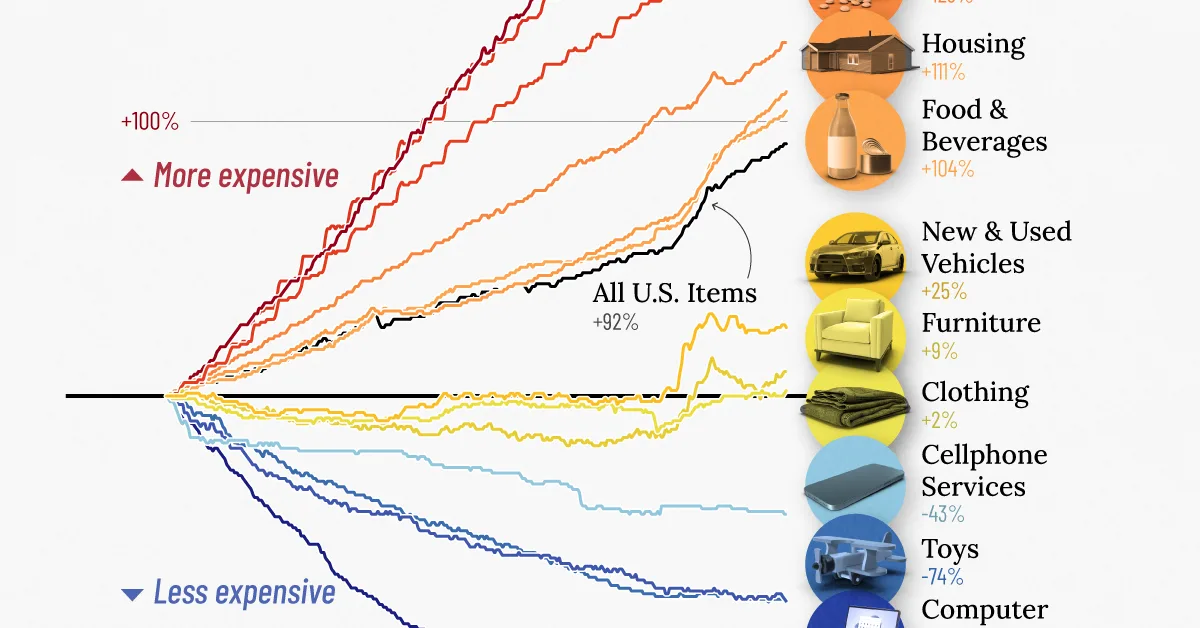
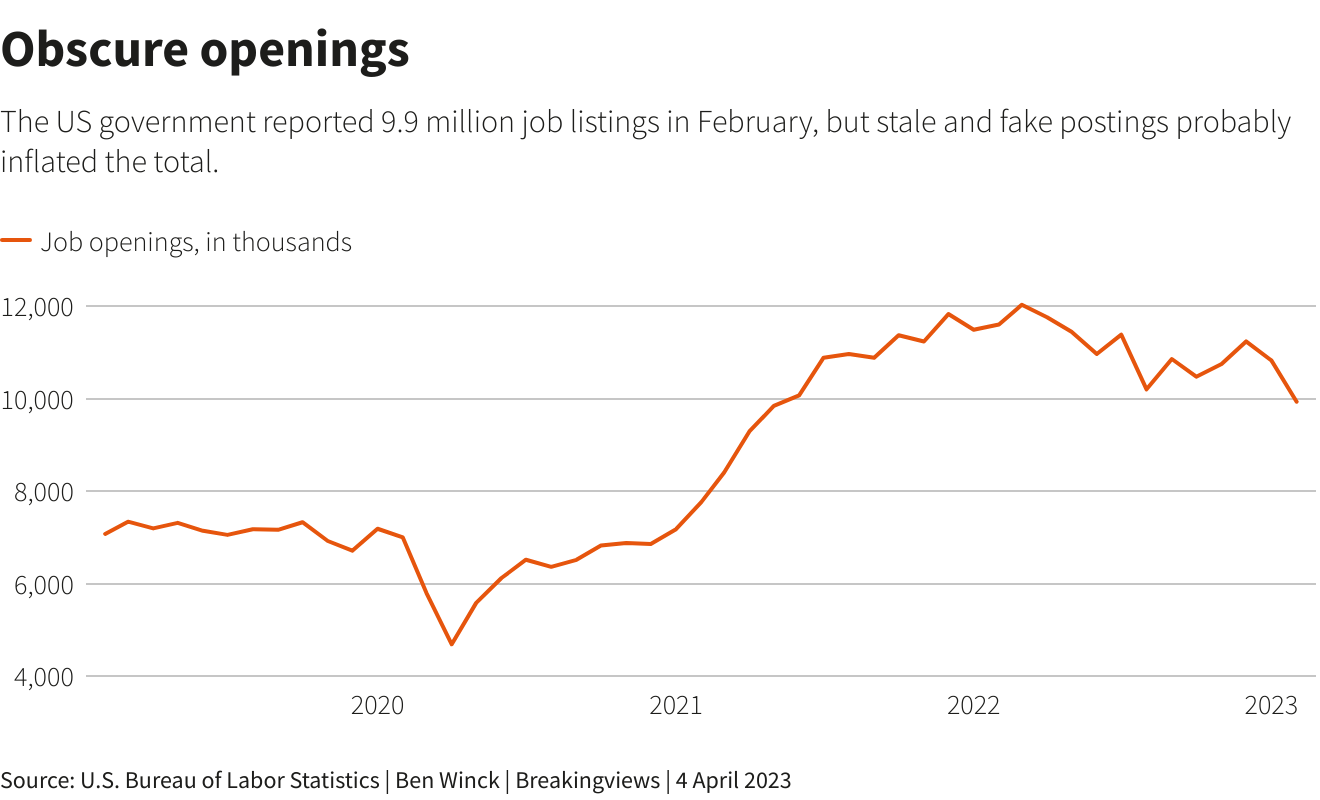
The Bureau of Labor Statistics measures job openings through the Job Openings and Labor Turnover Survey, known as JOLTS. This data is used by the Federal Reserve to assess labor market tightness, inflation pressure, and interest rate decisions. When millions of job postings represent positions nobody intends to fill, JOLTS overstates actual demand for workers. The same dynamic is at play in how official economic data routinely fails to capture lived reality, as we examined in our analysis of how inflation figures are built to undercount the real cost of living.
More than 90% of job seekers surveyed by Clarify Capital believe ghost jobs inflate perceptions of a healthy job market. They are not wrong. They are applying for jobs in a market that looks healthier on paper than it is in reality.
The Human Cost: Time, Money, and Mental Health
Every ghost job application extracts real cost from a real person. A 2025 Jobright.ai analysis of 4.4 million applications calculated that the average ghost-job application cycle costs a job seeker 9 hours, time spent researching the company, tailoring materials, writing cover letters, and sometimes attending early-stage interviews, all for a position that was never going to be filled.
Resume Genius career expert Nathan Soto summarized the situation in a 2026 report: "The hiring process today feels unclear, impersonal, and difficult to trust. People are especially tired of being ghosted during their job searches, and the mental strain it puts on job seekers is impossible to ignore."
The Geography of Phantom Work
Ghost jobs are not evenly distributed. A 2026 ResumeUp.AI analysis of LinkedIn data found pronounced geographic clustering. Los Angeles led all cities with an estimated 30.5% ghost job rate, meaning nearly one in three postings in that market are likely fake. Philadelphia came in at 30.1%, and Indianapolis at 27.8%. Corporate services roles saw the highest sector-specific ghost rate, reaching nearly 31% in Q2 2024.
Is Any of This Illegal?
For most of U.S. history the answer has been no. Ghost jobs by legitimate companies are generally legal at the federal level. There are no federal statutes requiring that a job posting represent an active, funded, approved vacancy. The FTC has jurisdiction over deceptive advertising and job scams involving fraudulent actors are actively prosecuted, but the broader practice of real companies posting non-hiring listings operates in a legal gray zone.
That is beginning to change. California passed legislation in March 2025 requiring all private employers to disclose in job postings whether the listing represents an actual vacancy, with violations constituting unfair competition under state law. Kentucky introduced similar legislation in 2025 requiring clear labeling of speculative roles. New Jersey introduced companion bills in both legislative chambers in June 2024. Ontario, Canada enacted a law effective January 2026 that goes even further, requiring companies to inform applicants of their candidacy status and essentially banning both ghost jobs and interview ghosting entirely. The FTC formed a Joint Labor Task Force in February 2025, designating deceptive job advertising as a priority enforcement area.
Meanwhile job platforms are beginning to self-regulate. LinkedIn reports that more than half its listings are now tagged as "verified," indicating confirmed open positions. Greenhouse introduced similar verification badges for clients.
How to Protect Yourself
Until legislation catches up nationally, job seekers need to navigate this landscape strategically. Researchers and career experts point to several reliable signals.
Practical steps that help: search LinkedIn to find the actual hiring manager and reach out directly, ask recruiters whether the headcount is approved and funded before investing significant time, use the timing of the posting as a filter since applications submitted within the first few days have dramatically higher response rates, and prioritize companies where you have a warm internal contact over cold applications to unknown listings.
The Systemic Fix
Individual vigilance is a patch, not a solution. The deeper problem is structural. Ghost jobs flourish because posting a job costs almost nothing while the downside risk to the company is essentially zero. The job seeker bears all the cost in time, money, and emotional energy. Labor market data does not distinguish between genuine openings and performative ones. And there is no federal legal standard requiring any minimum level of hiring intent before a job can be publicly advertised.
A comprehensive fix would require mandatory disclosure of whether postings represent active, funded vacancies, timely removal of filled positions from all platforms, standardized response obligations after interviews, and BLS methodology updates to separate genuine job openings from pipeline-building or vanity listings. Without those changes, the ghost job market will continue to function as a tax on ambition, levied almost entirely on workers who can least afford to pay it.
Conclusion
The ghost job epidemic is not a bug in the American hiring system. For many companies it has become a feature, a way to gather intelligence, signal health, pacify employees, and satisfy procedural requirements, all while committing none of the costs that actual hiring entails. The U.S. government, bound by its own civil service rules, participates in the same theater.
Job seekers, meanwhile, are applying into a void, spending thousands of collective hours every day chasing openings that were never meant to be filled. The data is clear: one in four jobs you see advertised right now is probably not real. The mental health toll is severe. The economic distortion is real. And for most of the country, it remains completely legal.
The phantom workforce is enormous. It just does not get paid, and neither do the people who spent months trying to join it.
Frequently Asked Questions
What is a ghost job?
A ghost job is a fake, inactive, or already-filled job posting that a real company lists publicly with no genuine intent to hire anytime soon. Companies post ghost jobs to build talent pipelines, signal growth to investors, benchmark competitor salaries, satisfy procedural requirements before promoting an internal candidate, or because AI platforms automatically re-post expired listings. An estimated 27% of all active LinkedIn job listings are ghost jobs, and 40% of companies posted at least one fake listing in 2024.
How common are ghost jobs in 2026?
According to a 2026 ResumeUp.AI analysis, 27.4% of all active U.S. job listings on LinkedIn are estimated to be ghost jobs. A 2024 ResumeBuilder survey found 40% of companies posted at least one fake listing that year, and 81% of recruiters admit their employers have posted ghost jobs. The Congressional Research Service formally acknowledged ghost jobs as a recognized labor-market phenomenon in a 2025 brief.
Does the U.S. government post ghost jobs?
Yes. Federal agencies are required by civil service law to post vacancies publicly on USAJOBS for competitive-service positions, even when an internal candidate is already the presumptive hire. Analysis of labor data found that government roles have the highest ghost-job rate of any sector at roughly 60%, compared to around 48% in tech. Federal hiring timelines can stretch six months or longer, meaning postings remain visible long after a selection has effectively been made.
Are ghost jobs illegal?
Ghost jobs by legitimate companies are generally legal at the federal level. There are no federal statutes requiring that a job posting represent an active, funded, approved vacancy. However, California passed legislation in March 2025 requiring employers to disclose whether a listing represents an actual vacancy. Ontario, Canada enacted a law effective January 2026 essentially banning ghost jobs. The FTC designated deceptive job advertising as a priority enforcement area in February 2025.
How do ghost jobs affect the Federal Reserve and interest rates?
Ghost jobs introduce noise into the BLS Job Openings and Labor Turnover Survey (JOLTS), which the Federal Reserve uses to assess labor market tightness and set interest rates. Since the start of 2024, job openings have outnumbered actual hires by more than 2.2 million per month. Korn Ferry senior partner Dan Kaplan said ghost jobs are "muddying the jobs report, making it harder for the Federal Reserve to make decisions and understand what the labor market looks like."
How can I tell if a job posting is a ghost job?
Key red flags: the posting has been live more than 30 to 45 days without an update; the description is vague or copy-pasted; no specific hiring manager contact is provided; the company recently announced layoffs or a hiring freeze; or the requirements are hyper-specific suggesting a pre-selected candidate. Practical steps: find the hiring manager on LinkedIn and reach out directly, ask recruiters whether headcount is approved and funded, and prioritize applications submitted within the first few days of posting.
Kai Tutor | The Societal News Team
Follow Us!
It helps decentralize our presence across the web and it's completely free!
Instagram ➤
Youtube ➤
Substack ➤
X.com ➤
Telegram ➤
TikTok ➤
Sources: ResumeBuilder, Ghost Jobs Survey 2024 | MyPerfectResume, Ghost Jobs Report 2024 | Resume Genius, Ghost Jobs Report 2026 | Clarify Capital, Ghost Jobs Survey | Congressional Research Service, IF12977, Ghost Jobs in the Labor Market, 2025 | Bureau of Labor Statistics, Job Openings and Labor Turnover Survey (JOLTS) | U.S. Office of Personnel Management, Competitive Hiring Guidelines | FTC, Joint Labor Task Force announcement, February 2025 | Jobright.ai, Analysis of 4.4 Million Applications, 2025 | Korn Ferry, Dan Kaplan commentary on JOLTS distortion, 2026 | ResumeUp.AI, LinkedIn Ghost Job Rate Analysis, 2026 | Columbia Law Review, Ghost Jobs and Labor Market Deception, November 2025