The State of Israel and Christianity: Heritage, Alliance, and Consequence
In the land where Christianity began, the historic Christian population is disappearing. Six thousand miles away, evangelical megachurches have become one of Israel's most reliable political assets. Both stories are true simultaneously, and understanding either one requires looking at the other.
Part I: The Vanishing Church of the Holy Land
The numbers are not in serious dispute, even if their causes are fiercely contested. Christians made up roughly 11% of the population of geographical Palestine in 1922. By 1946 that figure had fallen to 8%, reflecting greater relative growth of Jews and Muslims due to immigration. By 1967 Christians in the West Bank stood at just 6%. Today Christians are around 1% of the population in the Palestinian territories and about 1.9% in Israel itself. Israel's Central Bureau of Statistics put the 2022 religious breakdown at Jewish 73.5%, Muslim 18.1%, Christian 1.9%, and Druze 1.6%.
Bethlehem tells the sharpest version of the story. The town where Christianity was born was 86% Christian in 1950. Today that figure has fallen to roughly 10%. Gaza's Christian community, never large, has been gutted: it shrank from about 5,000 people before Hamas took control of the Strip in 2007 to roughly 1,000 by October 2023, and has likely fallen further since.
Two Competing Narratives of Cause
An Israeli think tank, the Jerusalem Center for Security and Foreign Affairs, published a widely cited 2024 report arguing the collapse is driven overwhelmingly by conditions inside Palestinian society and under the Palestinian Authority: violence and coercion to convert to Islam, religious and legal discrimination, desecration of holy sites, and social exclusion. The report cites a 2022 mob attack on the Forefathers Orthodox Church in Beit Sahour and testimony from clergy that Christians feel unprotected because PA police fail to intervene in disputes with Muslim neighbors. This is a genuine current in Palestinian Christian life, echoed by some clergy quoted anonymously, and it deserves to be taken seriously rather than dismissed as propaganda.
But independent polling tells a more layered story about motive. The Palestinian Center for Policy and Survey Research's own survey found that the decline has been attributed first and foremost to emigration among youth, driven by demographic factors like slower population growth and later marriage ages among Christians compared to Muslims, not primarily by sectarian violence. And when Palestinian Christian leadership speaks collectively, they overwhelmingly identify a different central cause: the Israeli occupation itself.
This is not an isolated complaint. Footage of an Israeli man assaulting a French Catholic nun in Jerusalem's Old City in April 2026, pushing her to the ground and kicking her, causing facial bruising and head injuries, prompted the Latin Patriarchate's vicar general, Bishop William Shomali, to call the attack "extremely serious and despicable." In February 2026 the Palestinian Presidential Higher Committee for Church Affairs issued an international appeal describing an unprecedented wave of settler assaults across the West Bank, and also documented how Israeli permit regimes have barred more than 230 Palestinian Christian teachers from the West Bank from reaching their schools in Jerusalem.
Gaza's Churches Under Bombardment
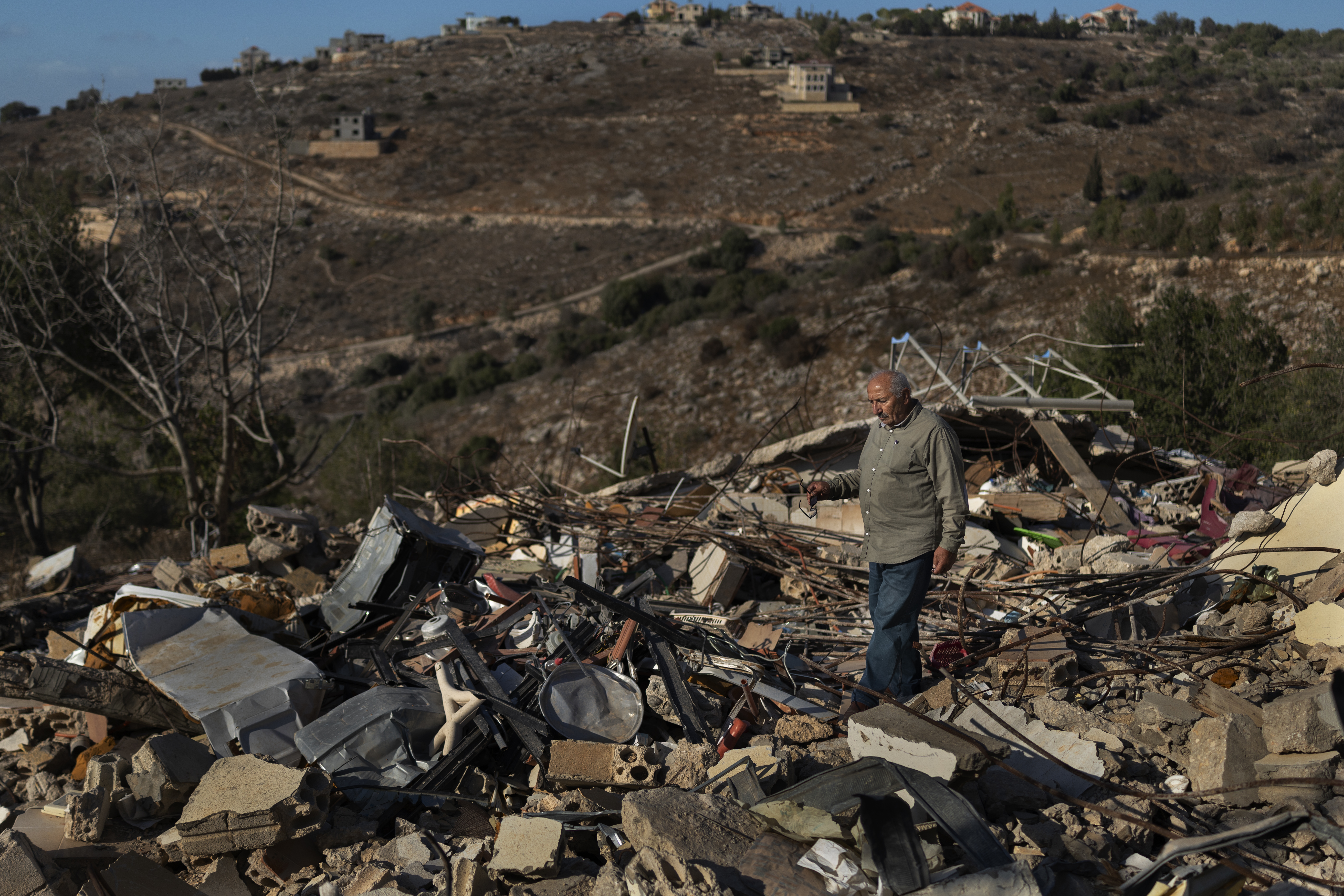
The war since October 2023 has produced the most severe single blows to Gaza's tiny Christian community in generations. On October 19, 2023, an Israeli airstrike hit a building inside the compound of the Church of Saint Porphyrius, a 1,600-year-old Greek Orthodox church believed to be among the oldest still in use anywhere, killing at least 18 civilians sheltering there. The Greek Orthodox Patriarchate of Jerusalem condemned the strike in the strongest terms, saying targeting churches "constitutes a war crime that cannot be ignored." The Israeli military said it had been targeting a nearby command center and that the damage was not intentional.
A Quieter, Longer-Running Dispute: Church Land
Beyond violence and permits lies a decades-long controversy over church property in Jerusalem's Old City. The Greek Orthodox Patriarchate has been repeatedly accused of secretly selling historic land and buildings, including the Petra and Imperial hotels near Jaffa Gate, to the settler organization Ateret Cohanim. Patriarch Irineos I was ousted over a 2004 deal, and secret recordings have raised concerns that Israel effectively pressures each incoming patriarch into selling land by withholding recognition of his appointment until he cooperates. Israel's Supreme Court ultimately upheld the sales. The stakes are large: nearly a quarter of the land in East Jerusalem is reported to be church-owned, including parts of the Mount of Olives, Sheikh Jarrah, and large swaths of the Old City, all areas targeted by the settler movement.
What virtually no one disputes is the trajectory: fewer Christians, less institutional protection, and a shrinking window for reversing course.
Part II: Israel's Alliance With Protestant and Evangelical Christianity
If Christian communities inside Israel and Palestine are contracting, Israel's relationship with Protestant Christianity abroad, especially white American evangelicalism, has become one of the most successful state-building partnerships in modern diplomacy. This dynamic connects directly to broader patterns of how institutions use political and financial influence to shape narratives, as we examined in our analysis of how the Trump family has intertwined personal financial interests with state power.
The Advocacy Infrastructure
Christians United for Israel, founded by Pastor John Hagee in 2006, describes itself as the largest pro-Israel organization in America. By 2023 it claimed over ten million members. CUFI takes credit for helping advance the 21st Century Peace Through Strength Act in spring 2024, which provided $14.3 billion in emergency military aid for Israel, and since October 7, 2023 it and partner ministries have raised over $11 million for Israeli first responders and frontline troops. CUFI is registered as a church with the IRS, meaning it is not required to disclose its finances, a structural feature that limits outside scrutiny of exactly how its money moves.
Formal Parliamentary Ties
The relationship is institutionalized inside Israel's own government. The Knesset Christian Allies Caucus was founded in January 2004 by Israeli politician Yuri Stern specifically to harness Christian support for Israel worldwide. It now has sister caucuses in the US Congress and in parliaments across Uruguay, the Philippines, South Korea, Brazil, South Africa, Japan, Australia, Finland, Italy, Canada, Costa Rica, and Malawi, coordinated through the Israel Allies Foundation, which by 2021 supported 50 pro-Israel parliamentary groups worldwide and takes politicians on paid tours of Israel.
Tourism as Statecraft
The Israeli Ministry of Tourism has treated evangelical visitors as a strategic asset since shortly after the 1967 war. Following Israel's conquest of the West Bank, the government funded research tours for officials to study American Protestants, especially conservative evangelicals who saw the war as fulfillment of biblical prophecy, and the Ministry of Tourism worked with evangelical advisers to market the Holy Land around the motif of Israel as "the land of the Bible."
Money Moving Into Settlements
The financial relationship runs in both directions and does not stop at the internationally recognized Green Line. American evangelical donations have historically flowed to West Bank settlement projects that many observers regard as illegal under international law. Ateret Cohanim, the settler organization at the center of the Old City property disputes, has drawn on American tax-exempt donations, including personal donations from David Friedman, who later served as Trump's ambassador to Israel.
The Theological Engine
None of this financial and political infrastructure would function without an underlying theology. Christian Zionism, rooted largely in dispensationalist premillennial eschatology, holds that the modern state of Israel represents the fulfillment of biblical covenant promises and a necessary precondition for end-times prophecy. This has for decades been mainstream doctrine in large swaths of American evangelicalism, propagated through prophecy conferences, Christian television, and organizations like CUFI and the International Christian Embassy Jerusalem, which was founded in 1980 by evangelicals specifically to protest the closure of foreign embassies in Jerusalem after Israel's Jerusalem Law.
Part III: What the Alliance Has Done to Protestant Christianity
The theological and political costs of this relationship are the subject of an increasingly sharp internal Christian argument, one that has intensified dramatically since October 2023.
The Palestinian Christian Indictment
The most systematic critique comes from Palestinian Christians themselves, most visibly through the Kairos Palestine movement. The original 2009 Kairos Palestine document described the occupation as "a sin against God." In November 2025, a successor document, Kairos Palestine II, subtitled "A Moment of Truth: Faith in a Time of Genocide," escalated the language considerably, describing Christian Zionism as "a theology of racism, colonialism and ethnic supremacy that has produced apartheid, ethnic cleansing and genocide of indigenous people," and calling for an end to religious dialogue with Christian Zionists.
The Reverend Munther Isaac, pastor of the Evangelical Lutheran Christmas Church in Bethlehem and a Kairos Palestine board member who became internationally known for a 2023 Christmas sermon depicting Jesus born amid rubble, has become the most prominent theological voice making this case. Isaac argues that Christian Zionism is more than a theological belief; it functions as what he calls an Imperial Theology and, willingly or not, a political movement built on the idea that Jewish chosenness confers a form of divine entitlement that overrides Palestinian claims to the same land.
Mainline Protestantism's Institutional Break
This critique has moved well beyond Palestinian Christian circles into the governing bodies of major American denominations. The Presbyterian Church USA declared in 2022 that Israel's treatment of Palestinians meets "the international legal definition of apartheid." In 2024 the denomination voted to divest from Israel bonds and passed a resolution formally denouncing Christian Zionism. In 2025 the church went further, voting to divest from Palantir Technologies and GE Aerospace, formally recognizing the war in Gaza as a genocide, lobbying Congress for an arms embargo, and voting 447-21 to affirm Kairos Palestine II. The United Methodist Church became in 2024 the first church in the world to direct its investment managers to avoid the government bonds of countries maintaining prolonged illegal military occupations, naming Israel, Morocco, and Turkey specifically.
A Generational Fracture Inside Evangelicalism Itself
Perhaps the most consequential development for Israel's long-term strategy is happening independent of any church resolution: younger American evangelicals are losing interest in, or turning against, the Christian Zionist framework that shaped their parents. A rigorous multi-year study by Motti Inbari and Kirill Bumin found that support for Israel among evangelicals under 30 dropped from roughly 69% in 2018 to well under half by 2021, with nearly half of young evangelicals surveyed in 2021 supporting neither Israel nor the Palestinians.
The researchers linked this to a broader theological shift away from the premillennial dispensationalism that undergirds Christian Zionism and toward amillennial and postmillennial eschatology, which does not treat the modern state of Israel as prophetically central. Young evangelicals also reported hearing far less about the importance of supporting Israel from their pastors than previous generations did, and showed increasingly positive views of Muslims relative to their elders. Brookings Institution polling corroborates the pattern independently.
Israeli commentators have described the shift as a strategically alarming trend given how central evangelical political support has been to sustaining U.S. military aid commitments. One Israel-aligned organizer warned that Israeli-American relations have been "systematically mismanaged" with respect to evangelicals over the last decade, and noted that a future renegotiation of the multi-year U.S. military aid agreement could face a much less accommodating American demographic. This generational and institutional fracture mirrors the broader pattern we documented in our analysis of how political movements lose their base when their language diverges too far from lived reality.
Both sides in this theological argument accuse the other of substituting politics for theology, and both are, in a sense, correct: theology and politics have become inseparable in this debate, and the consequences, for the shrinking Christian communities of the Holy Land, for U.S. foreign policy, and for the internal coherence of American Christianity, will be felt for decades.
Frequently Asked Questions
Why is the Christian population in the Holy Land declining?
Christians made up roughly 11% of geographical Palestine in 1922. Today they are around 1% in Palestinian territories and 1.9% in Israel. Bethlehem went from 86% Christian in 1950 to roughly 10% today. Israeli think tanks attribute the collapse primarily to conditions inside Palestinian society. Palestinian church leaders and the patriarchs of Jerusalem identify occupation, settler violence with state impunity, permit restrictions, and military operations as the central causes. Independent polling suggests the truth includes both: demographic factors and economic hardship alongside accelerating pressure from settler violence and military bombardment since 2023.
What is Christians United for Israel and how powerful is it?
Christians United for Israel (CUFI) was founded by Pastor John Hagee in 2006 and claims over ten million members as of 2023, making it the largest pro-Israel organization in America. It claims credit for helping advance $14.3 billion in emergency military aid for Israel in 2024, and has raised over $11 million for Israeli first responders and frontline troops since October 7, 2023. CUFI is registered as a church with the IRS, meaning it is not required to disclose its finances.
What happened to churches in Gaza during the war?
On October 19, 2023, an Israeli airstrike struck the compound of the Church of Saint Porphyrius, a 1,600-year-old Greek Orthodox church, killing at least 18 civilians sheltering there. In July 2025, an Israeli tank shell struck the Holy Family Catholic Church in Gaza City, the enclave's only Catholic parish, killing three people and wounding the parish priest. Netanyahu called Pope Leo XIV personally and stated Israel deeply regrets the strike. It was one of the few instances in the war where Israel issued a formal public apology for a specific attack.
What is Christian Zionism and why is it controversial?
Christian Zionism holds that the modern state of Israel represents the fulfillment of biblical covenant promises and a necessary precondition for end-times prophecy. It has been mainstream doctrine in large swaths of American evangelicalism for decades. Critics, led by Palestinian Christians and the Kairos Palestine movement, describe it as "a theology of racism, colonialism and ethnic supremacy." Defenders argue scripture affirms God's covenant with Abraham and the promise of land to the Jewish people, and that critics substitute political ideology for biblical theology.
Are young evangelicals losing support for Israel?
Yes. A multi-year study found that support for Israel among evangelicals under 30 dropped from roughly 69% in 2018 to well under half by 2021. Researchers linked this to a theological shift away from premillennial dispensationalism toward eschatologies that do not treat the modern state of Israel as prophetically central. Young evangelicals also reported hearing far less about supporting Israel from their pastors. Brookings Institution polling corroborates the pattern independently, and Israeli commentators have described the shift as strategically alarming.
Kai Tutor | The Societal News Team
Follow Us!
It helps decentralize our presence across the web and it's completely free!
Instagram ➤
Youtube ➤
Substack ➤
X.com ➤
Telegram ➤
TikTok ➤
Sources: Jerusalem Center for Security and Foreign Affairs, 2024 Report on Palestinian Christians | Palestinian Center for Policy and Survey Research, Survey of Palestinian Christians | Al Jazeera, Patriarchs visit Taybeh, July 2025 | The Times of Israel, Pizzaballa on West Bank Christian situation | NBC News, Holy Family Church strike, July 2025 | Jewish Virtual Library, CUFI membership and activity data | Washington Report on Middle East Affairs, Greek Orthodox Patriarchate land sales | Brookings Institution, Polling on evangelical support for Israel | Religion News Service, Presbyterian Church USA votes 2022-2025 | Kairos Palestine, Kairos Palestine II document, November 2025 | Washington Spectator, FARA registration Show Faith by Works, 2025 | NPR, Evangelical donations to West Bank settlements