The First Family's Fortune: How the Trumps Are Cashing In on the Presidency
From a $500,000 members-only club in Georgetown to $9.7 billion in crypto gains, a deep-dive into every revenue stream the Trump family has built off the White House.
The Scale of It
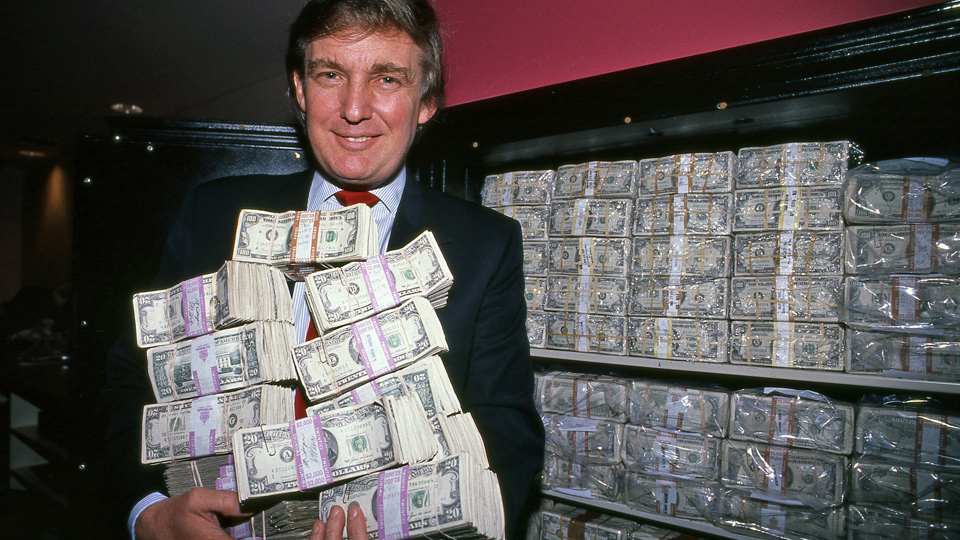
By virtually any historical measure, Trump's second term has produced an unprecedented intertwining of presidential power and personal profit. Democrats on the House Oversight Committee estimate the Trump family has realized approximately $2.25 billion in cash profits since January 2025, rising to as much as $9.7 billion when paper wealth from digital assets is included, with at least $436-$600 million traceable to foreign sources.
The Brennan Center for Justice has noted that even the most infamous American corruption scandals of the past century, including Teapot Dome, Watergate's illegal campaign finances, and the Clinton-era fundraising controversies, involved amounts that are a rounding error by comparison. Republicans including Trump himself condemned the Biden family for allegedly trading on public office to the tune of $35 million over 10 years, roughly 1% of what Trump made in just the last year.
Donald Trump
The Crypto Empire
The centerpiece of the family's enrichment is a web of cryptocurrency ventures. Trump started by selling NFTs, digital cartoons of himself, then moved on to World Liberty Financial (WLFI) with his sons. WLFI raised roughly $550 million selling governance tokens, with 75% flowing to the Trump Organization. It then went into the stablecoin business, with the UAE as its first major customer, a $2 billion purchase, earning the company roughly 4% annually by investing those reserves in short-term treasuries.
Days before Trump's second inauguration, an Abu Dhabi investment vehicle backed by Sheikh Tahnoon bin Zayed Al Nahyan, the UAE's national security advisor and brother of its president, purchased a 49% stake in WLFI for $500 million, netting the Trump family roughly $187 million almost immediately.
The Memecoin Dinner: Pay-for-Access Made Explicit
In April 2025, Trump made the pay-to-play nature of his administration explicit: the top 220 holders of his $TRUMP memecoin would be invited to a private dinner at his golf club, and the top 25 would receive a "VIP White House Tour." The memecoin surged more than 50%, netting Trump and his allies nearly $900,000 in trading fees in two days.
Collectively, the 220 invited guests spent an estimated $148 million acquiring coins for a seat at the table. The vast majority of the top holders appeared to be based overseas. The top investor was Justin Sun, founder of Tron and a Chinese-born crypto mogul who, until recently, had been facing civil fraud charges in the United States. Sun had invested $30 million in WLFI, after which the Trump administration paused the SEC's civil fraud case against him. He then invested an additional $45 million into the World Liberty Project while simultaneously accumulating $TRUMP memecoin holdings. Former Republican lawmakers and former Trump aides have called this a clear quid pro quo.
The Qatar Jet: A $400 Million "Gift"
In May 2025, Trump confirmed plans to accept a Boeing 747-8 "flying palace" valued at approximately $400 million from the royal family of Qatar, potentially the most valuable gift a foreign government has ever given to the United States. The aircraft would serve as Air Force One during his term, then transfer to Trump's personal presidential library foundation when he leaves office. The announcement came days after the Trump Organization revealed plans for a $5.5 billion golf course project in Qatar.
Ethics experts say they have never seen something on this level, especially combined with Trump's personal business dealings in the same country. The Constitution's Foreign Emoluments Clause explicitly prohibits a president from accepting gifts from foreign governments without congressional approval, approval Trump did not seek.
The Merch Machine and Fundraising From Supporters
While the billion-dollar deals dominate the headlines, Trump has also never stopped monetizing his own base, and has found new, largely unregulated ways to do it.
CREW (Citizens for Responsibility and Ethics in Washington) found that the Trump Store launched at least 622 products during Trump's second term alone, selling everything from bathrobes and candles to explicitly political merchandise referencing his presidency, his executive orders, and his constitutional ambitions.
Crucially, the Trump Store operates differently from a campaign shop. Without FEC donation limits or rules restricting sales exclusively to U.S. citizens, the storefront has a wider potential customer base than any official campaign store, meaning foreign nationals can freely purchase from it, with money going straight to Trump's company rather than being split among political committees. Trump is also known to hand out Trump Store hats at cabinet meetings and Oval Office visits, normalizing the brand at the highest levels of government.
Regulatory Rollbacks That Benefit the Family Directly
The Trump administration dissolved the DOJ's National Cryptocurrency Enforcement Team, repealed Biden-era investor protection rules for crypto, and systematically dismantled anti-corruption and financial integrity safeguards, moves that directly advanced the family's personal financial interests. Trump also pardoned Changpeng "CZ" Zhao, the founder of Binance who had previously pleaded guilty to money laundering violations.
Donald Trump Jr.
The Executive Branch Club
Perhaps the most brazen access-for-sale venture created by any Trump family member is "Executive Branch," a private members club co-founded by Donald Trump Jr. and megadonor Omeed Malik, along with Zach and Alex Witkoff, sons of Middle East envoy Steve Witkoff.
The club charges a $500,000 membership fee, making it one of the most expensive private clubs in U.S. history, more than double the cost of the Aman Club in New York, and had a waiting list before it even opened. The launch party included at least half a dozen members of Trump's cabinet alongside wealthy CEOs, tech founders, and policy experts.
The stated goal, according to people familiar with the plans, is to create the highest-end private club Washington has ever had, catering to business and tech moguls looking to nurture their relationships with the Trump administration. The prohibitive pricing is meant to ensure that C-suite executives can mingle with Trump advisers and cabinet members without press scrutiny.
Drones and War Profiteering
Since 2024, Trump Jr. and Eric Trump have invested in at least three drone companies. Trump Jr. joined the advisory board of Unusual Machines, which has already secured government contracts. His investment firm 1789 Capital also took a major stake in Anduril Industries, a defense company specializing in unmanned combat machinery that has also secured government contracts.
Their most significant investment is Powerus, a military drone company merging with a Florida golf course holding company (also backed by the Trump sons) to create a publicly traded drone business targeting the Pentagon's $1.1 billion Drone Dominance program. The Trump administration banned foreign-made drones in December 2024 citing national security, directly creating the market opening that Powerus and the Trump sons' other drone investments are now positioned to fill.
Eric Trump
Eric largely operates in parallel with his brother on drones and crypto. He is also an investor in Xtend, an Israeli drone maker that opened a U.S. facility in Tampa and secured a multi-million-dollar contract with the U.S. Department of War. He serves as an executive at the Trump Organization, managing the family's traditional portfolio of hotels, golf resorts, and real estate, though that revenue now pales compared to the family's newer ventures.
Jared Kushner
Affinity Partners and Saudi Arabia
Kushner's private equity firm, Affinity Partners, received $2 billion from Saudi Arabia's Public Investment Fund shortly after he left the White House following Trump's first term. The Senate Finance Committee found that Affinity earned $157 million in fees from foreign clients, including $87 million from Saudi Arabia's government, a fee structure described as unusually high given the firm's relative inexperience and the fact that it has not generated any return on investment for its clients.
Mixing Diplomacy with Deal-Making
In Trump's second term, Kushner has spearheaded U.S. diplomacy alongside special envoy Steve Witkoff, negotiating the Russia-Ukraine ceasefire, Iran's nuclear program, and the Gaza deal, while simultaneously soliciting billions of dollars from the very governments he is negotiating with for his private equity firm.
In March 2026, Senate Finance Committee Ranking Member Wyden and House Oversight Ranking Member Garcia wrote to the White House demanding answers about whether Kushner was using his diplomatic influence for personal gain, calling it "a potential conflict of interest that could threaten the security of the American people." Wyden had previously referred Kushner to the DOJ for possible violations of the Foreign Agents Registration Act.
The Balkans Real Estate Projects
Affinity Partners has pursued luxury real estate projects on government-owned land in Albania and Serbia, with those governments retaining complete control over permits, taxation, and licenses. The Senate Finance Committee noted this gives foreign governments "potentially coercive control" over the investments, meaning those governments could threaten to torpedo the projects as leverage over U.S. policy decisions.
The Structural Problem
What distinguishes the Trump family's enrichment from previous presidential conflicts of interest is not just scale, it's architecture. By systematically weaving personal profit into official policy, Trump has erased the distinction between public office and private business in a way that dwarfs even the most infamous scandals in American history.
The revenue streams now span every direction: foreign sovereign wealth funds investing in crypto ventures, foreign governments gifting aircraft, cabinet members mingling with paying members at a $500,000-entry private club, the president's sons selling weapons into a war their father started, and ordinary supporters buying "Trump 2028" hats to fund a constitutionally impossible third term, with no FEC limits and no requirement that buyers even be American citizens.
The use of complex LLCs and trusts obscures the full picture. Recent Supreme Court decisions have limited the public's ability to fight violations of the public trust. Ethics experts argue the solution requires new laws to stop any president from using their office for personal gain, and for prosecutors to have independent jurisdiction to take on government corruption.
The White House's consistent response to all of the above has been that the president is working to secure "good deals for the American people, not for himself," a line delivered even as foreign crypto investors toured the White House the morning after paying hundreds of millions for access to him.
Frequently Asked Questions
How much money has the Trump family made during his second presidency?
Democrats on the House Oversight Committee estimate the Trump family has realized approximately $2.25 billion in cash profits since January 2025, rising to as much as $9.7 billion when paper wealth from digital assets is included, with at least $436-$600 million traceable to foreign sources. A Reuters analysis found the family earned $802 million in realized crypto profits in just the first half of 2025 alone.
What is the Executive Branch club in Washington DC?
Executive Branch is a private members club co-founded by Donald Trump Jr. and megadonor Omeed Malik, located in an unmarked Georgetown basement. It charges a $500,000 membership fee, making it one of the most expensive private clubs in U.S. history. Members are screened for loyalty to President Trump, all media is banned, and the club is designed to allow wealthy CEOs and tech executives to privately mingle with Trump administration officials and cabinet members. Founding members include White House AI and crypto czar David Sacks and the Winklevoss twins.
What is World Liberty Financial and how does it benefit the Trump family?
World Liberty Financial (WLFI) is a cryptocurrency company launched by the Trump family in September 2024. It raised roughly $550 million selling governance tokens, with 75% of proceeds flowing to the Trump Organization. The company then launched a stablecoin called $USD1. Days before Trump's second inauguration, an Abu Dhabi investment vehicle purchased a 49% stake for $500 million, netting the Trump family roughly $187 million. The company has attracted substantial investment from foreign nationals and state-linked entities, raising constitutional concerns.
What was the Trump memecoin dinner and why is it controversial?
In April 2025, Trump announced that the top 220 holders of his $TRUMP memecoin would be invited to a private dinner at his golf club, with the top 25 also receiving a White House tour. The top 220 investors collectively spent an estimated $148 million acquiring coins for a seat at the table. A Bloomberg analysis found 19 of the top 25 holders were likely foreign nationals. The top investor, Justin Sun, a Chinese crypto mogul facing SEC fraud charges, had his case paused by the Trump administration after investing in Trump's other crypto ventures. Critics including Republican senators called it a brazen pay-for-play scheme that potentially violated the Foreign Emoluments Clause of the Constitution.
Why is Jared Kushner's role in Trump's second term controversial?
Kushner's private equity firm Affinity Partners received $2 billion from Saudi Arabia's Public Investment Fund shortly after he left the White House. In Trump's second term, Kushner has led U.S. diplomacy on the Gaza ceasefire, Russia-Ukraine war, and Iran's nuclear program, while simultaneously soliciting billions from the very governments he is negotiating with. As a government volunteer rather than an official employee, he is exempt from financial disclosure laws. Senate Finance Committee Ranking Member Ron Wyden referred Kushner to the DOJ for possible violations of the Foreign Agents Registration Act.
Are Trump's sons profiting from the war with Iran?
Donald Trump Jr. and Eric Trump have invested in at least three drone companies since 2024, including Powerus, Unusual Machines, and Anduril Industries. Powerus received a procurement order from the U.S. Air Force for its Guardian-2 counter-drone interceptor, designed to defend against the type of Iranian drones used in the conflict their father initiated. The Trump administration also banned foreign-made drones in December 2024, directly creating the market opening these companies are now filling. Former Republican White House ethics lawyer Richard Painter said Gulf states are under enormous pressure to buy from the sons of the president.
What is Trump 2028 merchandise and is a third term constitutional?
The Trump Organization is selling Trump 2028 hats for $50 and T-shirts for $36 bearing the slogan "Rewrite the Rules," despite a third presidential term being explicitly prohibited by the 22nd Amendment. The Trump Store has launched at least 622 products during Trump's second term. Unlike a campaign store, it is not subject to FEC donation limits and has no restriction on purchases by foreign nationals, meaning money goes directly to Trump's company with no campaign finance oversight.
What is the Qatar jet controversy?
In May 2025, Trump confirmed plans to accept a Boeing 747-8 luxury jet valued at approximately $400 million from the royal family of Qatar, potentially the most valuable gift a foreign government has ever given to the United States. The jet would serve as Air Force One during his term and then transfer to Trump's personal presidential library foundation. The announcement came days after the Trump Organization revealed plans for a $5.5 billion golf course project in Qatar. The Constitution's Foreign Emoluments Clause prohibits a president from accepting gifts from foreign governments without congressional approval, which Trump did not seek.
Kai Tutor | The Societal News Team
Follow Us!
It helps decentralize our presence across the web and it's completely free!
Instagram ➤
Youtube ➤
Substack ➤
X.com ➤
Telegram ➤
TikTok ➤
Sources: House Oversight Committee, Senate Finance Committee, Brennan Center for Justice, Center for American Progress, CREW (Citizens for Responsibility and Ethics in Washington), PBS NewsHour, CNN, ABC News, NBC News, The New Yorker, Reuters, Bloomberg, CNBC, The Hill, Fast Company.