Fasting in the Orthodox Church: A Guide for Every Season
The Discipline That Shapes the Year
In the Eastern Orthodox Church, fasting is not an optional spiritual exercise left to individual preference. It is one of the central disciplines of the Christian life, practiced by the faithful since the apostolic age, encoded in the canons of the ancient councils, and woven so deeply into the structure of the Orthodox year that to understand Orthodox fasting is to understand Orthodox Christianity itself. The Church assigns fasting to roughly half of all days in the calendar year. For those encountering this tradition for the first time, that figure can seem extraordinary. For those who live within it, it is simply the rhythm of a life oriented toward God.
Orthodox fasting is not defined primarily by what is absent. It is defined by what is present: an intensified attention to prayer, repentance, almsgiving, and the reading of Scripture. The dietary rules that govern it are the bodily dimension of a spiritual reality that involves the whole person. The Fathers of the Church are unanimous on this point. A fast that consists only of abstaining from food while the soul remains full of anger, pride, gossip, and distraction is not a true fast in the Orthodox understanding. The body fasts so that the soul may be freed to seek God more completely.
This guide covers every major aspect of fasting in the Orthodox tradition: its theological foundation, the four great fasting seasons and their individual characters, the weekly fasts observed throughout the year, the specific food rules and how they vary across different periods, the role of dispensations for the sick, the elderly, pregnant women, and travelers, and the spiritual purpose that animates the whole practice from beginning to end. For a deeper understanding of the liturgical context in which fasting takes place, see our guide to the Divine Liturgy.
The Theological Foundation: Why the Orthodox Church Fasts
The practice of fasting in the Orthodox Church rests on several interlocking theological convictions that together account for both its seriousness and its particular form.
The first is the conviction that the human being is a unity of soul and body, and that what the body does, the soul does with it. Orthodox theology does not accept any form of dualism that regards the body as a prison for the soul or the material world as inherently suspect. The human person is not a soul temporarily clothed in flesh. The body and the soul were created together, fell together in Adam, and are redeemed together in Christ, whose Incarnation, death, and bodily Resurrection are the definitive statement of how seriously God takes the material dimension of human existence. If the body participates in sin, the body must also participate in repentance. Fasting is part of that process. This connection between the body, the soul, and salvation is also explored in depth in our article on theosis, the Orthodox path to union with God.
The second theological foundation is the doctrine of self-mastery, or what the Greek Fathers call enkrateia. The passions of the soul are closely connected to the appetites of the body, and the undisciplined satisfaction of bodily appetite feeds and strengthens the passions. Gluttony, in the Orthodox tradition, is not simply overeating. It is the broader habit of allowing the body's desires to dominate the person, of living as though physical comfort and pleasure were the primary goods of existence. Fasting is a direct counter to this habit.
The third foundation is solidarity with the poor. When the faithful fast, they eat less. When they eat less, they spend less. The money saved by not purchasing meat, dairy, wine, and oil is traditionally given to the poor. In this way, fasting is directly connected to almsgiving, and the two together become a single act of love. The Prophet Isaiah makes precisely this connection in the fifty-eighth chapter of his book, read at the beginning of Great Lent: "Is not this the fast that I have chosen: to loose the bonds of wickedness, to undo the heavy burdens, and to let the oppressed go free?"
The fourth and perhaps most fundamental theological foundation is eschatological. The Kingdom of God is described in the Gospel as a great banquet. Fasting is a deliberate refusal of the lesser feast in anticipation of the greater one. It is a bodily expression of the conviction that the present age, with all its pleasures and satisfactions, is not the final reality.
The Biblical Roots of Orthodox Fasting
Fasting is not an innovation of the Christian era. It runs through the entire Biblical tradition from the Old Testament to the New, and the Orthodox Church understands her fasting practice as a direct continuation of this scriptural inheritance.
In the Old Testament, fasting accompanies repentance (Joel 2:12), mourning (2 Samuel 1:12), petition before God (Ezra 8:21), and preparation for encounter with the divine (Exodus 34:28, where Moses fasted forty days and forty nights before receiving the Law).
In the New Testament, Christ Himself fasts for forty days and forty nights in the wilderness before beginning His public ministry (Matthew 4:2), and He speaks of fasting as a normal part of the disciple's life: "When you fast, do not look dismal like the hypocrites... but when you fast, anoint your head and wash your face, that your fasting may not be seen by others but by your Father who is in secret" (Matthew 6:16-18). The word "when," not "if," is significant.
The Didache, a first-century or early second-century document that is one of the oldest surviving Christian texts outside the New Testament, specifies that Christians should fast on Wednesdays and Fridays. This Didache instruction is the direct ancestor of the Orthodox Wednesday and Friday fast that continues to this day. The forty-day fast before Pascha is attested from at least the third and fourth centuries.
The Four Great Fasting Seasons
The Orthodox year contains four extended fasting periods, each connected to a major feast and each carrying its own theological character. These four seasons, taken together, occupy a substantial portion of the calendar year and give the Orthodox year its distinctive alternating rhythm of fasting and feasting.
Great Lent: The Fast of Fasts
Great Lent is the summit and archetype of all Orthodox fasting. It begins on Clean Monday, seven weeks before Holy Pascha, and continues through Holy Saturday. In length, in strictness, and in liturgical richness, it surpasses all other fasting seasons and stands as the defining spiritual event of the Orthodox year.
Great Lent food rules
Meat, dairy products, fish, wine, and olive oil are all abstained from throughout the fast. Fish is permitted only twice: on the Feast of the Annunciation (March 25) and on Palm Sunday. Wine and oil are permitted on Saturdays and Sundays, with the exception of Holy Saturday. On Wednesdays and Fridays during Great Lent, only one meal is eaten, taken after Vespers in the evening.
Great Lent is not experienced by the Orthodox as a grim endurance test. The liturgical services of the season are among the most beautiful in the entire Orthodox calendar. The Canon of St. Andrew of Crete, read in the first week, is the longest and most searching penitential text in all of Christian hymnography. The Presanctified Liturgy, celebrated on Wednesday and Friday evenings, is a service of extraordinary spiritual depth in which the faithful receive communion from gifts consecrated at the previous Sunday's Divine Liturgy.
Cheesefare Week and the Approach to Clean Monday
The Orthodox Church does not move abruptly into the full strictness of Great Lent. Cheesefare Week, the week before Great Lent, already prohibits meat but permits dairy products, eggs, fish, wine, and oil. The Church reduces the diet in stages rather than all at once, showing pastoral wisdom about the challenges of radical dietary change.
The final Sunday of Cheesefare Week is Forgiveness Sunday, one of the most moving services in the Orthodox year. At Vespers that evening, the priest and congregation bow to one another and ask forgiveness, each saying "Forgive me, a sinner" and receiving the response "God forgives, and I forgive." The Lenten season begins not with rules but with reconciliation.
The Apostles' Fast: Fasting for Mission
The Apostles' Fast begins on the Monday after the Sunday of All Saints and concludes on June 29, the Feast of the Holy Apostles Peter and Paul. Because the date of Pascha varies from year to year, the Apostles' Fast ranges from as few as eight days to as many as six weeks.
Apostles' Fast food rules
Fish is permitted on Tuesdays, Thursdays, Saturdays, and Sundays. Wine and oil are permitted on Tuesdays and Thursdays. On Mondays, wine and oil are permitted but not fish. On Wednesdays and Fridays, strict abstinence is observed: no meat, dairy, fish, wine, or oil.
The Dormition Fast: Fasting with the Mother of God
The Dormition Fast runs from August 1 through August 14 and culminates in the Feast of the Dormition of the Most Holy Theotokos on August 15. It is two weeks in length, fixed and invariable, and is in many ways the most intimate of the four great fasting seasons.
Fish is permitted only on the Feast of the Transfiguration of the Lord on August 6. Wine and oil are permitted on Saturdays and Sundays. Many Orthodox Christians keep this fast with a particular quality of tenderness and filial devotion, as if keeping vigil alongside the Mother of God herself in the days before her falling asleep.
The Nativity Fast: Forty Days Toward Bethlehem
The Nativity Fast runs from November 15 through December 24 on the New Calendar, lasting forty days and mirroring Great Lent in length. In strictness, it is the most moderate of the four great fasting seasons. Fish, wine, and oil are permitted on most days throughout the fast. The rules intensify in the final two weeks, and on Christmas Eve a strict fast is observed until after the first star appears in the evening sky.
The Nativity Fast carries a different character from the other three great fasts. Where Great Lent is intensely penitential, the Nativity Fast carries a quality of joyful expectation. The Church is moving toward the celebration of the Incarnation, and the fast is colored by that anticipation.
The Wednesday and Friday Fast: The Weekly Rhythm of Repentance
In addition to the four great fasting seasons, Orthodox Christians fast every Wednesday and Friday throughout the year, with certain exceptions during fast-free weeks. This weekly fast is the backbone of Orthodox fasting life, practiced without interruption since the first century of the Church.
Wednesday is observed as a fast day in memory of the betrayal of Christ by Judas. Friday is observed in memory of the Crucifixion. Every week, the faithful relive the Passion of Christ in miniature through the discipline of the fast, keeping the memory of His suffering alive in their bodies and not only in their minds.
Several weeks throughout the year are designated as fast-free, during which even the Wednesday and Friday rules are suspended: Bright Week (the week following Pascha), the week following Pentecost, Cheesefare Week, the week following the Nativity, and the week following Theophany. These periods are times of unrestrained celebration.
What Is and Is Not Permitted: The Food Rules Explained
The food rules of Orthodox fasting vary by season, by day of the week, and by feast. The most fundamental distinction is between animal products and those that do not come from warm-blooded creatures.
Always permitted on fasting days
Bread, water, grains, legumes, vegetables, fruits, nuts, mushrooms, and seeds are permitted on all fasting days without exception. A thoughtful Orthodox fasting diet is far from impoverished. The cuisines of Greece, Russia, Serbia, Romania, and the Middle East have produced extraordinarily rich traditions of fasting cooking precisely because generations of Orthodox Christians have cooked creatively within these parameters.
Meat, poultry, and all products derived from land animals are abstained from on all fasting days without exception. Dairy products and eggs are also abstained from on strict fasting days. Fish occupies a more complex position, with its permission or restriction varying by season and by day as described in each section above. Wine and olive oil have their own rules, traditionally abstained from on the strictest fasting days and permitted on moderate ones.
Dispensations and Economia: Fasting with Mercy
The Orthodox Church does not apply her fasting rules with rigid inflexibility that ignores the realities of human bodies, health, and circumstance. The principle of economia, the wise application of the Church's rules with pastoral care and mercy, governs how fasting obligations are adjusted for those who cannot keep them in their full strictness.
The sick are not obligated to keep the full fasting rules. Canon 69 of the Holy Apostles explicitly exempts the sick from the fasting obligation. Pregnant women and nursing mothers are typically given significant dispensation from the full fasting rules, as the health of the unborn child or nursing infant takes precedence. Children are introduced to fasting gradually and according to their age and development. Those who travel in situations where Orthodox fasting food is genuinely unavailable may be excused from the full dietary observance.
The Orthodox approach to dispensations is always personal and specific, administered by the confessor who knows the individual. St. John Chrysostom wrote that God does not weigh the quantity of food abstained from but the quality of the soul's disposition, and that a fast kept in pride or legalism is worth less than no fast at all.
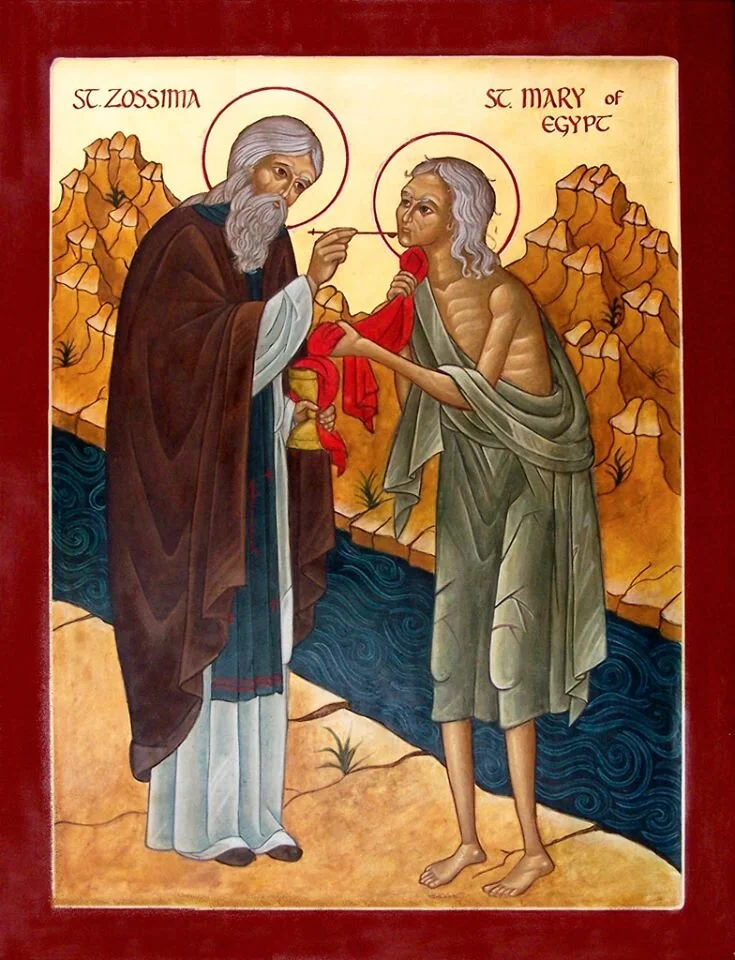
Fasting and Prayer: The Inseparable Pair
Throughout the Scriptures and in every major writer of the patristic tradition, fasting and prayer are spoken of together as a single spiritual discipline. Fasting without prayer is a diet. Prayer without fasting is vulnerable to a kind of spiritual laziness in which the soul seeks God while the body continues to pursue its own satisfactions undisturbed.
When the body fasts, the heaviness and sluggishness that come from a full stomach are reduced. Every monastic tradition in the world has recognized this physiological reality and built it into its daily rhythm. But the connection is also spiritual and symbolic. The bodily fast is a kind of enacted prayer, a prayer of the body that accompanies and reinforces the prayer of the lips and the heart. St. Isaac the Syrian wrote that fasting is the door of the spiritual life, and that no one who has not passed through this door has yet truly begun to pray.
During Great Lent, the number and length of church services increases substantially. For those who enter fully into the Lenten rhythm, the fast and the prayer together create an environment of focused spiritual attention unlike anything else in the Orthodox year.
Common Questions About Orthodox Fasting
Is Orthodox Fasting the Same as Veganism?
On paper, the dietary restrictions of Orthodox fasting look similar to a vegan diet: no meat, no dairy, no eggs. But the similarity is largely superficial. Veganism is typically grounded in ethical concerns and practiced continuously as a lifestyle choice. Orthodox fasting is grounded in repentance and prayer, practiced in specific seasons, and always ends in feasting. The lamb served at the Paschal feast after forty days of Great Lent is not a moral compromise. It is a theological statement: the fast is over, Christ is risen, and the earth and everything in it is good, for God made it so.
Does Orthodox Fasting Require Complete Abstinence from Food?
In its most demanding form, Orthodox fasting does call for complete abstinence from all food and water for specific periods: the first two days of Great Lent in the monastic tradition, all of Good Friday and Holy Saturday until the Paschal Liturgy, and the eve of certain major feasts. For most Orthodox laypeople in ordinary circumstances, however, the typical fasting day involves restriction of food categories rather than total cessation of eating.
How Do New Converts Begin Observing the Orthodox Fasting Rules?
Gradually, with the guidance of a confessor, and without anxiety. The full Orthodox fasting typikon is an ideal that most laypeople approach over years or even decades of practice. A confessor will typically advise a new convert to begin with the Wednesday and Friday fast, observing it consistently before adding more. The goal is a fasting practice that is genuinely demanding, integrated with prayer and increased church attendance, not a paper observance of dietary rules that leaves the rest of life unchanged.
Can Non-Orthodox People Observe Orthodox Fasting?
Anyone may observe a fasting diet modeled on Orthodox practice as a personal discipline. However, Orthodox fasting in its full sense is inseparable from prayer, attendance at fasting season services, sacramental confession, and participation in the liturgical life of the Church. The dietary rules alone, without this context, are the outer form of the fast without its inner substance. Those drawn to the practice are encouraged to connect with an Orthodox parish and speak with a priest about how to engage with the tradition authentically.
The Fathers Speak: Fasting in Their Own Words
St. Basil the Great wrote in his homily on fasting: "Fasting is the oldest of all remedies, prescribed not by physicians but by God himself from the very beginning. In Paradise there was a fast. The first commandment was a law of fasting: 'Of the tree of the knowledge of good and evil you shall not eat.' Through not fasting came our fall. Through fasting let us be raised up again."
St. John Chrysostom, perhaps the most eloquent of all the Fathers on this subject: "Do you fast? Give me proof of it by your works. If you see a poor man, take pity on him. If you see an enemy, be reconciled with him. If you see a friend gaining honor, do not envy him. Let not only your mouth fast but your eyes and your ears and your hands and your feet and all the members of your body."
St. Seraphim of Sarov said: "The body is the temple of the Holy Spirit, and he who dishonors the temple dishonors the Spirit. Fasting honors the temple by teaching the body that it is not the master of the soul but its servant."
The Fast That Never Ends: Toward an Integrated Fasting Life
The Orthodox fasting tradition, taken as a whole, is not a collection of individual rules to be observed separately. It is a way of relating to food, to time, to the body, and to God that gradually reshapes the entire person over years and decades of practice. The person who has kept the fasting seasons faithfully for twenty or thirty years is not the same person they were when they began.
Every great feast of the Orthodox year is preceded by a fast, and every fast ends in a feast. Clean Monday gives way to Pascha. The Dormition Fast opens into the Feast of the Dormition. The Nativity Fast concludes at the manger in Bethlehem. This rhythm of preparation and celebration, of voluntary emptiness and grateful fullness, is the heartbeat of the Orthodox year, and to live within it is to live inside a vision of the human person as capable of genuine transformation, genuinely free, genuinely oriented toward a joy that no food can provide and no fast can take away. That vision is inseparable from the whole of Orthodox Christian life, including its liturgical worship and its theology of theosis and union with God.
Kai Tutor | The Societal News Team
Follow Us!
It helps decentralize our presence across the web and it's completely free!
Orthodoxy Instagram ➤
Instagram ➤
Youtube ➤
Substack ➤
X.com ➤
Telegram ➤
TikTok ➤