What Is Theosis? The Orthodox Path to Union with God
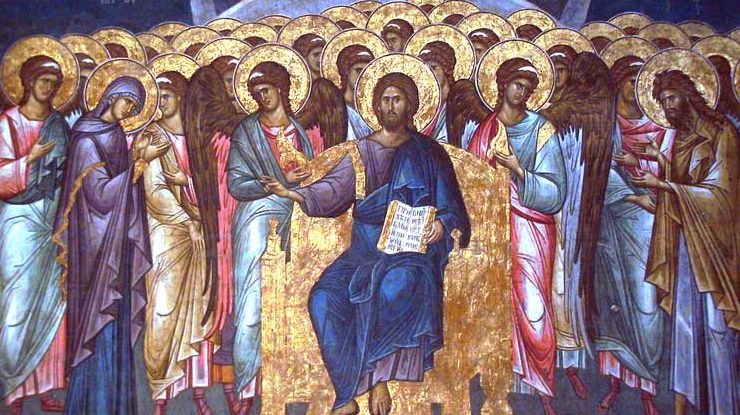
The Goal of the Entire Christian Life
If you have been exploring Eastern Orthodox Christianity for any length of time, you have almost certainly encountered the word theosis. It comes up in conversations about prayer, in the writings of the Church Fathers, in the theology of the sacraments, and in almost any serious discussion of what Orthodox Christianity is actually for. It is not a peripheral concept or a piece of advanced theological vocabulary reserved for monks and academics. In Eastern Orthodoxy, theosis — sometimes translated as deification or divinization — is the very purpose of human existence. It is what salvation means.
And yet it is also one of the most misunderstood and, to Western ears, one of the most startling ideas in all of Christian theology. The claim that human beings can become God — even in a qualified, carefully defined sense — sounds audacious, even dangerous. To understand why the Orthodox not only believe it but consider it the most natural and obvious truth of the Gospel requires going back to the very beginning: to Scripture, to the earliest Church Fathers, and to the nature of what God did in the Incarnation of Jesus Christ.
This article is a thorough exploration of theosis — what it is, what it is not, where it comes from, how it is understood theologically, and how it is actually lived out in the day-to-day life of an Orthodox Christian. Whether you are deep in your catechumenate, newly baptized, or still circling Orthodoxy from the outside, theosis is the doctrine that most clearly distinguishes Orthodox Christianity from every other form of Christian thought, and understanding it changes everything.
What Does "Theosis" Actually Mean?
The word theosis (θέωσις) comes from the Greek theos, meaning God. It literally means "becoming God" or "divinization." In Orthodox theology, it refers to the process — lifelong, and indeed extending beyond death — by which a human being is progressively united with God, transformed by His grace, and comes to share in the divine life.
The simplest and most famous formulation of the doctrine comes from St. Athanasius of Alexandria, writing in the 4th century: "God became man so that man might become god." This phrase is so central to Orthodox theology that it is quoted constantly — in homilies, in theological writings, in conversations between parishioners. It captures in a single sentence the entire logic of the Incarnation from an Orthodox perspective: God did not simply descend to us to satisfy a legal requirement or to demonstrate moral teaching. He descended to us in order to lift us up into Himself.
It is critical to understand immediately what theosis does not mean. It does not mean that human beings become God in essence — that we dissolve into the divine, or that our creaturely nature is annihilated, or that we become a second God. The Orthodox tradition is absolutely clear on this point. God remains God. We remain creatures. What changes is the relationship: through theosis, the human person comes to share in God's divine life, His divine energies, His holiness, His love, His immortality — not by nature but by grace.
The distinction between God's essence and God's energies is the theological key that makes theosis possible without collapsing into pantheism, and we will examine it in depth below. For now, the essential point is this: theosis is real participation in God, not merely imitation of God or closeness to God in a relational-but-external sense. Orthodox Christianity insists on the genuine, ontological transformation of the human person — not just moral improvement, not just forgiveness of sins, but actual deification.
The Biblical Foundations of Theosis
Theosis is not a philosophical concept imported into Christianity from Greek philosophy, as critics sometimes claim. It is rooted deeply in Scripture, and the Orthodox reading of the Bible consistently surfaces its presence throughout both Testaments.
The Image and Likeness of God
The starting point is the very first chapter of Genesis. God creates humanity "in our image, after our likeness" (Genesis 1:26). Orthodox theology distinguishes between image (eikon) and likeness (homoiosis). The image of God is given to every human being at creation — it is the rational, free, spiritual nature that makes us distinctively human and capable of relationship with God. The likeness, however, is not given automatically. It is a calling, a destiny, a goal to be achieved through a life of freely chosen cooperation with God's grace. Adam and Eve were created in the image of God and called to grow into the likeness of God — that is, to become fully what God intended them to be through an ongoing, dynamic relationship with their Creator.
The Fall disrupted this process. It did not destroy the image — humans remain in God's image even after the Fall — but it distorted it and cut off the natural growth toward likeness. The entire history of salvation is the story of the restoration of the path toward theosis, completed definitively in the Incarnation.
Partakers of the Divine Nature
The most explicit Scriptural statement of theosis comes from 2 Peter 1:4, where the Apostle writes that through God's great and precious promises, we "may become partakers of the divine nature" (theias koinonoi physeos). This phrase — "partakers of the divine nature" — is the cornerstone text for Orthodox theology of theosis. It is not metaphorical language about moral improvement. It is a direct assertion that human beings are called to genuine participation in the nature of God.
The Psalms and the Gospel of John
Psalm 82:6 reads: "I said, you are gods, sons of the Most High, all of you." Jesus himself quotes this verse in the Gospel of John (10:34-35), and the Orthodox tradition has always read it as a pointer toward the human vocation of deification — not that humans are God by nature, but that they are called to a divine destiny beyond anything that could be achieved by creaturely effort alone.
The Gospel of John is saturated with theotic language. The Prologue announces that the Word became flesh so that we might receive from His fullness "grace upon grace" (John 1:16). Christ's high priestly prayer in John 17 is a sustained meditation on union — "that they may all be one, just as you, Father, are in me, and I in you, that they also may be in us" (John 17:21). The intimacy being described here is not merely relational closeness but genuine participation in the divine life of the Trinity.
St. Paul and the New Creation
St. Paul's theology is equally rich with theotic themes. His description of Christians as those in whom "Christ lives" (Galatians 2:20), his prayer that believers be "filled with all the fullness of God" (Ephesians 3:19), his vision of the final state in which "God may be all in all" (1 Corinthians 15:28) — all of these are read by the Orthodox tradition as descriptions of theosis at various stages of completion. For Paul, salvation is not fundamentally a legal transaction but a cosmic transformation: the creation of a "new man" (Ephesians 4:24) who bears the image of the heavenly (1 Corinthians 15:49).
The Church Fathers on Theosis
Theosis is not a later development in Orthodox theology. It is present in the writings of the Church Fathers from the very earliest centuries, expressed with remarkable consistency across different theologians, cultures, and centuries.
St. Irenaeus of Lyon (2nd Century)
One of the earliest and greatest of the Church Fathers, St. Irenaeus wrote in his treatise Against Heresies: "The Word of God, our Lord Jesus Christ, who did, through His transcendent love, become what we are, that He might bring us to be even what He is Himself." This is the deification formula stated plainly, and it appears in the 2nd century — long before anyone could accuse the Church of having been corrupted by later philosophical speculation.
For Irenaeus, theosis is the fulfillment of humanity's original calling. He speaks of humans as beings in process — not created fully formed and complete, but created as infants in need of growth and development toward the fullness of the divine likeness. The Incarnation is God's decisive intervention to restore and complete this process after the disruption of the Fall.
St. Athanasius of Alexandria (4th Century)
St. Athanasius is the theologian most identified with the doctrine of theosis in the Western imagination, largely because of his famous formula. But his treatment of the doctrine is far more developed than a single sentence. His great work On the Incarnation is essentially a sustained argument for theosis: the Word of God assumed human nature so that human nature could be lifted up into the divine life. Christ did not merely demonstrate how to live a good life. He united human nature with divine nature, and through this union, the possibility of deification was opened to all humanity.
For Athanasius, theosis is inseparable from the doctrine of the Incarnation. If the Word did not truly become fully human, humans cannot be truly deified. This is why Athanasius fought so fiercely against Arianism — the heresy that the Son was a lesser being, not fully divine. If Christ is not fully God, then in His Incarnation he did not unite humanity to true divinity, and theosis is impossible. The stakes of the Arian controversy were not abstract theological points but the entire soteriological vision of Christianity.
St. Maximus the Confessor (7th Century)
If Athanasius is the father of the doctrine of theosis, St. Maximus the Confessor is its greatest systematic theologian. Writing in the 7th century, Maximus developed the most comprehensive and sophisticated Orthodox theology of deification, and his work remains the touchstone for all subsequent Orthodox reflection on the subject.
For Maximus, theosis is the ultimate fulfillment of the Incarnation — not merely the restoration of what was lost in the Fall, but the elevation of humanity to a state beyond what Adam and Eve possessed even before the Fall. Theosis is not a return to paradise; it is an eschatological reality that surpasses the original creation. Maximus teaches that the human person is a microcosm — a little universe — called to unite within himself the divisions of creation: between male and female, between paradise and the inhabited world, between heaven and earth, between the intelligible and the sensible, and ultimately between created nature and God.
Maximus also develops with great precision the concept of synergy — the cooperation between human will and divine grace in the process of theosis. God does not deify humans against their will or without their participation. Theosis requires the free, sustained, and often agonizing cooperation of the human person with the grace of God. This is why the ascetic life — prayer, fasting, vigilance, the struggle against the passions — is so central to Orthodox spirituality. It is not an attempt to earn salvation by works but a loving cooperation with what God is already doing.
St. Gregory Palamas (14th Century)
The most significant development in the theology of theosis after Maximus came in the 14th century with St. Gregory Palamas, Archbishop of Thessaloniki, and the controversy surrounding the hesychast monks of Mount Athos. At the center of the controversy was a question that strikes at the very heart of theosis: can a human being actually experience God directly, or is God absolutely unknowable and inaccessible to created beings?
The hesychast monks claimed that through the practice of interior prayer — particularly the Jesus Prayer — they could experience the divine light of God directly. This was the same uncreated light that the Apostles had witnessed at the Transfiguration of Christ on Mount Tabor. Their opponent, a Calabrian monk named Barlaam, dismissed these claims as theologically impossible. If God is absolutely simple and unknowable in His essence, Barlaam argued, then no created being can have direct experience of Him.
Palamas responded with a distinction that became the cornerstone of Eastern Orthodox theology: the distinction between God's essence (ousia) and God's energies (energeiai). God's essence is indeed utterly transcendent, unknowable, and inaccessible to created beings. But God also truly and really acts in the world through His divine energies — and these energies are not created intermediaries but are genuinely and truly God Himself in His self-communication to creation. The divine energies are uncreated. They are really God, not something less than God.
This distinction is what makes theosis coherent and real. When the Orthodox say that in theosis the human person participates in the divine nature, they mean participation in God's energies — His life, His light, His love, His holiness — which are truly and really God, even though they are not the divine essence. The Council of Constantinople in 1351 formally affirmed Palamas's theology as the teaching of the Orthodox Church.
Theosis and the Incarnation: Why Everything Depends on Christmas
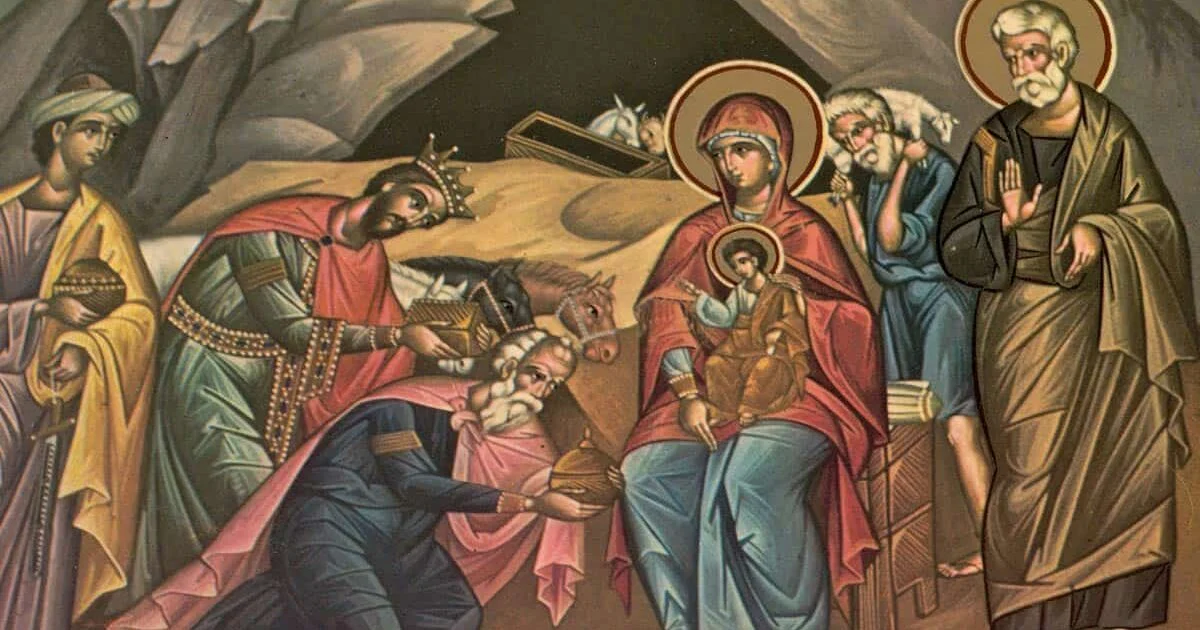
The doctrine of theosis is inextricably bound up with the Incarnation — the taking on of human flesh by the eternal Son of God. This is not incidental. It is the very logic of theosis: God became what we are in order to make us what He is.
In the Incarnation, the divine and human natures were united in the single Person of Jesus Christ — without confusion, without change, without division, without separation, as the Council of Chalcedon defined in 451 AD. This hypostatic union of divine and human natures in Christ is the ontological foundation of human theosis. When God the Word assumed human nature, He did not assume the nature of a particular individual only — He assumed human nature as such, and in doing so, He united all of humanity to Himself in principle.
The Resurrection and Ascension complete this logic. Christ did not merely take on human nature and then discard it. He carried human nature — now glorified — through death and into the life of the Resurrection and then into the heavenly realm in the Ascension. At the right hand of the Father sits a human being: Jesus Christ, the God-Man. This is the destiny of theosis made visible. Where the Head has gone, the Body is called to follow.
Theosis and Salvation: Why Orthodoxy Is Not About Going to Heaven
Understanding theosis reframes the entire question of what salvation means, and it reveals a profound difference between Eastern Orthodox Christianity and most Western Christianity — both Catholic and Protestant.
In much of Western Christianity, salvation tends to be understood primarily in legal or forensic terms. Humanity sinned, broke God's law, incurred a debt or a punishment that could not be paid. Christ, through His death on the Cross, paid that debt, satisfied divine justice, and made it possible for the punishment to be remitted. Salvation, on this model, is primarily about guilt and forgiveness — the cancellation of a legal liability.
The Orthodox tradition does not deny that Christ forgives sins or that the Cross accomplishes reconciliation between God and humanity. But these are not the primary categories through which Orthodoxy understands salvation. The primary category is healing and transformation. Sin, in Orthodoxy, is understood first as a disease — a corruption of human nature — rather than primarily as a legal transgression. Christ came not primarily to satisfy divine justice but to defeat death and to heal human nature. Salvation, therefore, is not about going to heaven after you die. It is about participating now, in this life, in the victorious life of the Risen Christ — being healed of sin's corruption, restored to the image of God, and increasingly transformed into the likeness of God. That transformation is theosis.
The Stages of Theosis: Purification, Illumination, and Union
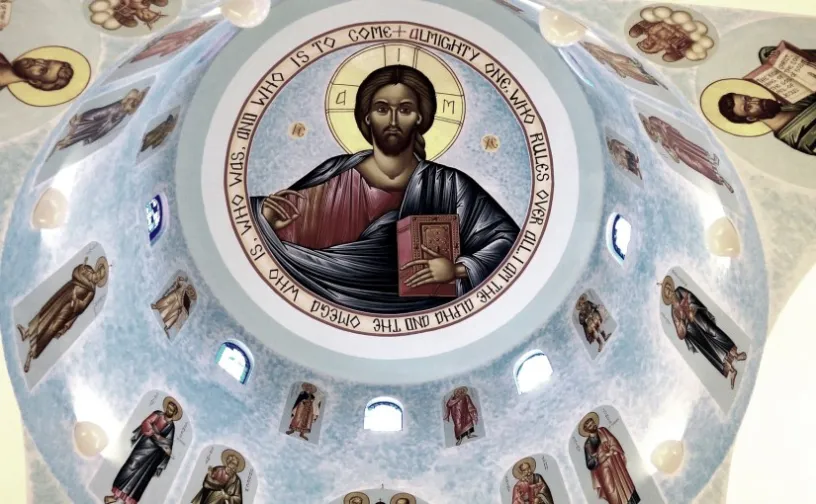
The Orthodox spiritual tradition describes the path of theosis in terms of three broad stages often called the three ways: catharsis (purification), theoria (illumination), and theosis (union). These are not strictly sequential stages that one passes through and leaves behind, but dimensions of the spiritual life that deepen and interweave throughout the entirety of a Christian's journey.
Catharsis — Purification
The first stage is purification — the cleansing of the soul from the passions. In Orthodox spiritual theology, the passions are disordered desires and attachments that have displaced God from the center of the human person's life and redirected the soul's energies toward created things rather than toward the Creator. The classic list includes gluttony, lust, avarice, anger, dejection, acedia, vainglory, and pride.
It is crucial to understand that the Orthodox tradition does not regard the passions as intrinsically evil. They are distortions of natural human capacities that are, in themselves, good. The work of purification is not the suppression of human nature but its reorientation and healing. Purification is accomplished primarily through prayer, fasting, almsgiving, watchfulness (nepsis), and the sacrament of Confession.
Theoria — Illumination
As the passions are gradually brought under the governance of reason and will, a new quality of perception begins to emerge. The Orthodox tradition calls this theoria — often translated as "vision" or "contemplation." Theoria is a direct, experiential knowledge of God — not the knowledge of the intellect alone, but an encounter with the living God in which the whole person is illuminated.
The nous — the deepest faculty of the human person, the spiritual intellect or the "eye of the soul" — plays the central role here. As purification progresses, the nous is gradually cleansed and reoriented toward God. When it is sufficiently purified, it begins to perceive God's presence directly — not through the medium of concepts or images, but in a direct awareness that the Fathers describe as a kind of divine light.
Theosis — Union
The third and highest stage is theosis proper — union with God. This is not annihilation but consummation — the human person, fully and finally transparent to the divine light, participates completely in God's life while remaining fully and distinctly a person. The image of iron in fire is often used by the Fathers: just as a piece of iron thrust into a fire becomes glowing and full of fire while remaining iron, so the deified human being is fully penetrated by the divine energies while remaining a creature and a person.
In this life, full theosis is the gift of the greatest saints. The fullness of theosis is an eschatological reality — the ultimate destiny of every human being who cooperates with God's grace, to be completed only in the resurrection and the life of the age to come.
The Role of the Sacraments in Theosis
Theosis is not a private spiritual achievement accomplished by individual effort. It takes place within the Body of Christ — the Church — and is sustained and communicated through the Holy Mysteries (sacraments).
Baptism: The Beginning of Theosis
Baptism is not merely the washing away of sins or the formal entry into a religious community. In Orthodox theology, Baptism is a genuine ontological event: the person who goes down into the waters of Baptism dies with Christ and rises with Christ, is united to His Body, and receives the gift of incorruption. The divine life enters the human person in Baptism. Theosis begins at the font.
Chrismation: The Seal of the Spirit
Immediately following Baptism, the newly illumined person receives Chrismation — the anointing with holy oil. This confers the gift of the Holy Spirit in a direct and personal way. The Holy Spirit is the agent of theosis: it is the Spirit who communicates the divine life to the human person and who will accompany, sustain, and increasingly transform them throughout the entire journey.
The Eucharist: Participation in the Divine Life
The Eucharist is the sacrament of theosis par excellence. When an Orthodox Christian receives the Body and Blood of Christ, they are not receiving a symbol or a memorial. They are receiving Christ Himself — and in receiving Christ, they receive the uncreated divine life. St. Cyril of Alexandria, commenting on John 6, writes that through the Eucharist Christ "transfers us from our own condition into His." This is theosis accomplished sacramentally.
Confession: The Healing of the Soul
Confession is the sacrament of healing. Sin, in Orthodox understanding, is not merely an offense against a legal code but a wound inflicted on the soul — a corruption that blocks the flow of divine life through the person. Regular Confession is the continual application of God's healing grace to the wounds of sin, restoring the soul's capacity for theosis.
The Ascetic Life: Cooperating with Grace
One of the most common misunderstandings of Orthodox spirituality among those coming from Protestant or evangelical backgrounds is the role of ascetic discipline. To Western ears, shaped by the Reformation's emphasis on salvation by grace alone, the Orthodox emphasis on prayer, fasting, and spiritual struggle can sound like an attempt to earn salvation by effort.
This misunderstands the Orthodox position entirely. The ascetic life is not an attempt to earn God's grace but to cooperate with it — to remove the obstacles that block the flow of divine life through the human person. The Fathers use the image of the farmer: he does not make the grain grow, but he plows the ground, removes the weeds, and waters the soil so that the growth God gives can proceed without obstruction.
The Jesus Prayer and Hesychasm
The Jesus Prayer — "Lord Jesus Christ, Son of God, have mercy on me, a sinner" — is the central practice of Orthodox interior spirituality and one of the primary means by which theosis is pursued. It is short, containing within it the full content of the Christian faith: the name of Jesus, His identity as the Christ and the Son of God, and the posture of the creature before the Creator.
The goal of the Jesus Prayer is not merely to repeat words but to allow the prayer to sink from the mind into the heart and to become a continuous interior movement of the whole person toward God. This is the practical application of St. Paul's injunction to "pray without ceasing" (1 Thessalonians 5:17). This practice is called hesychasm — from the Greek hesychia, meaning stillness — the tradition of interior prayer that has always been the beating heart of Orthodox monasticism and the high road of theosis.
Fasting
Fasting is bodily asceticism in the service of theosis. The Orthodox understanding of the human person is radically holistic: body and soul together constitute the human being, and both are called to participate in theosis. The body that fasts, that bows in prostration, that kneels and is anointed with oil — this body is being sanctified and prepared for the resurrection. Fasting disciplines the appetites, weakens the grip of the passions, and creates in the person a hunger that is ultimately satisfied only by God.
Watchfulness and the Guarding of the Heart
Nepsis — watchfulness, sobriety, vigilance — is the constant monitoring of the thoughts and movements of the inner life. The hesychast Fathers, particularly in the great collection of spiritual texts known as the Philokalia, devote extensive attention to this practice. The idea is that sinful actions begin as subtle movements of thought — what the Fathers call logismoi — and that these thoughts, if not noticed and rejected at their first appearance, progressively draw the person away from God. The watchful person catches these movements at their inception and turns the attention back to God.
Theosis Is Not Only for Monks
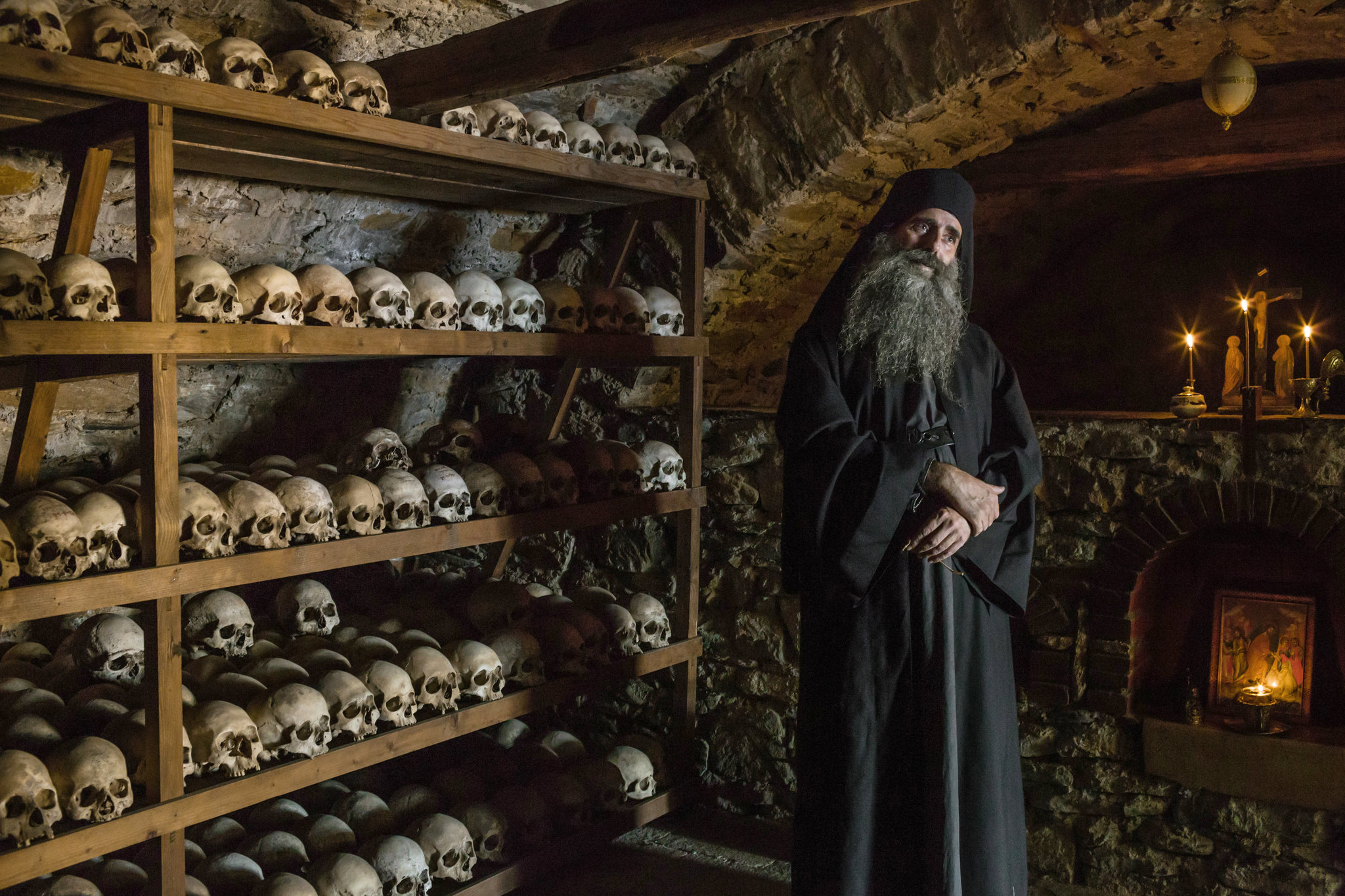
One of the most important things to understand about theosis is that it is not a vocation reserved for monks and nuns. It is the universal calling of every baptized Christian. The path to union with God is open to the married person, the parent, the laborer, the businessman, the soldier. The tools available and the pace of the journey may differ between monastic and lay life, but the destination is the same.
The Orthodox Church is full of examples of lay saints who achieved the fullness of theosis. St. Juliana of Lazarevo was a married Russian noblewoman of the 16th century whose profound holiness was expressed entirely in her domestic life — her care for the poor, her patience in suffering, her continuous prayer in the midst of family and household responsibilities. For laypeople, the primary means of theosis are the same as for monastics, simply adjusted for the conditions of life in the world: regular attendance at the Holy Mysteries, a daily prayer rule, faithful observance of the fasting seasons, regular Confession, almsgiving, and care for the poor.
The Transfiguration: Theosis Made Visible
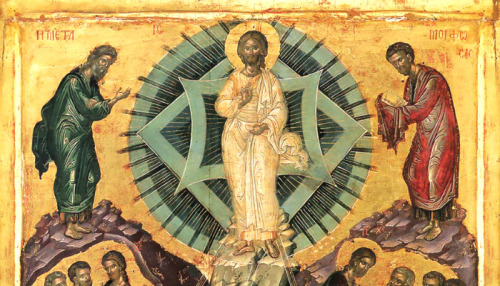
No event in the Gospels illuminates the doctrine of theosis more powerfully than the Transfiguration of Christ on Mount Tabor. Jesus leads Peter, James, and John up a high mountain and is transfigured before them: His face shines like the sun, His garments become white as light, and Moses and Elijah appear speaking with Him.
The Orthodox tradition reads the Transfiguration not as a temporary display put on for the disciples' benefit, but as a momentary unveiling of what was always true — Christ allowing the divine glory that was always present in His human nature to become visible to human eyes. The light that the disciples saw was not created light. It was the uncreated divine light of God's own glory, shining through the human flesh of Christ.
This is the light that the hesychast monks claim to experience in prayer. This is the light that transfigured the face of Moses. This is the light that will transform the bodies of the saints in the resurrection. The Feast of the Transfiguration, celebrated on August 6th, is one of the Twelve Great Feasts of the Orthodox year, and it is the icon of theosis — the visible demonstration of humanity's divine destiny.
Common Questions About Theosis
Is Theosis the Same as Pantheism?
No. Pantheism holds that everything is God — that the distinction between Creator and creature is an illusion. Theosis insists on the absolute distinction between God's essence and created being, and it maintains that even in the fullness of deification, the human person remains a creature, a distinct person, different from God in nature. The deified human being participates in God's energies — His life, love, and light — but does not become God in essence. The iron becomes glowing with fire, but it remains iron.
Is Theosis a Form of Works-Righteousness?
No. The initiative in theosis is entirely God's. It is God who became human, God who unites Himself to the soul in the sacraments, God who pours out His grace ceaselessly upon every human being. The ascetic effort of the human person does not produce theosis — it removes obstacles and opens the person to receive what God is already offering. Theosis is entirely a work of grace, freely given. But grace does not override human freedom. The human person must freely cooperate with grace — must choose, again and again, to turn toward God rather than away from Him.
Can Theosis Be Experienced in This Life?
Yes — and the Orthodox tradition insists on this strongly. The saints of every generation have tasted the divine life in this life. The experience of the divine light in prayer, the peace that surpasses understanding, the burning love for God and neighbor that characterizes the great saints — these are real, experiential foretastes of theosis available to anyone who perseveres in the Christian life.
How Does Theosis Relate to Eternal Life and Heaven?
In Orthodox theology, heaven is not primarily a place but a state — the state of full, unobstructed participation in the divine life. Theosis and eternal life are not two different things; they are the same reality at different stages of completion. At the general resurrection, the body will also be raised and glorified, participating fully in the divine life alongside the soul. The ultimate eschatological reality — the fullness of the Kingdom of God — is the completion of theosis for the entire human race.
Theosis and the Ordinary Life: Where to Begin
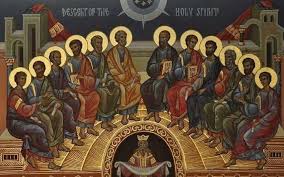
For someone in the middle of exploring Orthodox Christianity, or newly received into the Church, the doctrine of theosis can feel simultaneously inspiring and overwhelming. The vision is immense — union with the living God, participation in the divine life, transformation into the likeness of Christ. The gap between that vision and the ordinary realities of distraction, struggle, failure, and mediocrity in the spiritual life can feel paralyzing.
The Fathers are unanimous in their counsel: begin where you are. The path to theosis does not begin with mystical experiences or heroic ascetic feats. It begins with the fundamental disciplines of the Christian life — showing up to Liturgy on Sunday, saying your morning and evening prayers, keeping the fasts as best you can, going to Confession regularly, reading the Scriptures and the Fathers, and practicing small acts of love and self-denial in the ordinary circumstances of your daily life.
The Desert Father Abba Poemen, when asked how to begin the spiritual life, gave this answer: "Begin." Not with a grand plan or a comprehensive program, but with a single step, taken today, in the direction of God. The hesychast tradition teaches that the most important thing is not the quality or the intensity of your prayer today, but the fact of your return to prayer tomorrow, and the day after that, regardless of how you feel.
Theosis is not something that happens to the spectacular. It happens to the faithful. The great 20th-century Orthodox theologian Georges Florovsky wrote that "the Christian life is a constant beginning" — not a plateau reached and held, but a continuous turning toward God, a continuous reception of His grace, a continuous cooperation with what He is doing in the depths of the soul. That continuous turning, sustained over a lifetime of prayer and sacramental life and love of neighbor, is the path of theosis. It is the path every Orthodox Christian is called to walk.
Glory to God for all things.
Sources: St. Athanasius, On the Incarnation; St. Irenaeus, Against Heresies; St. Maximus the Confessor, Ambigua; St. Gregory Palamas, Triads; Council of Constantinople (1351); The Philokalia; Georges Florovsky, collected works.
Kai Tutor | The Societal News Team