The Desert Fathers and the Birth of Christian Monasticism
A Movement Born in the Wilderness
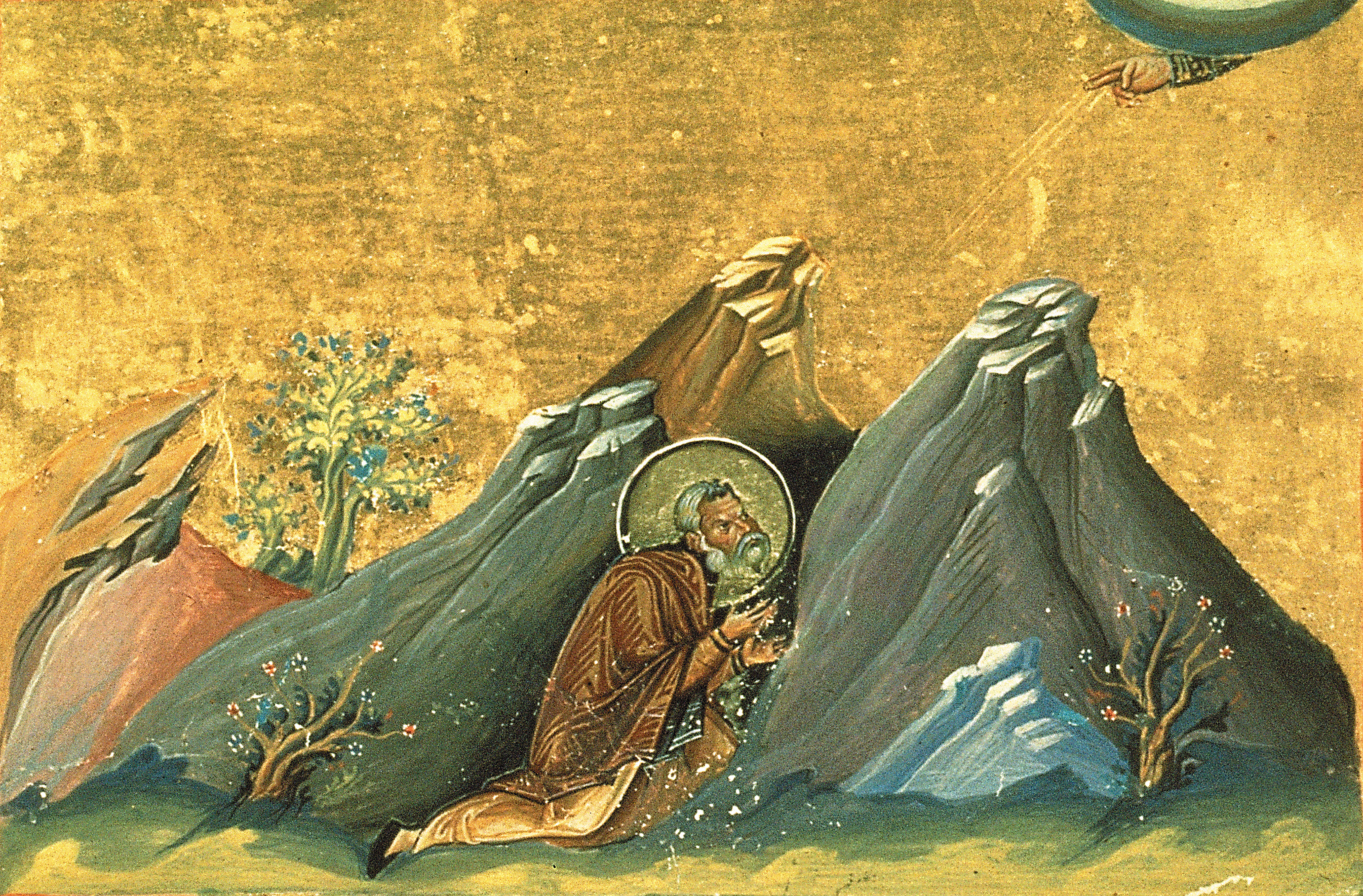
Sometime in the late third century, a young Egyptian man named Antony heard the words of the Gospel read aloud in church: "If you wish to be perfect, go, sell your possessions, and give the money to the poor, and you will have treasure in heaven; then come, follow me" (Matthew 19:21). He took those words with a literalness that would change the course of Christian history. He distributed his inheritance, entrusted his sister to a community of devout women, and walked out into the Egyptian desert. He did not come back.
What followed in the decades and centuries after Antony's departure was one of the most remarkable spiritual movements in human history. Thousands of men and women abandoned the cities and villages of Egypt, Palestine, Syria, and the surrounding regions and went to live in the desert. They took up residence in caves, in abandoned tombs, in mud-brick cells, and in the open air of the wilderness. They prayed without ceasing, fasted with ferocious discipline, battled demons and their own disordered appetites, and pursued with single-minded intensity the transformation of the human person into the likeness of God. They became known as the Desert Fathers and Mothers, and the movement they founded became Christian monasticism.
The Desert Fathers are not a distant curiosity of ancient religious history. They are, in the understanding of Eastern Orthodox Christianity, among the greatest saints and teachers the Church has ever produced. Their writings, preserved in collections like the Apophthegmata Patrum (the Sayings of the Desert Fathers) and woven throughout the pages of the Philokalia, remain living texts of spiritual instruction studied with deep seriousness by Orthodox monks, priests, and laypeople today. To understand the Desert Fathers is to understand something essential about what Orthodox Christianity believes the human person is, what it is for, and how the journey toward God is made.
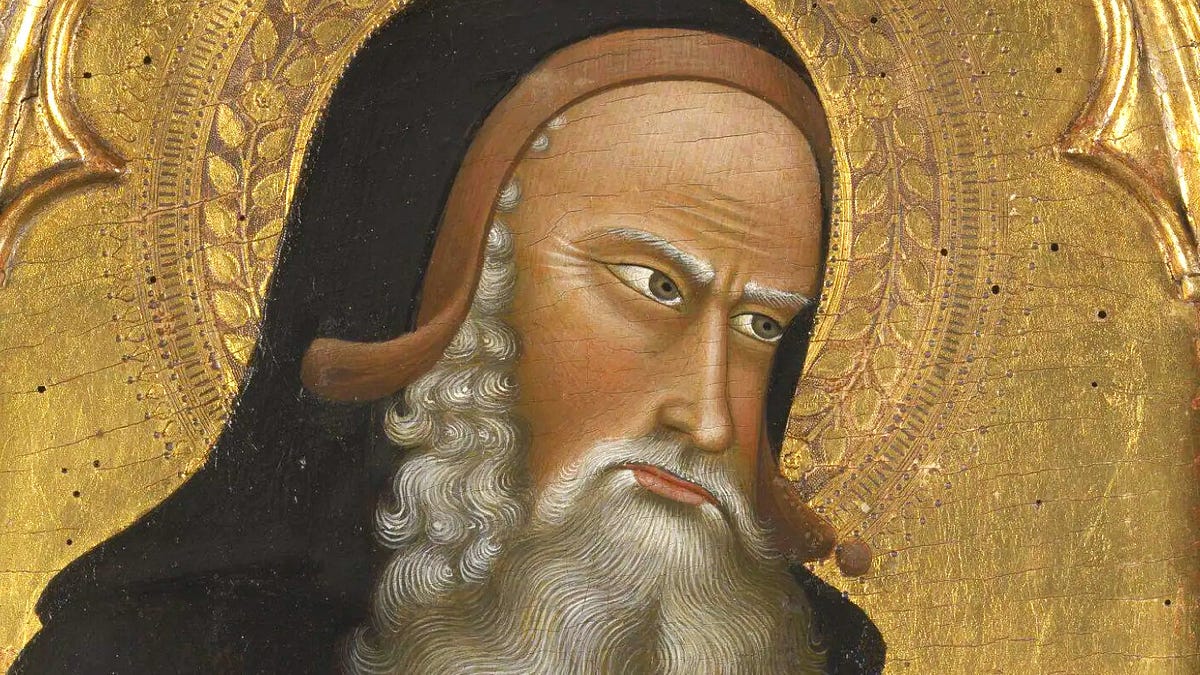
Why the Desert? The Historical Context of the Monastic Explosion
The emergence of Christian monasticism in the third and fourth centuries was not accidental. It arose in response to a specific and dramatic set of historical circumstances, and understanding those circumstances helps explain both the urgency and the character of the desert movement.
The End of the Age of Martyrs
For the first three centuries of its existence, the Christian Church lived under the constant threat of persecution. To be a Christian in the Roman Empire was to risk imprisonment, torture, and death. The martyrs were the heroes of the early Church, and martyrdom was understood as the supreme form of witness to Christ, the ultimate expression of total self-giving to God.
In 313 AD, the Emperor Constantine issued the Edict of Milan, granting legal toleration to Christianity throughout the Roman Empire. By the end of the fourth century, Christianity had become the official religion of Rome. This created a profound spiritual crisis. If the Church was no longer persecuted, if being a Christian carried social prestige rather than mortal danger, how was one to give everything to God? How was the radical seriousness of the Gospel to be maintained in a world where nominal Christianity had become socially advantageous?
The monks and nuns who fled to the desert understood themselves as answering this question. The desert was their martyrdom. The slow, daily dying to self that the monastic life demanded was their participation in the death of Christ. The Fathers sometimes spoke of monasticism as a "white martyrdom" to distinguish it from the "red martyrdom" of those who shed their blood.
The Influence of Egyptian Culture and Geography
Egypt was uniquely suited to be the cradle of monasticism. The desert was not merely a metaphor there; it was a literal, tangible reality lying just beyond the narrow green ribbon of the Nile Valley. The Egyptians had long understood the desert as a liminal space, a place of power and danger. For Christian monks, it became the arena in which the great spiritual battle was fought, the place of stripping away, of encounter with God in the silence that the noise of civilized life made impossible.
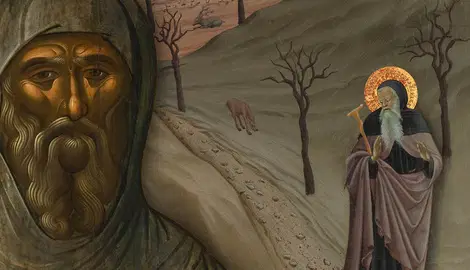
St. Antony the Great: The Father of Monks
Antony of Egypt, known in the Orthodox Church as Antony the Great, is venerated as the father of Christian monasticism. Born around 251 AD to a prosperous Coptic Christian family, his story is told in a biography written by his contemporary St. Athanasius of Alexandria, which became one of the most widely read and influential texts in Christian history.
After his initial renunciation, Antony spent approximately twenty years in progressive withdrawal from human society, moving deeper and deeper into the desert and devoting himself entirely to prayer, fasting, and the struggle against the demonic forces he believed were arrayed against the human soul. The Life of Antony describes these battles in vivid, sometimes terrifying detail. To modern ears, the demonic attacks Antony endured can be understood as the external projection of the inner warfare against disordered desires, fantasies, and fears that assail the person who strips away all the distraction with which ordinary life keeps those forces at bay.
What is perhaps most remarkable about Antony is what he became through this process. He did not emerge from the desert broken, eccentric, or inhuman. Athanasius describes him as radiant, balanced, serene, and full of a warm and penetrating love for every person he encountered. Visitors came from great distances to receive a word from him, to ask for his prayers, or simply to be in his presence. Philosophers came to debate him and went away confounded not by dialectical argument but by the quality of the man himself.
Antony died in 356 AD at the age of approximately one hundred and five. His feast day is celebrated in the Orthodox Church on January 17th.
The Great Desert Communities: Nitria, Scetis, and Kellia
While Antony represents the solitary, eremitic ideal of the desert life, the movement he helped initiate quickly produced something more organized and communal. By the mid-fourth century, large communities of monks had formed in the Egyptian desert, each with its own character and genius.
Nitria
About sixty miles south of Alexandria lay the settlement of Nitria. By the time the historian Palladius visited in the late fourth century, Nitria housed several thousand monks living in a loose community of cells. There was a church, bakeries, a guest house for visitors, and even physicians to serve the community's practical needs. Nitria was the gateway to the deeper desert, the first stopping point on the road away from the world, and it attracted an extraordinarily cosmopolitan collection of monks from across the Roman Empire.
Scetis
Deeper still into the desert lay Scetis, known today as Wadi El Natrun. Scetis was the most demanding of the desert settlements, reserved for those seeking the most intense solitude and the most advanced forms of the spiritual life. It was at Scetis that many of the greatest of the Desert Fathers lived and taught, including Macarius the Great, Moses the Black, and Poemen, whose sayings fill the pages of the Apophthegmata Patrum.
Kellia
Between Nitria and Scetis lay a third settlement called Kellia, the Cells, established around 338 AD. The cells were far enough apart that the monks could not see or hear one another during the week, each man living in near-total silence and solitude, gathering with the community only for the Eucharist on Saturday evening and Sunday morning before returning to the silence of his cell.
St. Pachomius and the Birth of Communal Monasticism
The eremitic life of Antony and the semi-eremitic life of Nitria and Scetis were not the only forms the desert movement took. In Upper Egypt, a former Roman soldier named Pachomius developed a radically different model of monastic life that would prove just as influential and would eventually become the dominant form of monasticism in the Christian world.
Pachomius was born around 292 AD. After his discharge from the Roman army and his conversion to Christianity, he established the first organized communal monastery at Tabennisi in 323 AD. He wrote a Rule for his community governing every aspect of communal life: prayer, work, eating, sleeping, the reception of guests, the care of the sick, and the formation of new monks. By the time of his death in 346 AD, he had founded nine monasteries for men and two for women, housing thousands of monks and nuns in total.
The genius of the Pachomian model was its recognition that the communal life offered its own rigorous and demanding path of transformation. In the cenobitic monastery, the monk cannot escape from other people. He must love them, serve them, bear with their faults, and allow them to bear with his. The friction of community life, patiently accepted, becomes itself an instrument of purification.
The Sayings of the Desert Fathers: The Apophthegmata Patrum
The primary literary legacy of the Desert Fathers is the Apophthegmata Patrum — the Sayings of the Elders. This collection was assembled in the fifth and sixth centuries, drawing on sayings that had circulated orally among the desert communities for generations, and it remains one of the most extraordinary documents in the history of Christian spirituality.
The format of the Apophthegmata is almost always the same. A younger monk or a visitor comes to an elder and says, "Abba, give me a word." The elder responds, sometimes at length, sometimes with a single sentence, sometimes with a parable or a gesture. The "word" that is given is always specific to the person and the situation. The Desert Fathers were deeply suspicious of generic spiritual advice. They believed that the soul of each person was unique, that its struggles and needs were particular, and that the word given to one person might be useless or even harmful to another.
What strikes the contemporary reader is the combination of radical psychological realism with radiant spiritual wisdom. The Fathers have no illusions about the human person. They know the depths of self-deception of which the human heart is capable. Their counsel is always practical, always grounded in an exact observation of how the human soul actually works.
The Role of the Abba
Central to the desert tradition was the relationship between the younger monk and the elder — the Abba (father) or Amma (mother) to whom he or she was entrusted for guidance. This was understood as a relationship of spiritual generation. The elder transmitted not merely information or techniques but a living spiritual experience that could only be caught by close and sustained proximity to someone who possessed it.
The virtue most demanded of the younger monk in this relationship was not intelligence or natural talent for prayer but obedience and humility. The Desert Fathers were unanimous in regarding pride as the most lethal of all spiritual dangers, and humility as the foundation upon which every other virtue rested.
Key Figures Among the Desert Fathers
Moses the Black
Moses the Black is one of the most beloved figures in the entire desert tradition. Before his conversion, he had been a slave and then became the leader of a band of violent outlaws in Egypt. His conversion was sudden and apparently complete. He went to the desert, submitted himself to the elders at Scetis, and became one of the greatest monks of his generation. He died as a martyr when Berber raiders attacked the settlement at Scetis around 405 AD, refusing to flee and remaining with those brothers too weak to escape.
Macarius the Great
Macarius of Egypt was one of the founding figures of the Scetis community and a disciple of Antony the Great. He is credited with dozens of sayings in the Apophthegmata and composed a series of spiritual homilies that have been enormously influential in the Orthodox tradition, particularly in their treatment of the purification of the heart and the experience of the Holy Spirit.
Abba Poemen
Poemen is perhaps the most frequently quoted figure in the entire Apophthegmata Patrum. His sayings have the quality of the best pastoral wisdom: direct, concrete, free from abstraction, addressed always to the real condition of the human heart. A few examples give a sense of the character of the entire collection: "Teach your mouth to say what is in your heart." "A man who is angry, even if he were to raise the dead, is not acceptable to God." Each saying is short enough to memorize, rich enough to meditate upon for years.
Syncletica of Alexandria
Among the greatest of the desert elders was Amma Syncletica of Alexandria. Born to a wealthy family, she renounced her inheritance and withdrew with her blind sister to live an ascetic life near Alexandria. Her reputation for holiness drew other women to her, and she became the de facto leader of a community of consecrated women. Her sayings are remarkable for their psychological acuity: "There are many who live in the mountains and behave as if they were in the town, and they are wasting their time. It is possible to be a solitary in one's mind while living in a crowd, and it is possible for one who is a solitary to live in the crowd of his own thoughts."
The Theology of the Desert: What the Fathers Taught
The Desert Fathers were not systematic theologians in the academic sense. Their theology was entirely practical and experiential, communicated primarily through short, dense, oracular sayings. And yet their teaching contains a remarkably coherent and profound vision of the human person, of God, and of the path that connects them.
The Primacy of the Heart
For the Desert Fathers, the central battlefield of the spiritual life is the heart — understood not as a seat of emotion in the modern sense but as the deepest center of the human person, the place where the human will and the divine presence meet. The entire project of the monastic life is the purification of the heart, the removal of everything that prevents God from reigning there without rival. They read "Blessed are the pure in heart, for they shall see God" (Matthew 5:8) not as a promise deferred to the afterlife but as a description of what becomes possible in this life when the heart is sufficiently purified.
The Battle Against the Logismoi
The desert tradition developed a highly precise analysis of logismoi, the thoughts or impulses that assail the mind and draw the person away from God. The monastic writer Evagrius of Pontus identified eight primary categories of disordered thought: gluttony, lust, avarice, sadness, anger, acedia, vainglory, and pride. This eightfold scheme is the ancestor of the later Western tradition of the seven deadly sins.
Evagrius and the Fathers who follow him trace the movement of a temptation through several stages: from the initial appearance of a thought, to the entertaining of that thought, to the consent of the will, to habitual enslavement to a passion. The goal of nepsis, watchfulness, is to intercept this sequence at the very first stage — to notice the thought at its initial appearance and refuse to engage with it before it gains any foothold.
Humility as the Foundation
If there is a single virtue that the Desert Fathers regard as foundational, it is humility. Not false modesty, but the realistic and accurate perception of what one actually is before God. The desert tradition is relentlessly suspicious of spiritual achievement that is visible to oneself. Pride, in the desert analysis, is the most dangerous of all the passions precisely because it is the most invisible to the person who suffers from it. It disguises itself as virtue, as zeal, as righteous indignation. The monk who has overcome lust and gluttony and anger is in the most danger from pride, because he has genuine spiritual achievements to be proud of.
The Desert Mothers: Ammas and Female Monasticism
Christian monasticism has never been exclusively a male institution. From its very beginnings, women participated in the desert movement with equal seriousness. The tradition refers to these women as Ammas (mothers), and their sayings appear in the Apophthegmata Patrum alongside those of the Abbots.
The most celebrated of the Ammas include Syncletica, Sarah of the Desert, and Theodora. Amma Sarah lived for sixty years on the banks of a river, fighting with extraordinary persistence against the passion of lust, and her sayings reflect a hard-won and utterly unsentimental wisdom about the spiritual life. When a group of male monks implied she was becoming proud of her spiritual accomplishments, she replied: "According to my nature, I am a woman, but not according to my thoughts." The saying became famous in the tradition as an expression of the truth that the spiritual life transcends the categories of gender, though it is always lived within them.
The Desert and the Church: A Necessary Tension
The relationship between the desert communities and the institutional Church was complex and sometimes tense. The Desert Fathers maintained a deep reverence for the sacramental life of the Church, gathering for the Eucharist regularly. But they were also suspicious of the ways in which the institutional Church, now allied with imperial power, could become entangled in the world's concerns.
Several of the greatest Desert Fathers actively refused ordination when it was offered to them, fearing that the responsibilities and honors of ecclesiastical office would endanger their humility. This tension between the prophetic, marginal witness of the desert and the institutional, sacramental life of the Church has been a productive and creative tension throughout the history of Orthodox Christianity. The Church needs the monks as a constant reminder of the eschatological horizon. The monks need the Church for the sacramental life that keeps their spiritual experience rooted in the historic faith.
The Spread of Monasticism: From Egypt to the World
The desert movement did not remain confined to Egypt. Within a generation of its establishment, it had spread throughout the Christian world, carried by travelers, pilgrims, and monks who took the desert ideal with them wherever they went.
Palestine and Syria
Palestine quickly developed its own rich monastic tradition, centered particularly on the Judean Desert and the region around the Jordan River. The great monastery of St. Sabas, founded in the fifth century near the Dead Sea and still active today, became one of the most important centers of Orthodox monastic theology and liturgical development.
Cappadocia and Asia Minor
In Cappadocia, Basil the Great studied the Egyptian monastic movement extensively and wrote a Rule for monastic life that proved enormously influential in the Eastern Church. Basil's approach emphasized communal life, intellectual formation, and integration of monastic communities into the service of the local Church through schools, hospitals, and care for the poor.
The West: Cassian and the Transmission of the Desert Tradition
The most important vehicle for the transmission of the desert tradition to the Latin West was John Cassian, a monk who spent years in the desert communities of Egypt and Palestine before founding two monasteries at Marseilles around 415 AD. His major works, the Institutes and the Conferences, profoundly influenced Benedict of Nursia, whose Rule governed Western monastic life for more than a thousand years.
The Legacy of the Desert in Orthodox Christianity Today
The Desert Fathers are not merely a historical phenomenon. Their tradition is alive and continuous within Eastern Orthodox Christianity, and their teachings remain as practically relevant as they were in the fourth century, because they address the unchanging conditions of the human heart.
Mount Athos
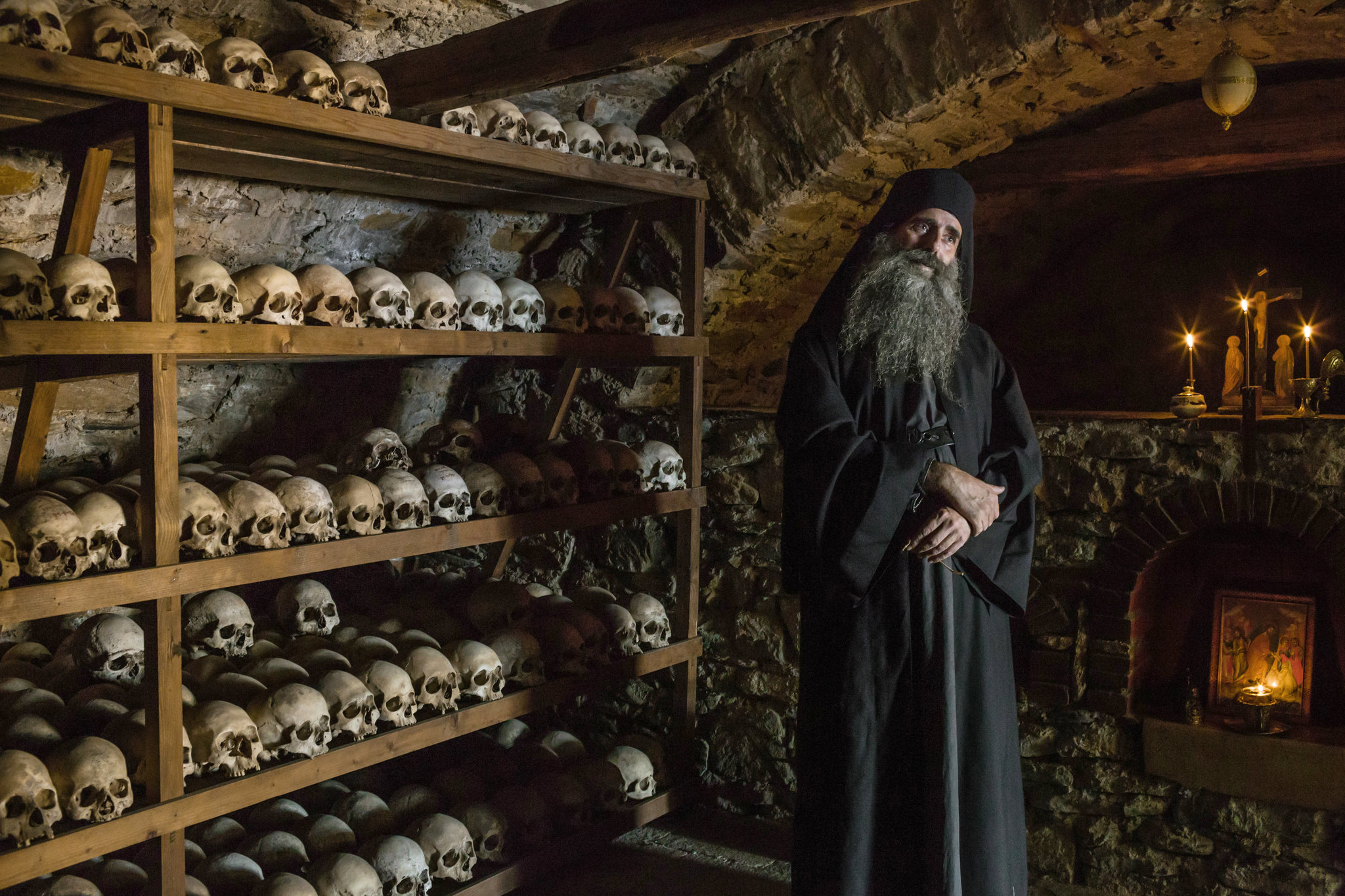
The most direct institutional continuation of the desert tradition is Mount Athos, the monastic peninsula in northern Greece continuously inhabited by Orthodox monks since at least the ninth century. Known as the Holy Mountain, Athos houses twenty ruling monasteries and numerous smaller communities, and remains the heartland of the hesychast tradition the Desert Fathers founded. The life on the Holy Mountain is organized around the Liturgical cycle and the practice of interior prayer, particularly the Jesus Prayer.
The Philokalia and Its Influence
The Philokalia, compiled in the eighteenth century from texts spanning fourteen centuries of the hesychast tradition, is the great written legacy of the desert in the modern world. Translated into Russian in the nineteenth century by Paisios Velichkovsky, it sparked a revival of hesychast prayer throughout the Russian Church that produced some of the greatest saints of the nineteenth and twentieth centuries, including Seraphim of Sarov and the Optina Elders. The Philokalia has since been translated into numerous modern languages and is read by Orthodox Christians across the world.
The Witness of the Desert for the Contemporary World
It might seem that the Desert Fathers have little to say to a world of smartphones, social media, and relentless digital noise. In fact, the opposite is true. The world the early monks fled shares its essential spiritual dynamic with our own: the multiplication of distractions, the noise that prevents interior stillness, the social pressures that make authentic self-knowledge nearly impossible. The Desert Fathers fled the world not because it was wicked but because it was distracting. Their analysis of the logismoi is a more penetrating framework for understanding distraction and addiction than most of what contemporary psychology has to offer. The insistence on humility is a corrective to the therapeutic culture of self-affirmation that may be the most needed word the desert tradition has for our time.
Common Questions About the Desert Fathers
Were the Desert Fathers Fleeing Responsibility?
This criticism was raised even in their own time, and the Desert Fathers addressed it directly. They did not understand their withdrawal as a flight from human responsibility but as the acceptance of a different and more fundamental one. The monk who prays without ceasing intercedes for the whole world. The monk who achieves some degree of purification becomes a source of grace for all who encounter him. Antony, who withdrew as deeply into the desert as he could go, was sought out by bishops, emperors, and ordinary people, and his presence in the world was more life-giving than it could have been had he remained in Alexandria as a respectable citizen.
Are Their Practices Relevant to Ordinary Life?
Yes, and the Desert Fathers themselves insisted on this. The Apophthegmata records numerous sayings given to laypeople and visitors who were not monks and had no intention of becoming monks. The principles of watchfulness, humility, prayer, and the struggle against the passions apply to every human being in every state of life. The specific practices of the desert, adapted to the conditions of ordinary life, are the substance of what Orthodox Christianity calls the spiritual life: a daily prayer rule, regular fasting, frequent Confession, attentiveness to the movements of one's thoughts, and the cultivation of genuine love for every person one encounters.
How Does One Access Their Wisdom?
The most accessible entry point is the Apophthegmata Patrum itself, available in several English translations. For those who want to go deeper, the writings of Evagrius of Pontus and the four volumes of the Philokalia offer the most comprehensive treatment of the interior life in the desert tradition. For a narrative approach, Athanasius's Life of Antony and Palladius's Lausiac History bring the world of the desert communities to life with remarkable vividness.
Stay in Your Cell: The Desert's Word for Every Generation
The counsel that recurs more than any other in the literature of the Desert Fathers is deceptively simple: "Stay in your cell." The cell is the place of encounter with God. It is also the place of encounter with oneself, with the full, unfiltered reality of what one is, stripped of the distraction and self-presentation that social life always involves. The cell is uncomfortable precisely because it is honest. And it is in that honesty, sustained over years and decades, that the soul is gradually transformed.
Every serious Orthodox Christian is, in a sense, called to find their cell. Not necessarily a literal mud-brick room in the Egyptian desert. The cell can be the quiet corner where one prays each morning before the household wakes. It can be the interior silence one cultivates in the midst of a busy day. It can be the fidelity to a simple prayer rule, kept day after day regardless of feeling or circumstance. The cell is wherever one consents to stop running and to stand still before God.
The Desert Fathers walked out into the wilderness in the fourth century and found God there. They left behind them a tradition of extraordinary richness and precision, a whole science of the soul, a body of wisdom about the human heart that has lost none of its relevance and none of its power. For those willing to sit with it, to read it slowly, to ask it for a word, it continues to speak. Abba, give me a word. And the word comes back across seventeen centuries, clear and direct and utterly particular: Go, sit in your cell. Your cell will teach you everything.
Glory to God for all things.
Sources: Athanasius of Alexandria, Life of Antony; Palladius, Lausiac History; Apophthegmata Patrum; Evagrius of Pontus, Praktikos; John Cassian, Conferences and Institutes; The Philokalia (Nikodemos of the Holy Mountain and Makarios of Corinth, eds.).
Kai Tutor | The Societal News Team