Ukraine May Need Billions More Amid Growing Humanitarian Crisis
$27 Billion Gap: What the EU Cannot Provide
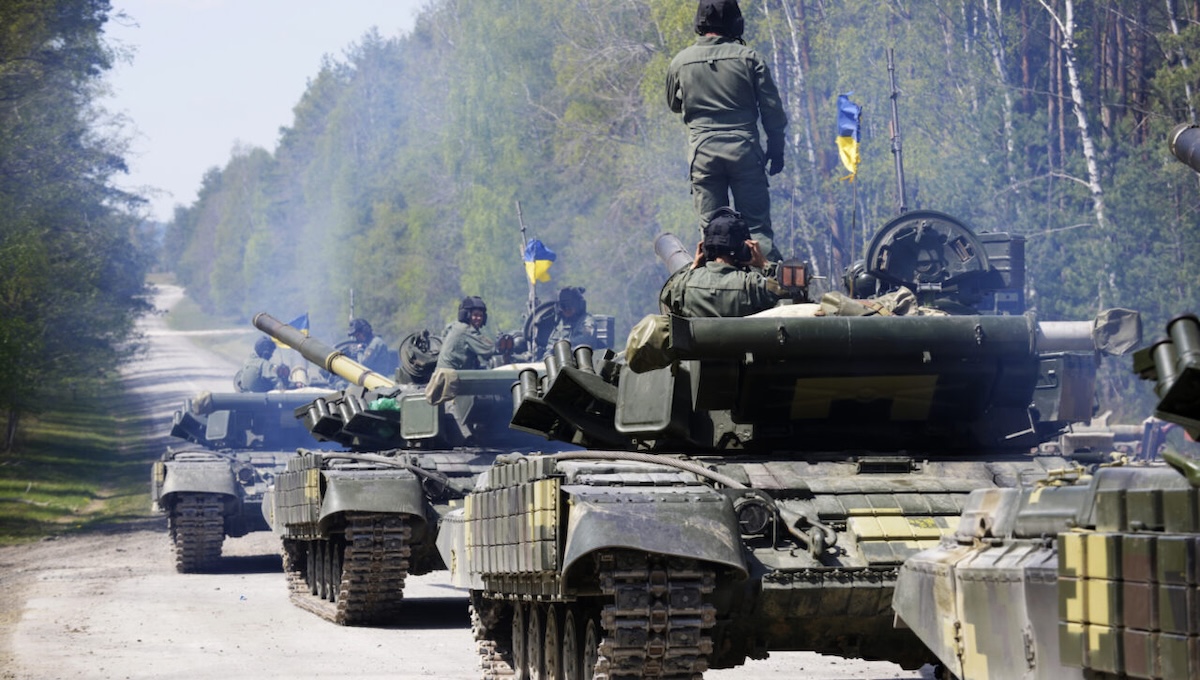
Ukraine requires at least $27 billion in military equipment from sources outside the European Union in 2026, underscoring the bloc's reliance on American technology to sustain support for Kyiv, according to negotiating documents. The European Union plans to allocate 60 billion euros ($70 billion) toward Ukraine's defense within a broader 90-billion-euro support package finalized in December, an unprecedented commitment that European leaders anticipate will revitalize the continent's military-industrial base while enabling the Ukrainian armed forces to maintain operations throughout 2026.
Nevertheless, the EU appears either incapable of replicating certain U.S. produced systems or unable to manufacture them at sufficient speed, as indicated by documents reviewed by the Kyiv Independent. This includes critical air defense technologies such as Patriot systems, as well as munitions and spare parts essential for Ukraine's F-16 aircraft fleet. Germany and the Netherlands have advocated that up to one-quarter of the defense funds be directed toward weapons manufactured beyond the EU, thereby permitting Ukraine to procure these vital capabilities from non-EU suppliers, particularly the United States.
Total EU support package (December 2025): €90 billion
Ukraine's estimated total need (2026-2027): €135 billion ($155 billion)
Coverage by December agreement: approximately two-thirds
Non-EU equipment gap: at least $27 billion
Germany/Netherlands proposal: up to one-quarter of funds for non-EU weapons
The Patriot Problem: Systems Europe Cannot Replace
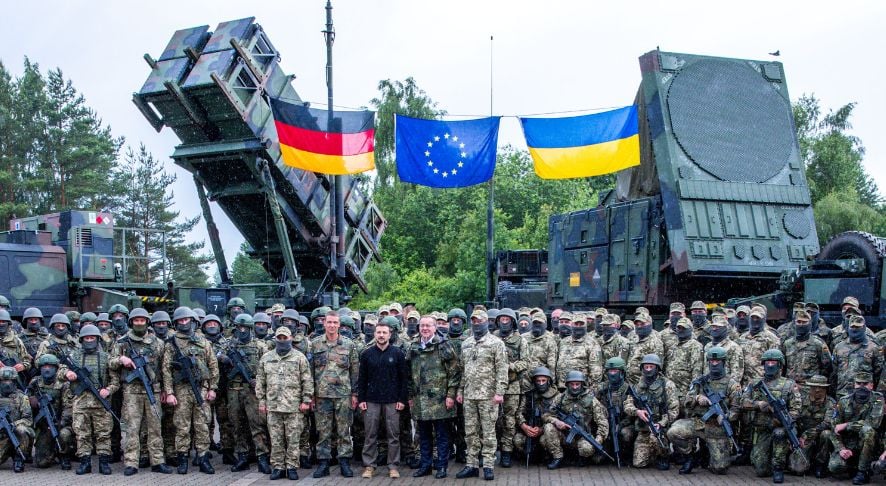
Ukraine has consistently maintained that American-made Patriot systems and their associated interceptors lack viable substitutes. Of particular importance are the advanced Patriot PAC-3 interceptors, which represent Ukraine's most effective countermeasure against ballistic missiles. Although the joint French-Italian SAMP/T system possesses anti-ballistic missile capabilities, no units have been manufactured since Russia's full-scale invasion of Ukraine in 2022, owing to complex production arrangements, according to a forthcoming study by the Institute for European Policymaking reviewed by the Kyiv Independent. Moreover, in operational conditions, Ukraine's SAMP/T batteries have demonstrated lower effectiveness than the American Patriot PAC-3 in intercepting Russian ballistic missiles. Ukraine also depends significantly on U.S. signals intelligence and satellite capabilities, areas in which its European partners lack comparable assets.
The EU delegation in Kyiv neither confirmed nor denied the $27 billion estimate, noting that such assessments fall to Ukraine, while emphasizing that "the EU is by far the largest and most stable financial partner of Ukraine." Ukraine's newly appointed Defense Minister Mykhailo Fedorov did not respond to a request for comment.
Transatlantic Tensions: The Greenland Crisis Complicates Everything
Ukraine's reliance on U.S. weaponry reveals the challenging position confronting EU member states, which depend on American technology to bolster Kyiv even as U.S. President Donald Trump's increasingly assertive statements regarding Greenland precipitate the most severe crisis in the transatlantic alliance in decades. On January 17, Trump announced that the United States would impose tariffs on several European countries following their public support for Denmark amid American threats to annex Greenland. Reports indicate that the EU is preparing retaliatory tariffs on goods valued at 93 billion euros.
When queried about potential adjustments to EU policy toward the United States in light of the Greenland threats and new tariffs, the EU delegation in Kyiv declined to comment but affirmed that the EU was "working side by side with the U.S. to ensure Ukraine has robust and credible security guarantees to defend its sovereignty and territorial integrity".
A Humanitarian Crisis Developing in Real Time
This transatlantic discord emerges at a pivotal juncture for Ukraine. The country is enduring one of its coldest winters in recent memory, with temperatures falling below minus 20 degrees Celsius (-4 degrees Fahrenheit). Russia has systematically targeted and destroyed extensive portions of Ukraine's civilian energy infrastructure through near-daily missile and drone attacks, pushing the nation toward the threshold of a humanitarian crisis.
"The consequences of Russian strikes and worsening weather conditions are severe," President Zelensky stated on January 14, urging Ukraine's allies to accelerate deliveries of air defense systems and interceptors. The Ukrainian president further disclosed that certain air defense systems had exhausted their ammunition supplies entirely. On January 16, Zelensky announced the arrival of a substantial air defense aid package in Ukraine, though Russia is anticipated to launch further large-scale strikes on the nation's energy infrastructure, which would further strain remaining air defense resources.
Source: kyivindependent.com
Kai Tutor | The Societal News Team 19 JAN 2026
Follow Us!
It helps decentralize our presence across the web and it's completely free!
Instagram ➤
Youtube ➤
Substack ➤
X.com ➤
Telegram ➤
TikTok ➤