The United States Intervention in Venezuela
Background: Decades of Tension
The relationship between the United States and Venezuela has long been characterized by ideological clashes, economic interdependence, and strategic competition. Venezuela, home to the world's largest proven oil reserves, has been a focal point of U.S. foreign policy since the rise of Hugo Chavez in 1999, whose socialist policies challenged American influence in Latin America. Under Chavez's successor, Nicolas Maduro, tensions escalated through U.S. sanctions, diplomatic isolation, and, most recently, a direct military intervention.
Operation Absolute Resolve: January 3, 2026
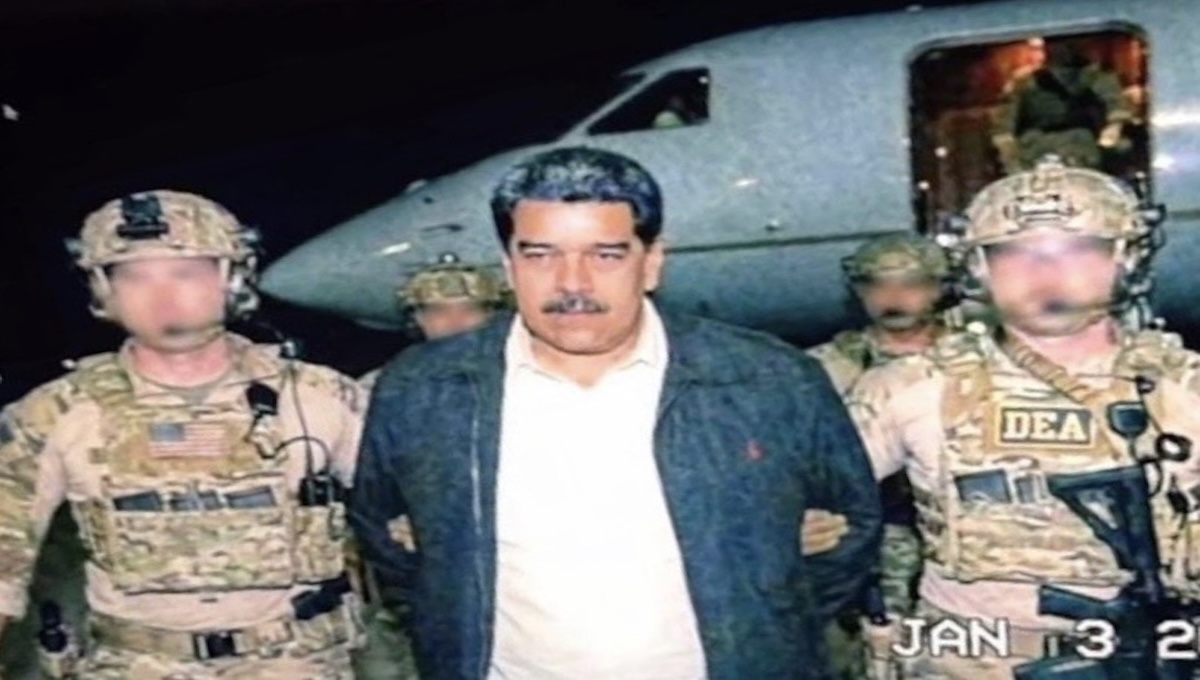
On January 3, 2026, U.S. forces executed Operation Absolute Resolve, a raid on Caracas that captured Maduro and his associate Flores, transporting them to New York for trial on charges including narco-terrorism and drug trafficking. The operation involved airstrikes on military targets and special forces insertions. Venezuela reported 83 deaths as a result, including 47 soldiers.
The event has been described as a "capture" by U.S. officials and a "kidnapping" by Venezuelan authorities and international critics. Maduro pleaded not guilty at his arraignment and described himself as a "prisoner of war," raising questions about the operation's compliance with the UN Charter, which prohibits the use of force against sovereign states without Security Council approval or a valid self-defense claim.
The Official Rationale: Narco-Terrorism
The Trump administration portrayed the capture as a targeted law enforcement operation rather than an act of war. President Trump announced it as a success in apprehending a "narco-terrorist," emphasizing Maduro's indictment on charges of conspiring to flood the U.S. with cocaine, possession of machine guns, and related offenses. These charges stem from a 2020 indictment expanded over subsequent years, accusing Maduro of leading the Cartel of the Suns, a network allegedly involving senior Venezuelan officials in drug trafficking.
The operation built on months of escalation, including U.S. strikes on vessels suspected of carrying drugs in the Caribbean and seizures of sanctioned Venezuelan oil tankers. Secretary of State Marco Rubio clarified that the intervention did not require congressional authorization, classifying it as a counter-narcotics effort rather than an act of hostilities. This framing aligns with broader U.S. national security priorities including curbing migration, disrupting drug flows, and countering Venezuelan alliances with Iran, Russia, and China.
Critics argue this rationale masks violations of international law. The European Union and several Latin American nations condemned the action, calling for dialogue and restraint.
The Alternative View: Petrodollar and Oil Control
While the official narrative centers on counter-narcotics, an alternative view holds that the intervention was driven by economic imperatives, particularly the need to secure Venezuelan oil to bolster the U.S. dollar's global reserve status amid growing de-dollarization pressure.
This perspective draws on the petrodollar system, established in the 1970s, wherein oil-exporting nations price crude in U.S. dollars, creating sustained demand for the currency and enabling the U.S. to finance deficits through seigniorage. (Seigniorage is the profit governments make from issuing currency, calculated as the difference between the face value of money and the cost to produce it, or the interest earned by the central bank on assets backing that money.)
Venezuela's oil reserves, estimated at over 300 billion barrels, represent a critical asset in this context. Under Maduro, Venezuela diversified oil sales away from the dollar, trading with China, Russia, and Iran in alternative currencies and cryptocurrencies, directly challenging petrodollar dominance. This shift accelerated amid U.S. sanctions, which reduced Venezuelan oil exports to the U.S. from over 1 million barrels per day in the early 2000s to near zero by 2020. As global powers push for de-dollarization, the U.S. faces inflationary pressure from potential dollar debasement.
Reports indicate U.S. sales of seized Venezuelan oil worth $500 million, with proceeds directed to accounts in Qatar. Capturing Maduro facilitates U.S. control over Venezuelan production, ensuring it is traded in dollars and integrated into U.S.-aligned markets. This could stabilize the dollar by increasing global demand for USD-denominated assets and countering inflation from U.S. fiscal deficits exceeding $2 trillion annually.
Venezuela Under Delcy Rodriguez
Following Maduro's capture, Vice President Delcy Rodriguez was sworn in as acting president, maintaining continuity in the Chavista government. The U.S. has pursued a multifaceted strategy blending coercion, diplomacy, and economic leverage. Trump initially asserted U.S. administration of Venezuela, focusing on an oil quarantine to prevent sales to adversaries. Rubio subsequently clarified a non-occupational approach, emphasizing pressure on remaining officials for compliance on drugs, migration, and energy.
Diplomatic engagements have accelerated. A U.S. delegation visited Caracas to explore restoring relations, with Rodriguez signaling openness to re-establishing embassies and opening the oil sector to foreign investors including U.S. firms. CIA Director John Ratcliffe met Rodriguez, indicating intelligence-driven coordination. Economically, the U.S. has seized and sold Venezuelan oil assets, negotiating deals for control over production.
Politically, Trump dismissed opposition leader Maria Corina Machado's viability despite her international profile and calls for democracy, prioritizing stability under Rodriguez. A state of emergency persists in Venezuela, with U.S. military presence in the region enforcing compliance. These actions have yielded mixed results: 56 political prisoners were released, but international condemnation persists, with China demanding Maduro's release and regional powers including Brazil and Mexico criticizing the intervention.
What This Means for the International Order
The U.S. capture of Nicolas Maduro exemplifies the intersection of security, law, and economics in contemporary geopolitics. Officially framed as a counter-narcotics triumph, the operation's alternative reading as a bid to secure oil for dollar stability reveals deeper structural motivations. Current U.S. engagements in Venezuela, through diplomatic overtures, economic control, and coercive leverage, suggest a strategy aimed at regime co-optation rather than full democratization.
As global de-dollarization trends intensify, such interventions may become more common, challenging the post-World War II international order built on sovereign equality and non-intervention norms. We will continue to monitor Venezuela's oil integration into U.S. markets and its impact on currency dynamics.
Kai Tutor | The Societal News Team
Follow Us!
It helps decentralize our presence across the web and it's completely free!
Instagram ➤
Youtube ➤
Substack ➤
X.com ➤
Telegram ➤
TikTok ➤