Seizures of Russian Oil Tankers Amid the Venezuelan Oil Crisis
January 2026: A New Escalation in Sanctions Enforcement
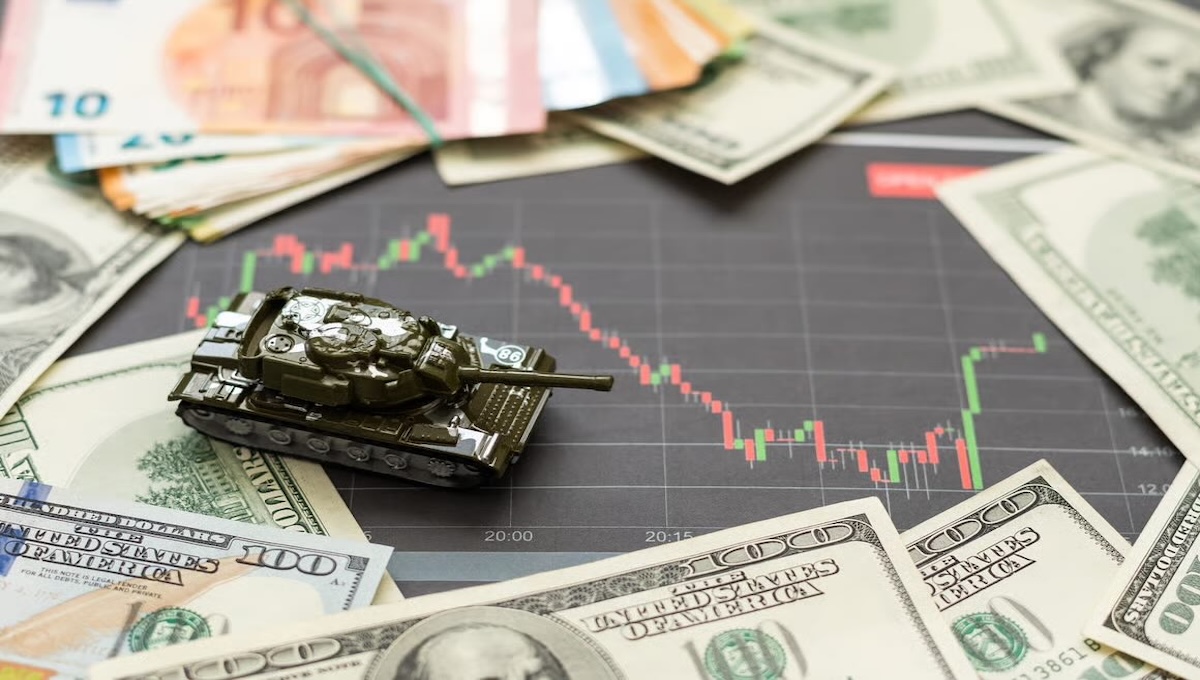
In early January 2026, the United States executed a series of high-profile maritime operations, seizing multiple oil tankers linked to Venezuelan exports, including at least one Russian-flagged vessel. These actions, part of a broader blockade announced by the Trump administration, mark a significant escalation in US enforcement of sanctions against Venezuela following the controversial arrest of former President Nicolás Maduro on January 3, 2026. The seizures, occurring in international waters such as the North Atlantic and the Caribbean, have drawn sharp rebukes from Russia, which labeled them as "piracy." This development is not isolated but intertwined with longstanding US efforts to isolate Venezuela economically, disrupt Russia's sanctions-evasion mechanisms amid its war in Ukraine, and maintain dominance in global oil markets denominated in US dollars (USD). As of January 9, 2026, these events highlight the convergence of energy geopolitics, sanctions policy, and military posturing in a multipolar world.
Jan 7: Russian-flagged Marinera (formerly Bella-1) seized by US Navy SEALs in North Atlantic
Marinera background: sanctioned in 2024 for Iranian oil transport, reflagged to Russia
Second seizure: stateless tanker Olina in the Caribbean
UK assistance: provided in the pursuit of the Marinera
Russian shadow fleet size: 600+ vessels
Russian vessels sanctioned by Treasury in 2025: 180+
Venezuela oil production in 2018: 2 million+ barrels/day
Venezuela oil production by late 2025: under 800,000 barrels/day
Venezuela's Oil Sanctions: The Petrodollar Leverage
Venezuela possesses the world's largest proven oil reserves, estimated at over 300 billion barrels, making its petroleum sector a critical lever in international relations. Since 2019, the US has imposed comprehensive sanctions on Venezuela's state-owned oil company, Petróleos de Venezuela, S.A. (PDVSA), aiming to deprive the Maduro regime of revenue and precipitate regime change. These measures, intensified under both the Biden and Trump administrations, block Venezuelan oil sales to US entities and restrict access to the global financial system, which is heavily reliant on USD denominated transactions.
The USD's hegemony in oil markets, often termed the "petrodollar" system, amplifies the impact of these sanctions. Venezuelan oil exports, traditionally priced in USD, require access to US financial networks for clearance, enabling Washington to enforce embargoes extraterritorially. By designating the Maduro government as a "foreign terrorist organization" in December 2025, the US justified a total blockade on sanctioned tankers entering or leaving Venezuelan ports, effectively seizing control of Venezuelan oil sales "indefinitely." This move, announced by President Trump, targets not only domestic Venezuelan revenue but also disrupts flows to allies like China and Russia, who have increasingly purchased Venezuelan crude to circumvent Western sanctions.
Economically, the sanctions have slashed Venezuela's oil production from over 2 million barrels per day in 2018 to under 800,000 by late 2025, exacerbating hyperinflation and humanitarian crises. However, partial relaxations in 2023-2024 allowed limited exports to US refineries, reflecting pragmatic energy needs amid global shortages triggered by the Russo-Ukrainian war. The 2026 blockade reverses this, prioritizing geopolitical leverage over short-term supply stability, with potential upward pressure on global oil prices as Venezuelan exports, often discounted to buyers like China, disappear from the market.
The Shadow Fleet: How Sanctioned States Move Oil
A key element in evading these sanctions has been the emergence of the "shadow fleet". Its a network of aging, uninsured, and often reflagged tankers used by sanctioned states like Russia, Iran, and Venezuela to transport oil covertly. These vessels, frequently operating without transparent ownership or insurance from Western providers, employ tactics such as ship-to-ship transfers, false flagging, and AIS (Automatic Identification System) spoofing to bypass detection.
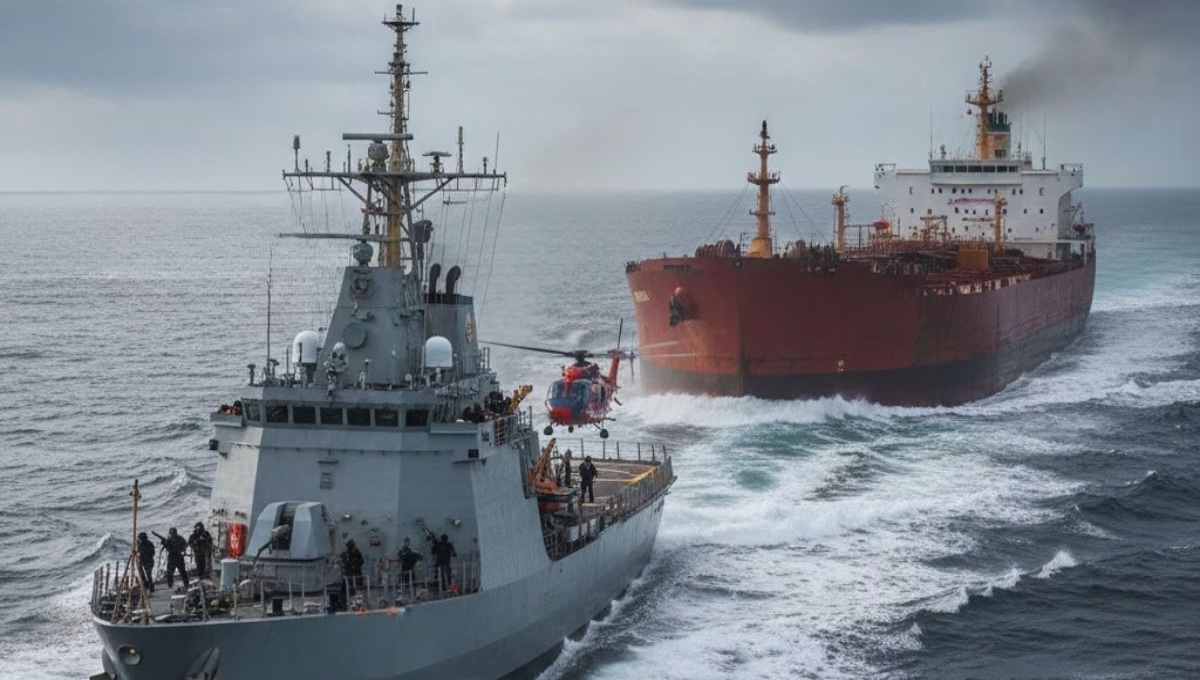
The US has increasingly targeted this fleet, viewing it as a vulnerability in adversaries' economic resilience. In the Venezuelan context, shadow tankers have facilitated exports to non-Western buyers, undermining sanction efficacy. The January 7, 2026, seizure of the Russian-flagged Marinera (formerly Bella-1), which had loaded Venezuelan crude, exemplifies this strategy. Pursued for weeks across the Atlantic with UK assistance, the vessel was boarded by US Navy SEALs, marking the first known seizure of a Russian-flagged ship in recent history. A subsequent seizure of the stateless tanker Olina in the Caribbean brought the total to five in early 2026.
Motivations extend beyond Venezuela: Disrupting the shadow fleet weakens Russia's ability to fund its military operations in Ukraine by limiting oil export revenues. US officials, including Senator Marco Rubio, have emphasized enforcing sanctions "anywhere in the world," signaling a global campaign against these vessels. This approach aligns with broader Treasury actions, such as sanctioning over 180 Russian vessels in 2025.
The Russia-Ukraine Connection
The Venezuelan seizures cannot be decoupled from the Russo-Ukrainian war, which entered its fourth year in February 2026. Russia's 2022 invasion prompted unprecedented Western sanctions, including a G7 price cap on Russian oil at $60 per barrel and bans on seaborne crude imports to the EU. These measures, aimed at curbing Moscow's war funding, have reduced Russian oil revenues by an estimated 15-39% in 2025-2026.
Russia's reliance on the shadow fleet, now comprising over 600 vessels, has mitigated some losses, with exports rerouted to Asia. However, US actions in Venezuela indirectly target this network, as many shadow tankers service multiple sanctioned regimes, including joint Russia-Venezuela oil trades. The Marinera, sanctioned in 2024 for Iranian oil transport before reflagging to Russia, illustrates this overlap. Escalation risks are evident. Russia's deployment of submarines to escort tankers and threats of military retaliation underscore the potential for direct confrontation. Proposed US legislation, such as the Graham Sanctions Bill, seeks further pressure on Russia's "shadow economy." In this context, Venezuelan operations serve as a testing ground for broader anti-Russia strategies, potentially straining alliances and elevating global tensions.
Implications: Economics, Politics, and Military Risk
The January 2026 seizures, involving vessels like the Marinera and Olina, demonstrate US willingness to employ kinetic force in sanctions enforcement. Supported by allies like the UK, these actions challenge norms of freedom of navigation under the UN Convention on the Law of the Sea. Russia has demanded the release of crew members, while market reactions include rising oil prices amid supply uncertainties.
Implications are multifaceted: Economically, sustained blockades could reduce Russian and Venezuelan revenues, but at the cost of higher global energy costs. Politically, they risk alienating Latin American states and accelerating de-dollarization efforts by BRICS nations. Militarily, the precedent of tanker boardings could provoke escalatory responses, echoing historical naval blockades.
The US seizures of Russian oil tankers from Venezuela represent a confluence of sanctions warfare, energy dominance, and great-power competition. Rooted in Venezuela's oil-dependent economy and the USD's global role, these actions target the shadow fleet as a linchpin in Russia's evasion of Ukraine-related sanctions. As of January 2026, they signal a more assertive US posture, but with inherent risks of broader conflict, through provocation.
The Societal News Team 09 JAN 2026
Follow Us!
It helps decentralize our presence across the web and it's completely free!
Instagram ➤
Youtube ➤
Substack ➤
X.com ➤
Telegram ➤
TikTok ➤