The AI Investment Tsunami: Unpacking the Trillions Pouring into LLMs and Broader AI Development
The Biggest Investment Target in History
In just a few years, artificial intelligence has gone from a niche research topic to one of the biggest investment targets in history. Since 2013, more than $1.6 trillion has been invested in AI, and another $375 billion is expected in 2025 alone. That level of spending is larger than past tech booms like the dot-com bubble and even rivals historic government projects such as the Apollo moon program.
This surge is fueled by the belief that AI will transform nearly every industry. At the same time, critics warn that the hype may be outpacing reality, pointing to sky-high valuations, massive energy use, and the risk of a future crash. Despite these concerns, governments, venture capitalists, and major corporations continue to invest heavily, betting that AI will drive the next industrial revolution.
Historical Overview: From AI Winters to the Current Boom
AI investment has moved in cycles of optimism and disappointment over the decades. Before 2010, funding was relatively small and largely confined to universities, government research programs, and early machine-learning experiments. Annual investment during this period amounted to only a few billion dollars, reflecting limited computing power and narrow real-world applications.
During the 2010s, breakthroughs in computing power, data availability, and deep learning reignited interest in AI. This decade marked a major turning point, as private investment surged and AI began moving out of research labs and into commercial products. Between 2013 and 2023, global private investment in AI reached approximately $760 billion, driven by milestones such as IBM's Watson and Google DeepMind's AlphaGo.
After 2020, AI investment entered a new phase of explosive growth. The COVID-19 pandemic accelerated digital transformation across industries, but the real catalyst was the release of ChatGPT in 2022. That moment sparked widespread public awareness and enterprise adoption of AI, especially LLMs. Although funding briefly dipped during periods of economic uncertainty, it rebounded quickly, and by 2025 AI accounted for nearly half of all global venture capital investment.
The Current Investment Landscape: Trillions at Play
By 2025, global VC investment reached $368 billion in 2024 (rising from $349 billion in 2023), with AI as the "standout superstar." AI-specific private investment hit $110 billion in 2024, a 62% YoY growth, while generative AI (heavily LLM-focused) attracted $45 billion. Q3 2025 alone saw $97 billion in VC, with AI capturing 46.4%. Geographically, the U.S. dominates: $109.1 billion in private AI investment in 2024 (74% of global), followed by China ($9.3B), UK ($4.5B), and France. Since 2013, U.S. AI funding totals $471 billion vs. $289 billion for the rest of the world.
Expected AI investment in 2025: $375 billion
Global VC in 2024: $368 billion (AI = 46.4% of Q3 2025 VC)
AI-specific private investment 2024: $110 billion (+62% YoY)
Generative AI attracted in 2024: $45 billion
US share of global private AI investment: $109.1 billion (74%)
OpenAI projected 2025 revenue: $12.7 billion
Agentic AI projected market by 2030: $155 billion
Data center infrastructure needed by 2030: $5.2 trillion
Where the Money Flows: Hardware, Talent, and Beyond
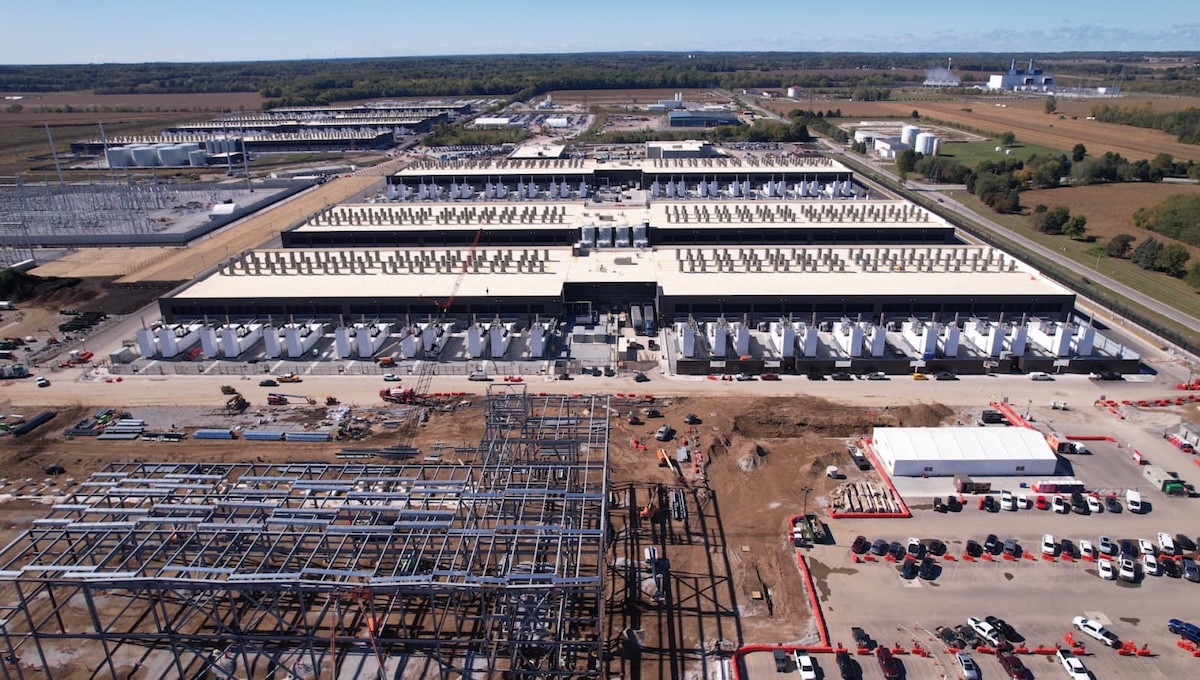
AI investment extends far beyond software products. A significant portion of capital is flowing into chips and data centers, as modern AI systems require enormous amounts of computing power to train and operate. This demand has driven unprecedented spending on hardware and cloud infrastructure. Over 500 new data centers were built between 2021 and 2024, with $5.2 trillion needed by 2030.
Another major area of investment is talent. Top AI researchers and engineers are in extremely high demand, with salaries reaching up to $1 million per year, intensifying competition among tech firms and research labs. At the same time, AI funding is expanding into real-world applications such as healthcare, finance, robotics, biotechnology, and autonomous systems.
Increasingly, investors are also shifting their focus toward next-generation AI. These efforts go beyond text generation and aim to create more autonomous, "agent-like" systems capable of planning, reasoning, and acting independently. This shift signals a move away from narrow applications toward more ambitious forms of AI with broader capabilities.
Analysis: Bubble or Sustainable Growth?
The data suggests a potential bubble... LLM investments may plateau as models hit limits (e.g., Apple's paper on diminishing returns). Energy demands are staggering AI could consume as much power as the Netherlands by 2027. Yet, revenue growth (e.g., OpenAI's 243% YoY) and enterprise adoption (59% in India) indicate real value.
Risks include regulatory hurdles (e.g., EU AI Act) and concentration (U.S. dominance raises geopolitical tensions). Positives AI could add $15.7T to global GDP by 2030. In 2025, trends shift to agentic AI and efficiency, moving beyond pure LLMs.
This investment wave reshapes economies, job displacement in routine tasks, but creation in AI ethics and deployment. Ethically, LLMs amplify biases, while broader AI raises existential risks. Positively, applications in healthcare (e.g., drug discovery) and climate modeling accelerate progress.
The trillions flowing into AI, particularly LLMs, represent a bet on humanity's future. While LLMs have catalyzed the boom with their accessible magic, broader AI holds the key to transformative intelligence. Data shows sustained growth, but prudence is advised, investors should diversify beyond hype. As 2025 unfolds, watch for IPOs, M&A (up in 2024), and regulatory shifts to determine if this is a bubble or the dawn of an AI era.
Analysis By The Societal News Team 22 DEC 2025
Follow Us!
It helps decentralize our presence across the web and it's completely free!
Instagram ➤
Youtube ➤
Substack ➤
X.com ➤
Telegram ➤
TikTok ➤