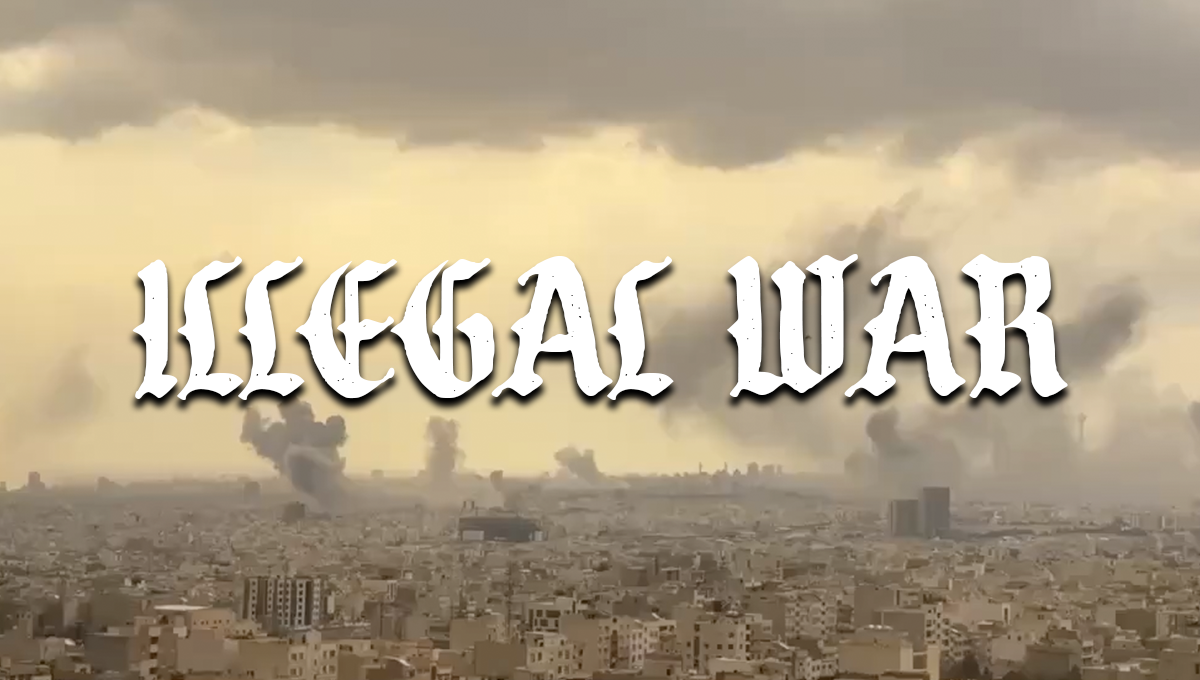
The Endless Frontier: Israel's Wars in Gaza, Lebanon, and Iran
The map they are actually fighting for, the ideology driving it, and who is paying in blood and treasure
Before We Begin: A Note on Complexity
This article does not argue that every Israeli citizen is a warmonger, or that every Palestinian is innocent. It argues something simpler and more disturbing: that the current Israeli government, dominated by far-right ideologues with openly maximalist territorial ambitions, has pursued a pattern of military action that independent legal bodies, UN investigators, and major human rights organizations have described as genocidal, and that the United States has bankrolled nearly every step of it.
The facts presented here are drawn from UN reports, congressional research, Israeli investigative journalism, and mainstream international sources. They are not fringe claims. They are simply rarely assembled in one place for a general audience.
Part One: The Land They Are Actually Fighting For
To understand the wars, you first have to understand the map.
"Greater Israel," in Hebrew Eretz Yisrael HaShlema, meaning "the Whole Land of Israel," is not a conspiracy theory. It is a documented ideology with a long paper trail, from Theodor Herzl's 19th-century diaries, which referenced territorial claims stretching from the Nile to the Euphrates, to a 1982 Israeli Foreign Ministry document that laid it out in coldly strategic terms.
That 1982 document, written by Oded Yinon, a senior official and journalist with ties to then-Defense Minister Ariel Sharon, argued that Israel's long-term survival depended on two things: becoming a regional imperial power, and breaking up surrounding Arab states into smaller, weaker, ethnically divided fragments. Yinon wrote that Lebanon was a "precedent" for how the rest of the Arab world could be dismantled along sectarian lines. The plan specifically identified Iraq, Syria, Jordan, Lebanon, and Egypt as targets for fragmentation. Sound familiar?
The Yinon Plan has been dismissed by some as fringe thinking never adopted as official policy. But the dismissal has become harder to sustain. In August 2025, Israeli Prime Minister Benjamin Netanyahu was presented with an amulet on the Israeli news channel i24 depicting a "Greater Israel" map stretching from the Nile to the Euphrates. When asked if he "feels a connection to the vision," he replied simply: "Very much."
That was not a gaffe. It was a statement of intent from the leader of a country currently fighting wars on three simultaneous fronts.
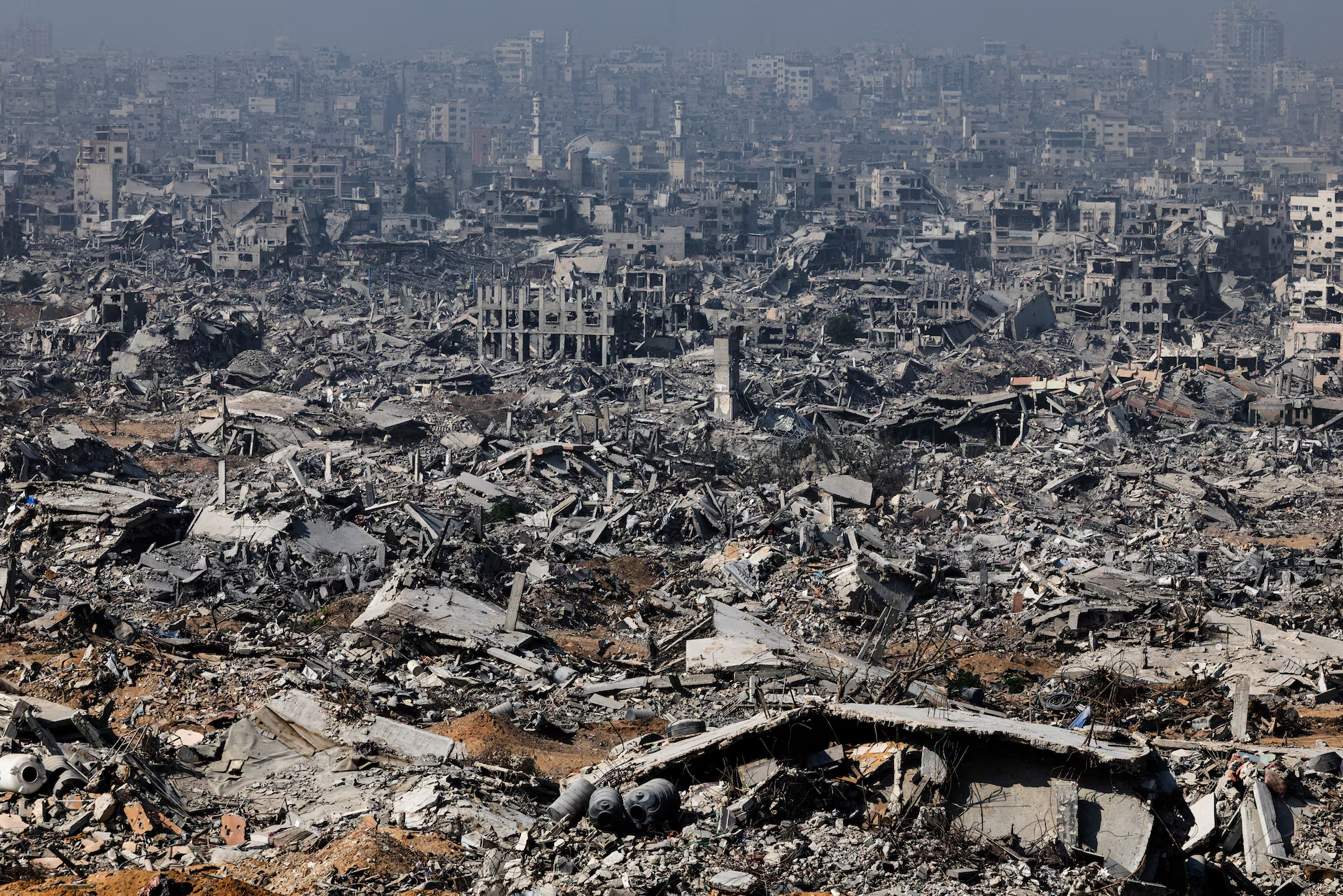
Part Two: Gaza, What "Leveling" Actually Means
On October 7, 2023, Hamas-led militants breached the Gaza border fence and attacked Israeli communities and a music festival, killing approximately 1,200 people, mostly civilians, and taking 251 hostages. The horror of that day was real. Israel's response has also been real, and what has followed is, by almost any empirical measure, one of the most intensive campaigns of urban destruction in modern history.
Here are the numbers, drawn from UN agencies, Medecins Sans Frontieres, and Israeli military intelligence:
Netanyahu himself said in May 2025: "We are destroying more and more homes, and Gazans have nowhere to return to."
In January 2025, a brief ceasefire allowed displaced Palestinians to begin returning to northern Gaza. Israel broke the ceasefire in March 2025 and resumed operations. By spring 2025, Human Rights Watch was reporting that Israel planned to "flatten" whatever buildings remained and concentrate the entire population into a single "humanitarian area." In May 2025, UN-backed monitors declared famine in Gaza.
The UN Special Rapporteur issued a formal report in early 2026 describing the destruction as "unprecedented even by the terrible standards of modern warfare since the 20th century," noting that it had "rendered almost the entire territory uninhabitable." Amnesty International, Human Rights Watch, the UN Commission of Inquiry, the International Association of Genocide Scholars, and multiple governments have used the word genocide to describe what is occurring. The International Court of Justice found the genocide case plausible enough to issue emergency provisional measures against Israel in January 2024.
The ICJ also ruled, in July 2024, that Israel's entire presence in the Occupied Palestinian Territories is unlawful under international law, that Israel has violated prohibitions against racial segregation and apartheid, and that occupation cannot transfer sovereign title. Israel has ignored these rulings.
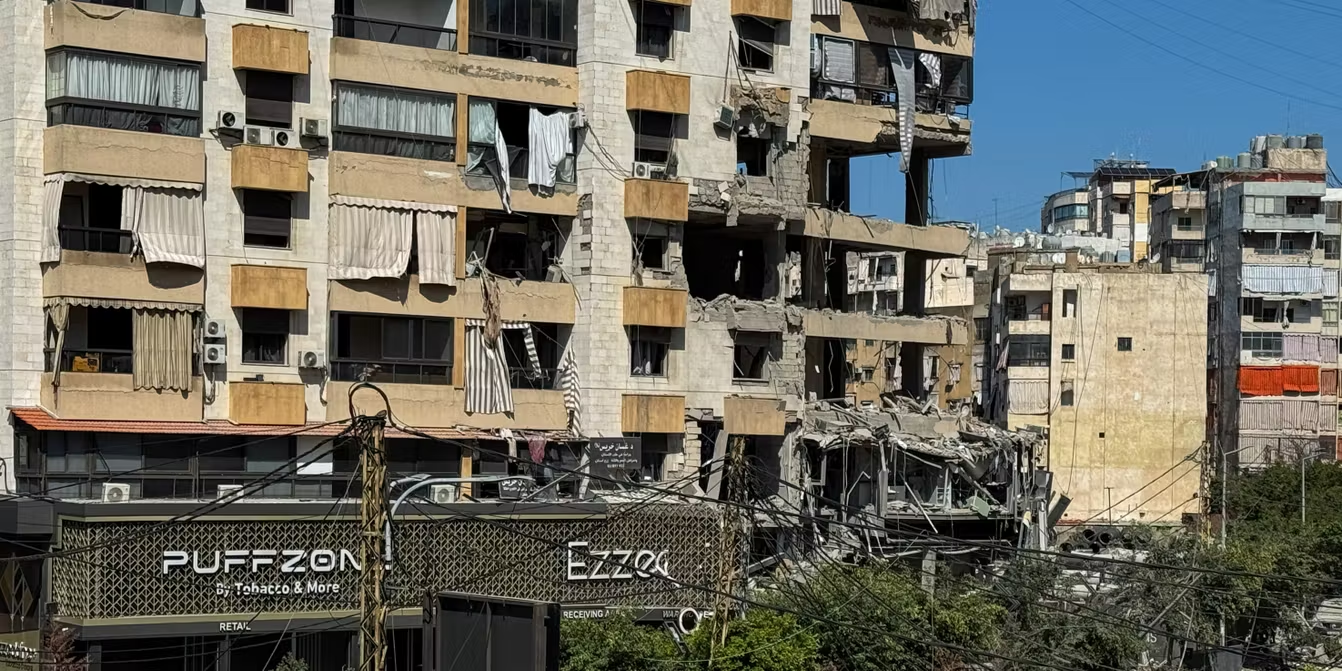
Part Three: Lebanon, the Gaza Playbook Repeated
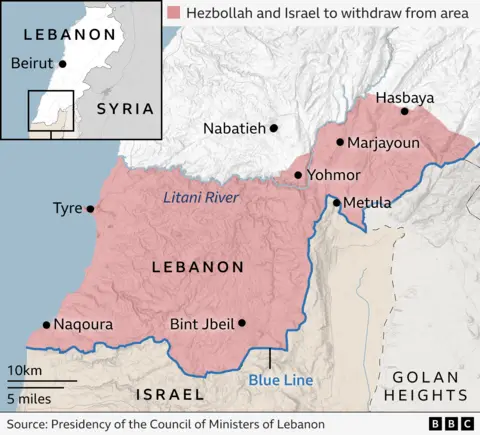
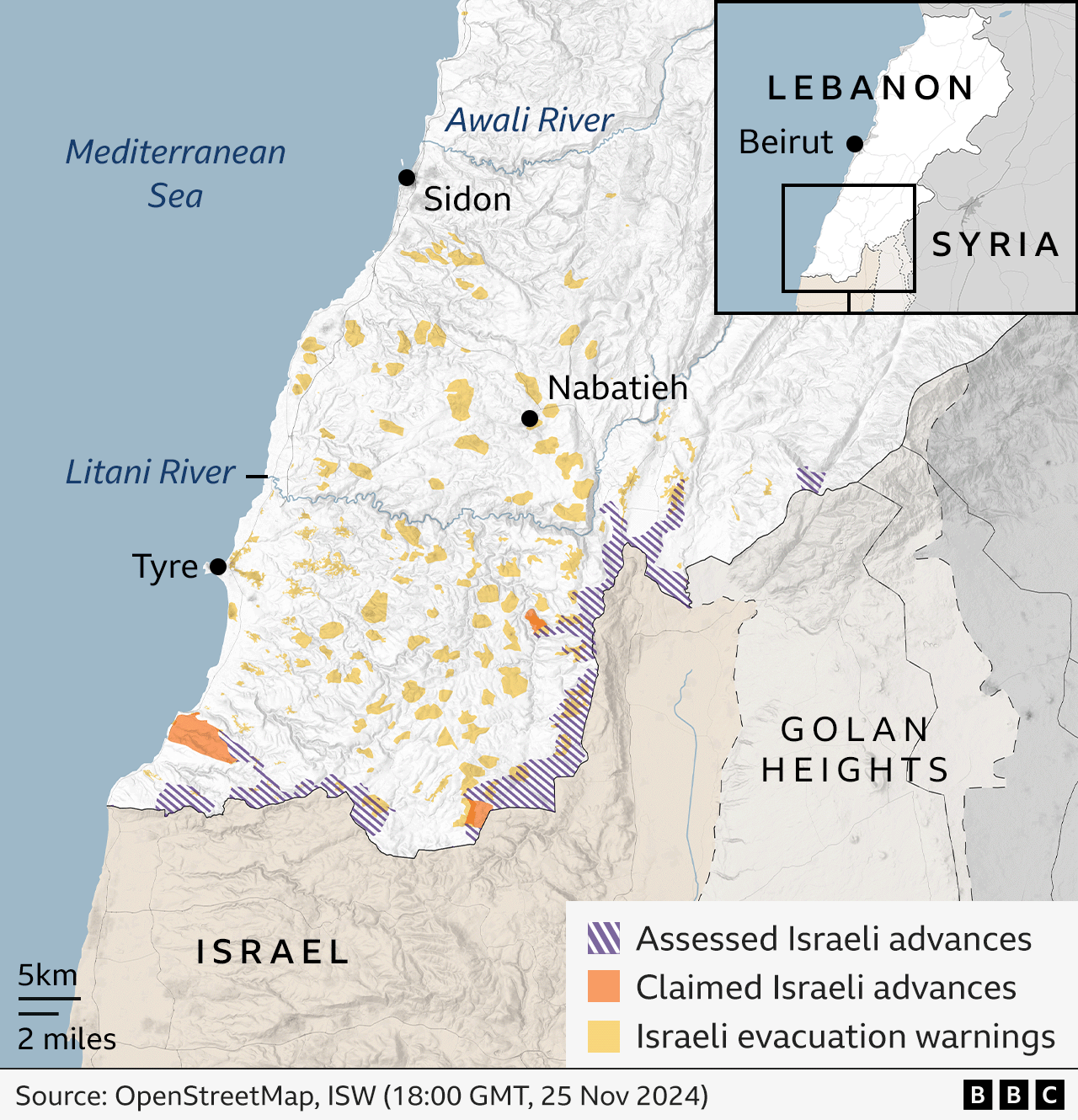
In September 2024, Israel expanded its war to Lebanon, ostensibly to neutralize Hezbollah, the Iran-backed militia that had been firing rockets into northern Israel since October 2023 in solidarity with Gaza. Israel assassinated Hezbollah's leader Hassan Nasrallah and systematically killed much of the group's senior leadership. By November 2024, a ceasefire was declared.
But the ceasefire did not end the destruction. It was merely paused.
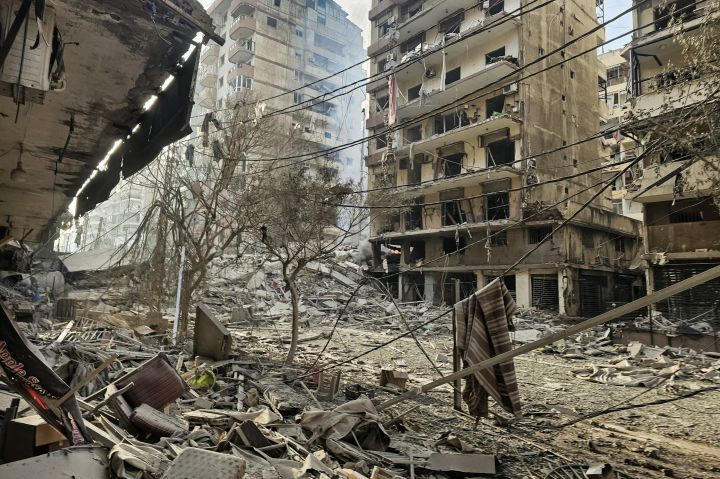
Satellite imagery reviewed by CNN showed that after the first ceasefire in November 2024, Israeli forces remained in southern Lebanon and began systematically demolishing buildings across dozens of villages, not through combat, but through controlled demolitions and bulldozers. Nearly 1.3 million Lebanese were displaced. When war resumed in early 2026, the images from border villages like Adaisseh were described as apocalyptic: almost every building reduced to rubble, including homes where families had already begun reconstruction under the previous ceasefire.
The stated goal was disarming Hezbollah. The practical result is the physical erasure of entire Shia communities from the landscape.
Part Four: Iran, the Boss Fight
Iran is the thread connecting all of this. It has funded, armed, and directed Hezbollah in Lebanon, provided support to Hamas in Gaza, and backed the Houthi movement in Yemen. All of these organizations are collectively called the "Axis of Resistance." For Israel, eliminating these proxies without addressing their backer would be, in their strategic calculus, like cutting weeds without removing the roots.
The deeper Israeli fear is Iran's nuclear program. Iran has been enriching uranium since the mid-2000s, survived a US-Israeli campaign of assassinations, cyberattacks, and sanctions, and by mid-2025 had enough enriched uranium to theoretically produce nine nuclear warheads, according to the IAEA. For Israel, a country that considers itself in existential danger from a regime that has repeatedly called for its destruction, an Iranian nuclear bomb is the line that cannot be crossed.
In June 2025, Israel launched Operation Rising Lion, a massive surprise strike on Iran. Over 30 top Iranian military commanders were assassinated in near-simultaneous strikes in Tehran. Nuclear scientists were killed. Nuclear facilities were bombed. Much of Iran's Russian-supplied missile defense infrastructure was destroyed. The United States joined on June 22, bombing Iran's most hardened nuclear sites. Iran retaliated with over 550 ballistic missiles and 1,000 drones. Most were intercepted. A ceasefire was declared on June 24, 2025.
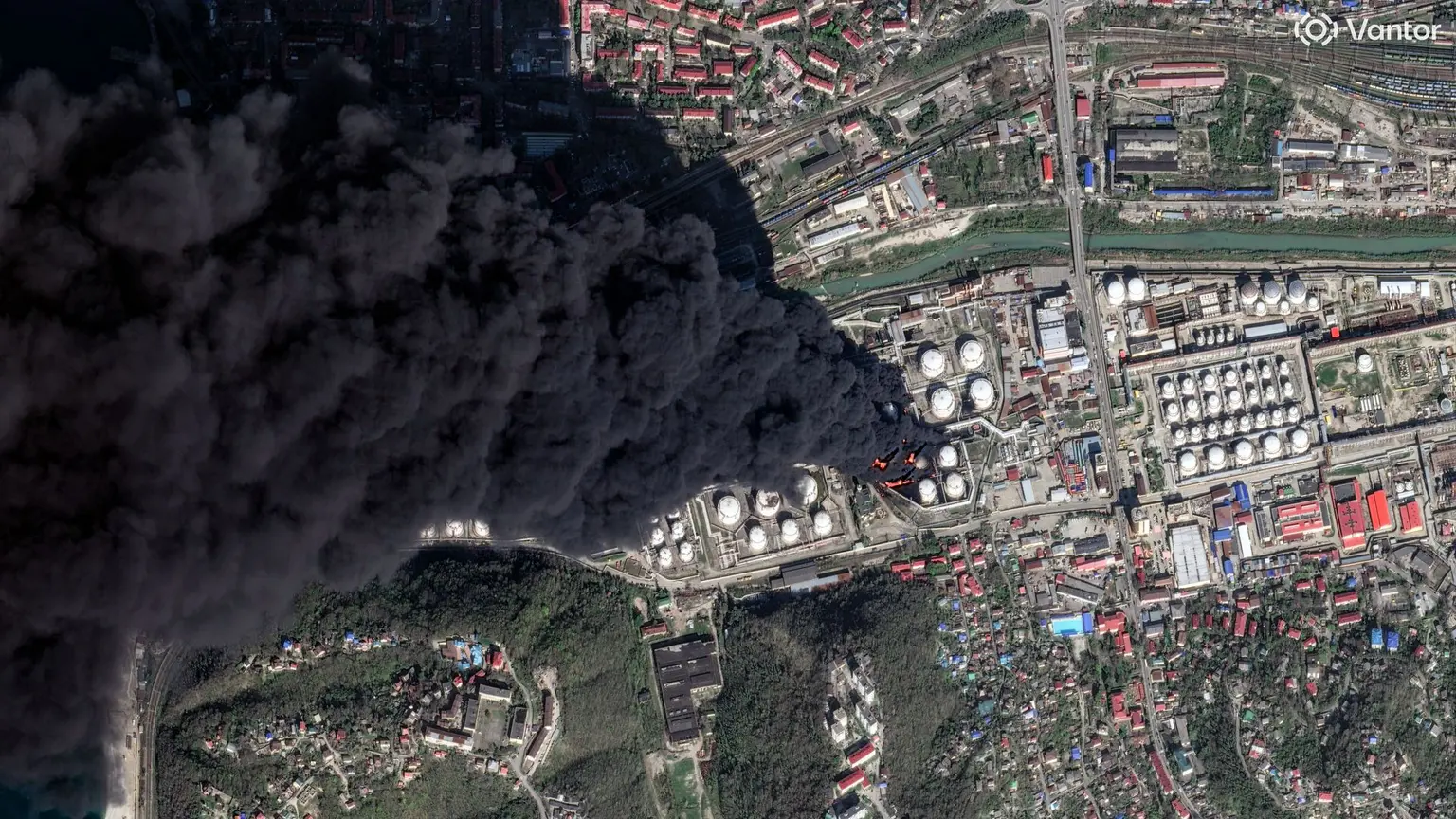
Then, on February 28, 2026, Israel and the United States launched a second, larger wave of strikes on Iran, killing Supreme Leader Ali Khamenei in the process. A conditional ceasefire was declared on April 8, 2026, with negotiations ongoing.
The stated reason is nuclear nonproliferation. The broader geopolitical reality is that the United States and Israel are attempting to collapse the Iranian Islamic Republic entirely, removing the one regional power capable of materially opposing Israeli military dominance across the Middle East.
Part Five: The "Terrorist" Narrative and the Inconvenient History
Western media has largely framed these conflicts through a consistent lens: Israel is fighting terrorism; Hamas and Hezbollah are unprovoked aggressors; Iran is the axis of evil. This framing collapses upon even modest historical scrutiny.
On Hamas: Hamas did not emerge from a vacuum. It was actually nurtured into prominence by Israeli policy. In the 1970s and 1980s, Israel deliberately encouraged Islamic movements in Gaza as a counterweight to the secular, nationalist Palestine Liberation Organization. Former Israeli Prime Minister Ehud Olmert said in 2023: "In the last 15 years, Israel did everything to downgrade the Palestinian Authority and to boost Hamas." Former PM Ehud Barak said Netanyahu's strategy was to keep Hamas "alive and kicking" in order to weaken the Palestinian Authority and block any path toward a Palestinian state.
On Hezbollah: Hezbollah emerged in the early 1980s directly in response to Israel's invasion of Lebanon in 1982. It is not simply a terrorist group. It is a political party, a social welfare organization, and a militia with roots in a Shia Muslim community that has been invaded, bombed, and occupied by Israel multiple times over the past 50 years. Whatever one thinks of Hezbollah's tactics or ideology, describing it as an unprovoked aggressor against Israel requires ignoring the entire history of Israeli military operations in southern Lebanon since 1978.
On the Gaza population: Statements by senior Israeli officials have framed the entire civilian population of Gaza as legitimate military targets. Defense Minister Israel Katz declared in 2025 that anyone who remained in Gaza City "will be terrorists and terror supporters." A June 2025 poll by the Hebrew University of Jerusalem found that 64% of Israelis largely agreed with the statement "there are no innocent people in Gaza." A July 2025 poll found that 79% of Israeli Jews were "not so troubled" or "not troubled at all" by reports of famine and suffering in Gaza. These are not the attitudes of a country fighting a surgical counterterrorism operation. They are the attitudes of a society that has convinced itself that collective punishment of an entire population is morally acceptable.
Part Six: America's Role, Funding Every Bomb
The United States has provided more military aid to Israel than to any other country in its history, over $300 billion in inflation-adjusted terms since 1959. Since October 7, 2023 alone, the US has provided at least $21.7 billion in direct military aid to Israel, with an additional $14.84 billion in war budget funding for related US operations. This is the largest single-period military aid package to Israel in American history by a wide margin.
Deliveries have included 57,000 artillery shells, 13,981 anti-tank missiles, 8,700 500-pound bombs, and 20,000 M4 rifles. In February 2025, the Trump administration declared a national security "emergency" to fast-track $4 billion in additional military aid, bypassing normal congressional review, including a sale of Caterpillar D9 bulldozers, the very machines used to demolish Palestinian homes.
The US has also intervened militarily on Israel's behalf in both the June 2025 and February 2026 Iran strikes, firing over 150 THAAD interceptors on Israel's behalf during the Twelve-Day War and bombing Iran's most fortified nuclear sites with munitions Israel's own arsenal could not reach.
When the International Criminal Court moved to issue arrest warrants for Israeli leaders, the US responded by sanctioning the ICC judges. When the UN tried to pass Security Council resolutions demanding a ceasefire, the US vetoed them. When a State Department internal report found that Israel had deliberately blocked humanitarian aid, Secretary of State Blinken rejected his own agency's findings.
According to a 2025 Pew Research poll, more than half of American adults (53%) now hold an unfavorable opinion of Israel, up from 42% before October 7, 2023. Even among American Jews, a Washington Post poll found that 61% believe Israel has committed war crimes in Gaza, and 39% believe Israel is committing genocide.
Part Seven: Why Three Wars at Once?
The question that unnerves many observers is the simplest one: why now? Why is Israel fighting in Gaza, Lebanon, and Iran simultaneously?
The answer, from a purely strategic perspective, is this: because it can, and because the window may be closing.
Since October 7, 2023, Israel has accomplished the following: decapitated Hamas's political and military leadership; destroyed most of Gaza's physical infrastructure; assassinated Hassan Nasrallah and dismantled Hezbollah's senior command; facilitated the fall of Bashar al-Assad's government in Syria, collapsing one of Iran's key land corridors; bombed Iran's missile defense systems in October 2024, clearing the airspace for future strikes; and then, in June 2025, launched what may be the most audacious single military operation in Israeli history, killing 30 Iranian generals, nine nuclear scientists, and destroying much of Iran's nuclear infrastructure in a single night.
From the perspective of the Israeli government, October 7 was catastrophic, but it was also the justification for actions that would have been politically impossible before it. As RAND analysts put it, Israel "has been less restrained in conducting military operations against its adversaries" since October 7. The tragedy has been weaponized into permission.
Conclusion: What This Means
This is not a war about security alone. Israel has genuine security needs. The October 7 attack was real. Hamas rockets are real. Hezbollah tunnels are real. An Iranian nuclear bomb would be genuinely destabilizing. None of these facts are invented.
But genuine security needs do not explain why 70% of Gaza's buildings have been demolished. They do not explain why Israeli contractors are being paid per building destroyed. They do not explain why Finance Minister Smotrich says Gaza will be "completely destroyed" and its people will emigrate "to third countries." They do not explain why southern Lebanese villages are being bulldozed after ceasefires. They do not explain why Netanyahu's coalition partners are pushing to annex 82% of the West Bank. They do not explain why Netanyahu himself, when shown a map of Greater Israel stretching from the Nile to the Euphrates, said he felt "very much" connected to that vision.
A government fighting for security does not pay contractors by the building. A government fighting for security does not block food and medicine until children die of starvation and hypothermia. A government fighting for security does not make territory uninhabitable. It makes territory safe.
What is happening in Gaza, Lebanon, and now Iran is the attempt, by a government controlled by religious nationalists and ideological maximalists, to permanently reshape the Middle East in Israel's favor, using the pretext of security, the financing of the United States, and the rubble of entire civilizations as its building materials.
The world is watching. The question is whether it will continue to call this by its right names.
Follow Us!
It helps decentralize our presence across the web and it is completely free!
Instagram ➤
Youtube ➤
Substack ➤
X.com ➤
Telegram ➤
TikTok ➤