Crisis in Iran, Foreign Intelligence Involvement
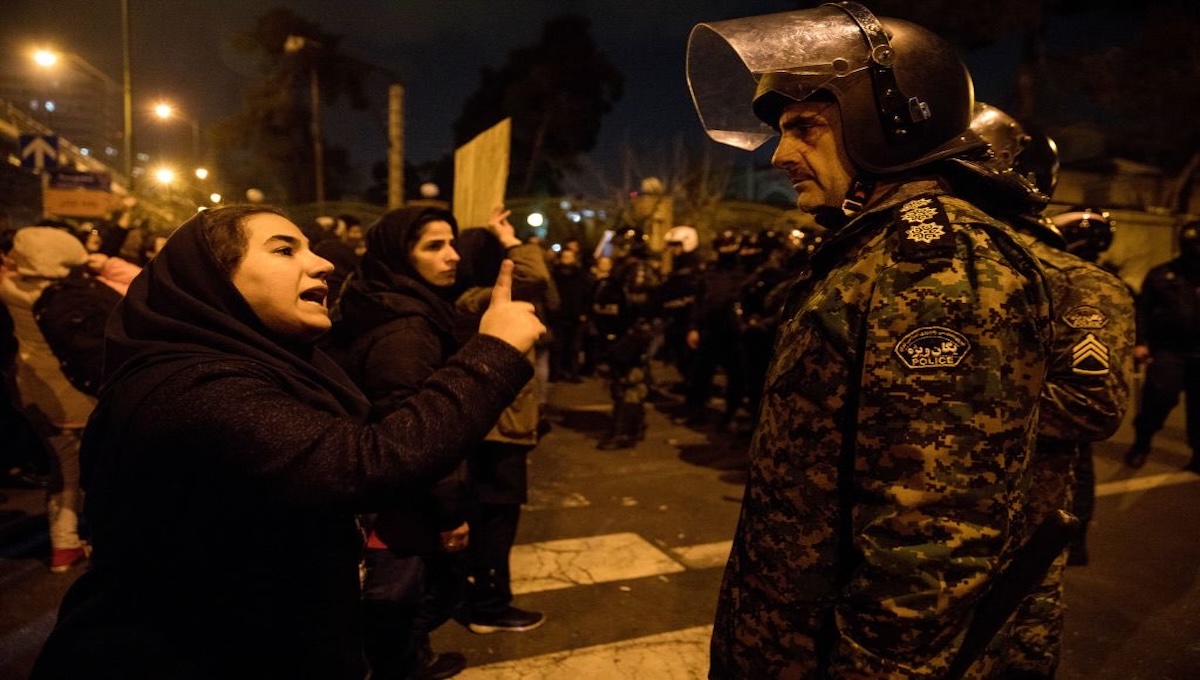
The Islamic Republic of Iran has been gripped by widespread protests since late December 2025, representing one of the most intense periods of internal upheaval since the 1979 Islamic Revolution.
These demonstrations, initially driven by economic hardships, have evolved into calls for systemic change, marked by violent confrontations, infrastructure sabotage, and a draconian state response.
As of January 22, 2026, the unrest persists sporadically, amid a nationwide internet blackout and intensified security measures.
Chronology
The crisis commenced on December 28, 2025, with peaceful protests in Tehran and other cities over economic issues, including hyperinflation and devaluation.
By early January 2026, these escalated into anti-regime actions, with slogans targeting Supreme Leader Ayatollah Ali Khamenei and demands for secular governance.
Key incidents included bombings of infrastructure, assassinations of officials, and cyber disruptions between December 28, 2025, and January 8, 2026.
A pivotal escalation occurred on January 8, 2026, when Iranian authorities imposed a near-total nationwide internet blackout at approximately 20:30 Iran Standard Time, coinciding with intensified protests.
This shutdown, described as one of the most severe in history, affected 92 million citizens, disrupting not only internet access but also phone services and text messaging in many areas.
The outage persisted for over 14 days, with government officials indicating it may continue until the Persian New Year on March 20, 2026.
Partial restrictions preceded the full blackout, including targeted disruptions in protest hotspots like Tehran, Bushehr, and Mashhad from December 29, 2025.
The Islamic Revolutionary Guard Corps (IRGC) responded with lethal force, deploying live ammunition, tear gas, and surveillance drones, resulting in fatality estimates ranging from 500 to over 5,000 by mid-January 2026.
Protests spread to over 100 cities by January 13, incorporating student and labor actions. On January 14, regime officials accused foreign entities of orchestrating the violence, framing the unrest as externally induced terrorism.
Amid the blackout, sporadic reports emerged via smuggled Starlink terminals, though authorities began jamming these signals, causing 30-80% packet loss and rendering them nearly unusable.
Seizures of Starlink equipment intensified, with a major border confiscation on January 13, 2026, involving hundreds of devices. As of January 22, 2026, protests have reportedly subdued under repression, though isolated incidents continue.
Unrest
Iran's protests stem from entrenched economic, political, and social grievances, amplified by international pressures.
Economically, U.S. sanctions reimposed in 2018 and tightened under the second Trump administration (inaugurated January 2025) have driven inflation to 50%, youth unemployment above 20%, and the rial's collapse from 32,000 to over 1.4 million per U.S. dollar since 2015.
Resource diversion to regional proxies in Syria, Yemen, and Lebanon exacerbates domestic shortages.
Politically, the unrest builds on prior movements, such as the 2009 Green Movement, 2019 fuel protests, and 2022 demonstrations following Mahsa Amini's death, which highlighted issues like mandatory hijab laws and IRGC dominance.
In 2026, these converged with economic triggers, mobilizing women, students, ethnic minorities, and workers.
Digital repression forms a critical layer, with Iran's history of internet censorship enabling protest suppression.
The 2026 blackout, more comprehensive than previous ones (e.g., 2019's seven-day shutdown), aims to prevent coordination and obscure atrocities.
This "digital isolation" has been likened to North Korea's model, with regime officials viewing the internet as an "existential threat”.
Geopolitically, Iran's nuclear advancements and support for groups like Hamas and Hezbollah amid the Gaza conflict have isolated it, making it vulnerable to external influences.
Censorship
Integral to the regime's strategy is pervasive internet censorship, enforced through the "filternet" system, which filters content and restricts access to global platforms.
The January 2026 outage represents an escalation, with military-grade jamming extending to satellite services like Starlink.
Protesters initially bypassed restrictions using smuggled Starlink terminals, estimated at over 50,000 units since 2022, often concealed as solar panels or hidden on rooftops.
SpaceX made the service free for Iranians in early January 2026, aiding information flow.
However, authorities have countered aggressively. A June 2025 law banned Starlink, imposing penalties from imprisonment to death for espionage-related use.
Seizures include a January 13, 2026, border haul of 100 terminals, amplifiers, modems, and phones, allegedly for sabotage near military sites.
House-to-house raids and signal jamming have degraded Starlink efficacy, with users risking execution for possession.
Mossad and the CIA
Foreign intelligence agencies, particularly Mossad and the CIA, have been accused by Iranian officials of fueling the unrest.
Historically, the CIA orchestrated the 1953 coup against Mohammad Mossadegh, while Mossad conducted assassinations (e.g., Mohsen Fakhrizadeh in 2020) and sabotages (e.g., Natanz in 2021).
In 2026, Mike Pompeo's January 2 post suggested Mossad agents were active on Iranian streets. Iranian claims assert these agencies hijacked peaceful protests into violence via embedded operatives.
Regarding Starlink smuggling, Iranian intelligence alleges U.S. and Israeli involvement in delivering terminals to "terrorist cells" for coordination during blackouts.
U.S. nonprofits like Holistic Resilience, which collaborated with SpaceX, have facilitated smuggling, potentially with intelligence backing.
While direct evidence is limited, shipments reportedly originated from regional countries, aligning with Mossad's covert networks.
Western sources deny orchestration, portraying support as aiding dissent against repression.
These efforts complement broader strategies. Mossad's June 2025 missile program sabotage and CIA funding for Persian media and digital tools.
However, Iran's counterintelligence, aided by Russian jamming technology, has mitigated impacts.
Analysis
The 2026 crisis illustrates how internal vulnerabilities intersect with hybrid warfare, where sanctions and covert operations amplify dissent.
The internet blackout and Starlink crackdown exemplify digital authoritarianism, potentially backfiring by deepening public alienation.
Mossad and CIA involvement, if substantiated, risks escalation, though assessments suggest aversion to full conflict.
Outcomes may include regime collapse, civil war, or fortified authoritarianism.
International responses, European restraint, Chinese support, will influence trajectories. Long-term, addressing economic roots over external interference is essential to avert recurring instability.
Iran's turmoil reflects authoritarian fragility amid global pressures.
Economic woes and political repression drive protests, while digital blackouts and Starlink seizures underscore control tactics.
Alleged Mossad and CIA roles in smuggling and operations highlight geopolitical stakes, though evidence remains contested.
Future declassifications will help to clarify these dynamics, but sustainable peace in the region demands internal reforms rather than foreign manipulations and the topplings of disagreeable governments.
Kai Tutor | The Societal News Team 22JAN2026