
Why Time Feels Like It's Speeding Up: What the Research Actually Shows
An analysis of the psychology and neuroscience of temporal acceleration
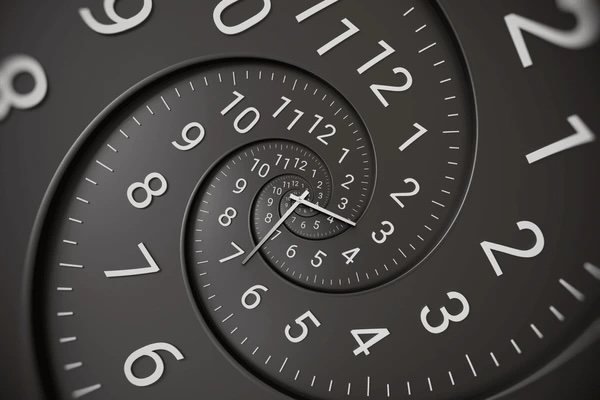
Everyone over the age of thirty has said some version of it: "I can't believe it's already December." "Where did the year go?" "The kids were just starting school and now they're graduating." The feeling that time is accelerating is so universal it borders on cliche. But is it real? And if so, why?
The short answers are: yes, it is real in a meaningful psychological sense, and the reasons behind it are more complicated and more interesting than the popular explanations suggest. A growing body of empirical research has confirmed the effect while quietly dismantling the most intuitive theories for why it happens.
The Effect Is Robustly Real
The scientific study of perceived temporal acceleration got a significant boost from a 2005 survey by psychologists Marc Wittmann and Sandra Lehnhoff at Ludwig Maximilian University of Munich. They surveyed 499 participants ranging in age from 14 to 94 and asked them to rate the pace at which time felt like it was moving across different scales: a week, a month, a year, a decade. The pattern was clear and consistent: the older the participant, the faster the last decade of their life had felt.
What makes this finding unusually sturdy is its replicability. Subsequent researchers reproduced the core result in the Netherlands, New Zealand, Canada, and Japan. Across industrialized nations with different cultures, languages, and social structures, the pattern held. In an era defined by a replication crisis in psychology, where landmark findings routinely collapse under scrutiny, the temporal acceleration effect has proven notably durable.
Survey data also reveals how widespread the subjective experience is. Depending on methodology, between roughly 65 and 84 percent of people report perceiving time as accelerated. This is not a quirk of certain personality types or a bias introduced by leading questions. It appears to be something close to a universal feature of adult human experience.
Where the Effect Actually Lives
One of the more clarifying details to emerge from the data concerns the scale at which the effect operates. The acceleration is not uniform across all time frames. For short durations, a week, a month, even a single year, age does not clearly predict differences in perceived speed. The effect becomes strongest and most consistent when people are asked to reflect on longer spans, particularly the last decade of their lives.
This is a meaningful distinction. It suggests the phenomenon is not primarily about moment-to-moment experience. It is not that Tuesday afternoon feels shorter to a fifty-year-old than to a twenty-year-old. Rather, the distortion is most pronounced in retrospective evaluation: when we look back over long stretches of lived time, older adults find that time seems to have compressed in ways younger adults do not yet experience.
This shifts the question from perception to memory and metacognition. It is not just about how we experience time while it is happening; it is about how we reconstruct and evaluate it afterward.
Key Finding
The temporal acceleration effect is strongest when people reflect on decades, not days or months. Age does not meaningfully predict how fast a single week or year feels. The distortion lives in long-range retrospective judgment, not moment-to-moment perception.
The Popular Explanation Probably Gets It Wrong
The most widely cited explanation for why time speeds up with age is the memory density or novelty hypothesis. The argument is intuitive: new experiences generate rich, detailed memories, which make a period feel long in retrospect. Routine and repetition, by contrast, produce few distinct memories, collapsing in our minds to a blur. Since children experience nearly everything for the first time, their time feels slower and fuller. Adults, embedded in familiar routines, encode less, and so their time compresses.
It is a satisfying theory, and it contains some truth about how memory works. The problem is that when researchers tested it directly, it did not hold up.
A 2026 study by Alice Teghil, Maddalena Boccia, Marc Wittmann, and colleagues, published in Memory and Cognition, is the most direct challenge to the novelty hypothesis to date. The researchers assessed autobiographical memories alongside time perception ratings in 120 adults aged 20 to 91, testing whether the number or quality of remembered life events predicted the sense of temporal acceleration. The result was a clear negative: the quantity of memories had no statistical relationship to how fast time felt like it had passed.
More surprisingly, the quality of memories did not predict it either. Older adults in the study actually rated their memories as more vivid and personally meaningful than younger adults did. Far from losing richness of experience with age, the older participants reported savoring and retaining it more deeply. The memory density story, at least in its simple form, appears to be wrong.
What the 2026 Teghil & Wittmann study found:
- 120 adults tested, aged 20 to 91, across Freiburg, Zurich, and Rome
- Number of autobiographical memories: no relationship to perceived time acceleration
- Vividness or personal importance of memories: no relationship to perceived acceleration
- Older adults rated their memories as more vivid and meaningful than younger adults
- Working memory and new information encoding ability: strong predictor of acceleration
What the Data Points Toward Instead
If not memory richness or novelty, what does predict the acceleration effect? The same 2026 study found a compelling answer: cognitive processing ability, specifically working memory and the capacity to encode new information efficiently.
Older participants who scored lower on tasks requiring them to recall spoken words after a delay were the ones who felt the past decade had passed most quickly. The relationship was not with the richness of their autobiographical archive but with a more basic cognitive function: the ability to take in, hold, and process fresh information in the moment. As this capacity declines with age, time appears to slip through with less friction, less grip.
This points toward a neurological rather than a purely psychological explanation. Age-related declines in dopaminergic signaling, processing speed, and working memory capacity may alter the brain's internal clock in ways that distort retrospective time judgment. The brain, less able to encode discrete new moments efficiently, finds that long stretches of time leave fewer cognitive traces, and those stretches are subsequently experienced as having passed faster than they did.
Anxiety adds another layer. Separate research found significant correlations between trait anxiety and the sense of time speeding up, including the perceived speed of past, present, and future time. People with chronically elevated anxiety are not simply more stressed; they appear to have a systematically altered relationship with time itself. This suggests the acceleration effect is not purely a function of age but is also sensitive to psychological states that cut across the lifespan.
The Proportional Theory Still Has Merit
While the memory density hypothesis has been weakened, the proportional theory remains conceptually compelling and has not been directly falsified. The basic idea, formalized using Weber-Fechner psychophysics, is that the brain encodes time the way it encodes other stimuli: logarithmically. A one-year increment represents a far larger fraction of total lived experience at age eight than at age fifty. Just as the difference between one and two pounds feels larger than the difference between fifty and fifty-one pounds, the difference between year seven and year eight of a life feels larger than the difference between year forty-nine and year fifty.
Under this framework, the acceleration of time is an inevitable perceptual consequence of accumulating experience, as predictable as the fact that it becomes harder to notice a small increase in volume when the music is already loud. The mathematical modeling of this effect produces curves consistent with what people report: rapid perceived deceleration through childhood, a plateau in middle age, and a ceiling effect in later years beyond which additional aging produces diminishing perceptual changes.
This theory has the advantage of explaining why the effect is so universal and why it appears across such different cultural contexts. It does not require a specific mechanism like novelty or memory density. It emerges from something more fundamental: the basic structure of how the nervous system processes cumulative information.
What This Means in Practice
The experience of temporal acceleration is not inevitable in its intensity. The data suggests that cognitive engagement, particularly activities that demand new information encoding, appears to modulate the effect. People who continue learning, exploring unfamiliar environments, and engaging in cognitively demanding tasks may preserve some of the cognitive capacity that anchors the perception of time. The goal is not novelty for its own sake but the maintenance of the mental machinery that makes time feel like something you are moving through rather than something that is moving past you.
Mindfulness practices have shown some evidence of expanding perceived duration, likely by directing deliberate attention toward the passage of time in ways ordinary routine does not. Retrospective time judgment depends heavily on how much attention was paid while the time was being lived.
The anxiety connection also suggests that chronic stress and worry may be silently compressing people's experienced lives in ways they do not attribute to anxiety. Managing trait anxiety is not just a matter of emotional comfort; it may have measurable effects on how much of one's life registers as having been lived at all.
The Open Questions
The science here is not settled. The 2026 Teghil and Wittmann study challenged the memory hypothesis, but it is a single study, and the working memory explanation it offers will need replication and further testing. The proportional theory remains largely theoretical rather than neuroscientifically grounded. The exact roles of dopamine, metabolic rate, and neural processing speed in time perception are still being debated.
What is clear is that the phenomenon is real, widespread, and more complex than the folk psychology around it suggests. Time is not actually speeding up. The clocks are indifferent. But the brain's relationship with time is deeply, consequentially subjective, and understanding that relationship is not a trivial pursuit. It shapes how people experience the length of their lives, how much they feel they have lived, and ultimately what they make of the time they have.
"The sensation that time speeds up as you get older is one of the biggest mysteries of the experience of time." — Claudia Hammond, psychologist and BBC columnist
Sources: Wittmann & Lehnhoff (2005), Psychological Reports; Teghil, Wittmann et al. (2026), Memory & Cognition; Block et al. (1998); additional research via PMC, Scientific American, and Psychology Today.