Russia's Strategies and Tactics in Targeting Ukraine's Energy Infrastructure (A Data-Oriented Analysis)
Overview: A Systematic Campaign to Destroy Ukraine's Grid
Russia's strategies and tactics for disabling Ukraine's energy grid and related infrastructure have formed a core component of its military approach since the full-scale invasion began in February 2022. The campaign combines large-scale kinetic strikes with drones and missiles, occasional cyber elements, and deliberate timing to exploit winter conditions, aiming to erode civilian resilience, strain recovery resources, and pressure Ukraine politically. Official Ukrainian data indicate that Russia has conducted hundreds of attacks annually, with a marked escalation in intensity during the current period, 2025-2026 winter.
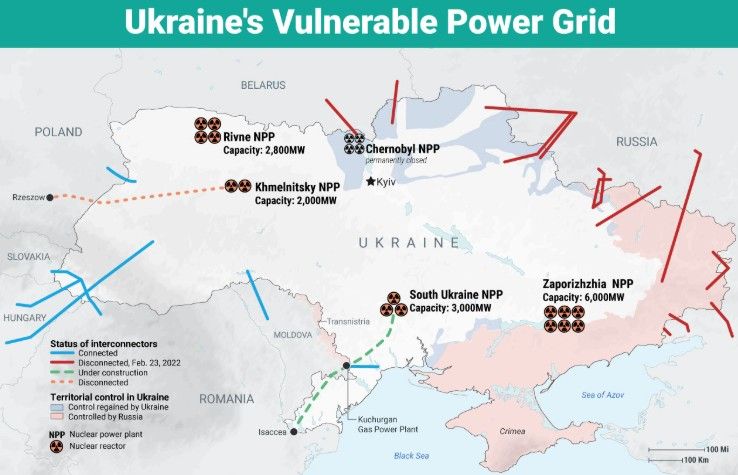
Power generation at invasion start: ~33.7 GW
Power generation by January 2026: ~14 GW
Capacity damaged in fall/winter 2025-2026: ~8.5 GW (equiv. ~15% of pre-war levels)
DTEK facility major assaults since October 2025: 9
Gas production decline (late 2025 strikes): up to 60%
Grid recovery timeline (if attacks cease): 3 to 4 years
Scale of the 2025-2026 Campaign
By early 2026, Ukraine's energy minister reported 612 combined drone and missile strikes on energy facilities in 2025 alone, leaving no power plant untouched and causing widespread, prolonged outages amid sub-zero temperatures. The campaign intensified significantly from October 2025 onward, with Russia shifting toward more sustained and precise targeting of generation, transmission, and distribution assets.
In the fall and winter of 2025-2026, strikes damaged approximately 8.5 gigawatts of power generation capacity, equivalent to about 15% of pre-war levels, further reducing Ukraine's available generation from around 33.7 gigawatts at the invasion's start to roughly 14 gigawatts by January 2026. Thermal power plants operated by companies like DTEK suffered repeated hits, with nine major assaults on DTEK facilities recorded since October 2025. Hydroelectric and combined heat-and-power plants also faced heavy damage, contributing to deficits that forced emergency load shedding and blackouts lasting days in some areas. Gas production capacities reportedly declined by up to 60% due to targeted strikes starting in late 2025, exacerbating heating shortages.
Geographic Targeting: Fragmenting the Grid
Geographically, attacks have concentrated on frontline and central regions, including Kyiv, Kharkiv, Odesa, Dnipro, Sumy, Chernihiv, Vinnytsia, and Poltava. Kyiv has experienced some of the most severe impacts, with repeated barrages leaving over a million residents without power or heat at times, affecting thousands of apartment buildings. In Kharkiv and Odesa, strikes have damaged thermal plants and substations, causing extended outages and civilian injuries. Nationwide, Russian forces have aimed to fragment the grid into isolated "energy islands," particularly attempting east-west divisions to isolate eastern regions.
Weapons and Tactics Used
Russian forces, primarily aerospace units, have employed a mix of platforms including Shahed-type drones, cruise missiles (such as Kh-101/555 and Kalibr), ballistic missiles (Iskander-M), and occasionally hypersonic types like Zirkon. Drone swarms often precede or saturate missile salvos to overwhelm air defenses. In January 2026, Russia launched over 4,500 long-range drones and missiles, with peaks including barrages of 375 drones and multiple missiles on single nights.
The February 2026 Escalation
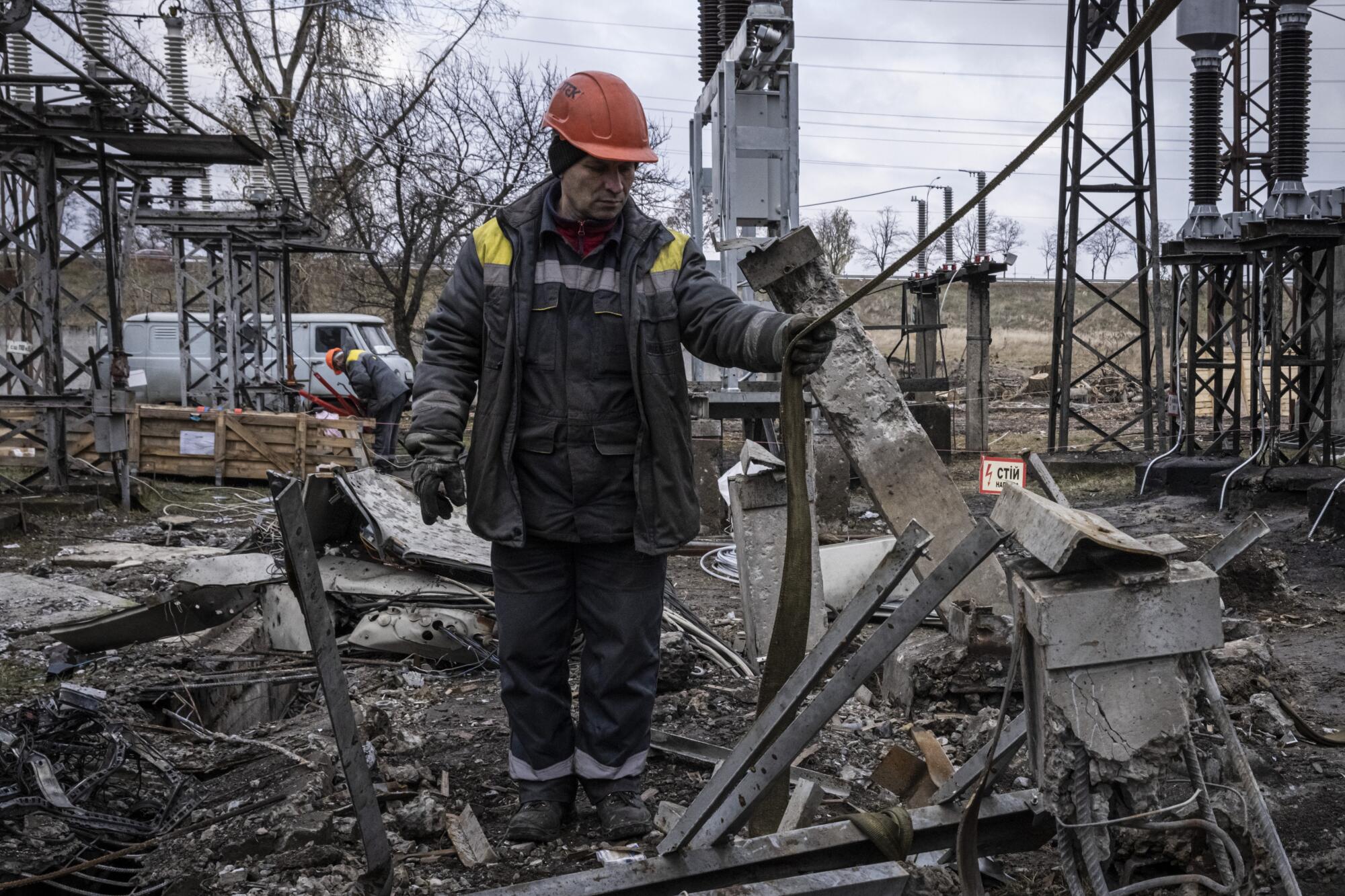
A very brief pause in strikes on energy infrastructure occurred from late January to early February 2026, reportedly following a U.S. brokered request from President Donald Trump to President Vladimir Putin, with the Kremlin confirming a temporary halt on attacks targeting Kyiv and energy facilities until around February 1. However, large-scale assaults resumed shortly thereafter, with one of the year's most powerful strikes on February 2-3, 2026, involving 450 drones and over 70 missiles across at least six to eight regions, hitting thermal plants in Kyiv, Kharkiv, Dnipro, and elsewhere, and leaving hundreds of thousands without heat in freezing conditions.
Missiles launched: 70+
Regions hit: at least 6 to 8
Targets: thermal plants in Kyiv, Kharkiv, Dnipro, and others
Impact: hundreds of thousands without heat in sub-zero temperatures
Context: resumed immediately after a brief Trump-brokered pause ending ~February 1
The Tactical Evolution: From Carpet Strikes to Precision Attrition
Tactically, Russia has evolved from broad nationwide "carpet" strikes in 2022-2023 to more focused, repeated hits on hard-to-replace components like large power transformers, substations, turbines, and generators. This approach maximizes long-term disruption while adapting to improved Ukrainian air defenses. Winter timing amplifies effects, as cold weather turns outages into humanitarian crises, with reports of millions deprived of electricity, heating, and water for extended periods. Ukrainian officials describe this as "weaponizing winter" to undermine morale and divert resources from the battlefield.
Humanitarian and Economic Impact
The impacts remain severe, with rolling blackouts becoming routine, some areas facing only three to four hours of power daily, and economic damages in the tens of billions. Restoration timelines for substantial grid recovery are estimated at three to four years, even if attacks cease, due to equipment degradation and repeated targeting. International assessments, including from the UN and energy agencies, highlight these actions as disproportionate attacks on civilian infrastructure, contributing to ongoing humanitarian challenges in Ukraine.
Kai Tutor | The Societal News Team 03 FEB 2026
Follow Us!
It helps decentralize our presence across the web and it's completely free!
Instagram ➤
Youtube ➤
Substack ➤
X.com ➤
Telegram ➤
TikTok ➤