Russia's Smuggled Grain Finds New Market in Saudi Arabia
The Investigation: Krasnodar's Journeys to Saudi Arabia
A joint investigation by Bellingcat and Lloyd's List has identified Saudi Arabia as the newest country to import grain directly from a Western-sanctioned port in occupied Crimea, as Russia attempts to secure recognition of the Ukrainian territory via a US-led peace plan.
Satellite imagery and Automated Identification System (AIS) data from Lloyd's List Intelligence shows the bulk carrier Krasnodar (IMO: 9296781) sailed from Avlita Grain Terminal in Sevastopol to Saudi Arabia on two occasions between September and November 2025. Bellingcat confirmed Krasnodar's journeys ended at Saudi Arabia's King Abdullah Port in September and the Port of Jazan in November. These journeys show that Saudi Arabia has joined buyers in Iran, Syria, Egypt, Turkey, Venezuela and Houthi-controlled territories in Yemen who are willing to accept what the Ukrainian government describes as "stolen" grain.
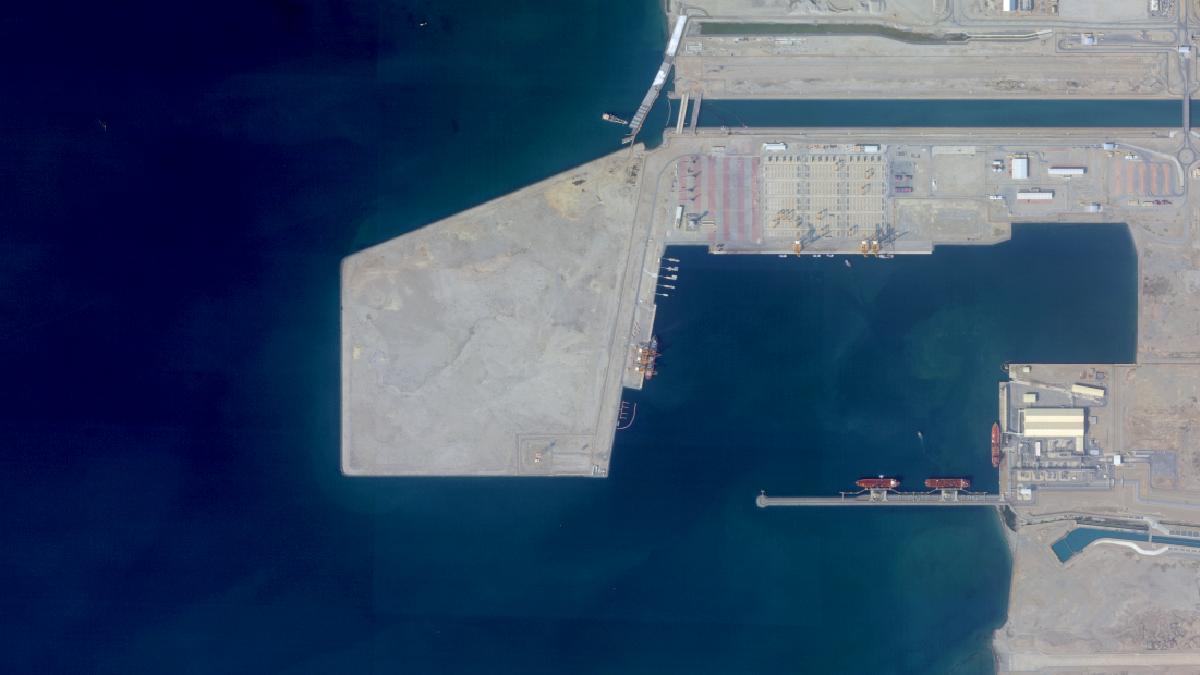
The bulk carrier Krasnodar, identified in Bellingcat and Lloyd's List satellite imagery.
Sept 18: Krasnodar docked at King Abdullah Port, Saudi Arabia — grain pile visible in satellite imagery
Nov: Second voyage to Port of Jazan, Saudi Arabia
Nov 23: Krasnodar returned to Black Sea via Bosphorus
Nov 24: AIS stopped transmitting for nine days
Nov 26: Satellite imagery confirmed Krasnodar docked at Avlita terminal, Sevastopol — AIS switched off
Petrokhleb-Kuban Denies Visiting Avlita Terminal
Documents accessed on Russia's federal registry indicate the vessel is leased by Russian firm Petrokhleb-Kuban, a major player in Russian and international grain markets. Petrokhleb Kuban told Bellingcat it "categorically denies any allegations of involvement in the theft of grain from Ukrainian regions". It added that Petrokhleb-Kuban does not export grain from the Avlita terminal to any country. "Petrokhleb-Kuban does not operate at the port of Avlita and does not ship grain from there. All grain shipped by Petrokhleb-Kuban is produced by Russian farmers," a spokesperson said. "The vessel Krasnodar follows all widely accepted safety protocols and does not disable its AIS while on passage. The AIS signal in the Black Sea is being jammed by the military due to the ongoing conflict between Russia and Ukraine."
The spokesperson also said the vessel Krasnodar was loading barley at the port of Kavkaz, "as confirmed by bills of lading and port clearance." AIS interference is rampant in the Black Sea, however, instances of jamming typically do not last more than a couple of days. Further, third-party disruptions impact all vessels in one area indiscriminately. Bellingcat reviewed the AIS traces of vessels sailing near Krasnodar. In both voyages, Krasnodar was the only vessel in that area that stopped transmitting AIS data for that period of time. Bellingcat also checked available Planet Labs PBC and Sentinel-2 satellite imagery covering the grain terminal in Port Kavkaz during the two periods of August and October where Krasnodar has absent or unreliable AIS coverage and found no vessels matching the length of the Krasnodar.
How Investigators Confirmed the Identification
Bellingcat identified Krasnodar in Avlita terminal on three occasions, by cross referencing satellite images of Krasnodar and recent images and video of the ship. Krasnodar was last detected at Avlita terminal in satellite imagery on November 26, again with its AIS switched off. Krasnodar's chimney is navy blue in colour, except for a white band on the left, right, and front side of the chimney. The ship's other features — five grey hatches, four grey cranes, a red deck, a green floor on the bridge — all visually match known images of the ship. Finally, the ship's measurements (a total length of 183 metres according to Russia's shipping registry) matches what we see in satellite images. There are no live or historic sanctions on Krasnodar, according to Lloyd's List Intelligence data.
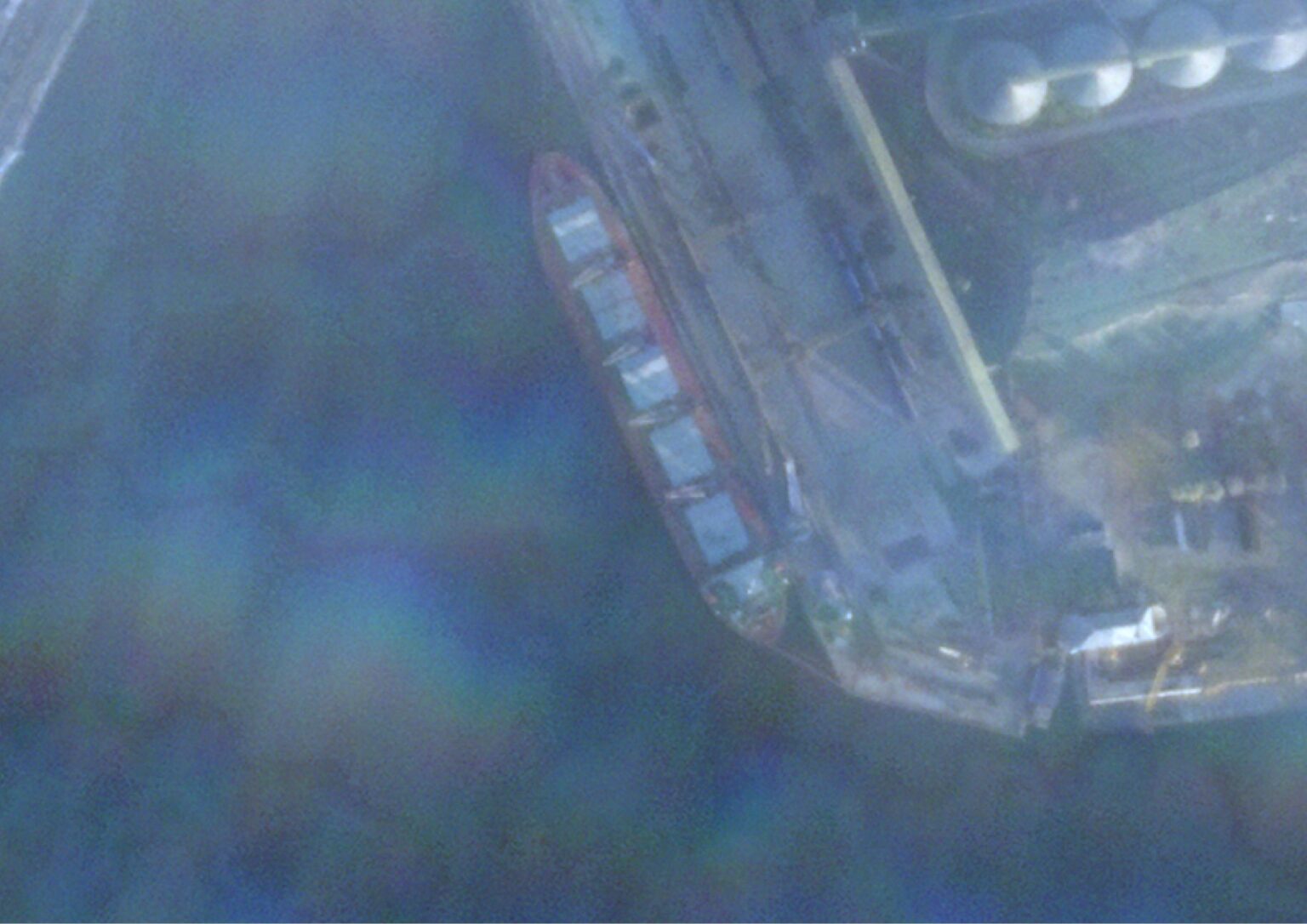
Krasnodar docked at Avlita terminal, Sevastopol, November 26, 2025. Credit: Planet Labs PBC
Saudi Arabia Joins Eight-Country List
Krasnodar's voyages from Sevastopol to Saudi Arabia demonstrate that Russia is continuing to expand its grain exports from occupied Crimea to new markets as it negotiates to end the war in Ukraine. Crimea's occupied ports have become important assets for Moscow, having evolved into key logistics hubs for dark grain exports over the course of the war. Prior to the full-scale invasion of Ukraine in 2022, the ports in occupied Crimea were used for the small-scale export of grain and scrap metal, mostly to Syria and Turkey. The occupation of additional territory in Donetsk and Zaporizhia enabled Russia to establish a new supply route, resulting in more grain being shipped south to Crimea for export to international markets.
The Port of Sevastopol and the Avlita grain terminal remain under European, UK and US sanctions. While no UN sanctions specifically target the port, a majority of UN member states have passed resolutions condemning Russia's invasion of Ukraine and its occupation of Crimea since 2024. Ukraine has repeatedly tried to dissuade countries from purchasing shipments loaded with what it describes as "stolen" grain from occupied regions. In 2023, Iran received its first grain shipments from Sevastopol. In 2024, it was joined by Venezuela, Libya, Egypt and the Houthis. Last month, Bellingcat revealed that the bulk carrier Irtysh (IMO: 9664976) delivered grain from the Crimean port of Sevastopol to the Houthi-controlled port of Saleef in Yemen despite Western Sanctions. Bellingcat and other news outlets have identified a total of eight countries that have imported grain directly from occupied Crimea. While Saudi Arabia is the latest direct importer from Sevastopol, it is unclear if authorities are aware of the origin of the cargo.
The grain shipments follow a similar pattern to Russia's shadow fleet, which moves sanctioned oil barrels. In both cases steps are taken to disguise the origin of the cargo and port of loading. Most ships calling to Crimea disable their AIS transponders, which is considered a deceptive shipping practice, and fraudulent documents are issued.
Ukraine's Response
Alona Shkrum, First Deputy Minister for Development of Communities and Territories of Ukraine, told Bellingcat that Ukraine was closely monitoring Russian exports from occupied territories. She said Ukraine had discussed the issue with Saudi Arabia on the sidelines of recent talks at the International Maritime Organisation Assembly. She told Bellingcat that Ukraine had "received assurances that Saudi authorities are actively counteracting the risks posed by shadow fleet operations and other violations of international maritime law." She added that Ukraine would continue to work with partners to identify and sanction vessels involved in the illegal export of grain from occupied territories. Bellingcat contacted both the Saudi Arabian Ministry of Foreign Affairs and the Russian Ministry of Foreign Affairs; neither responded to requests for comment.
The Peace Plan and Crimea's Ports
The US-Russia 28-point peace proposal includes the recognition of Crimea, Luhansk and Donetsk as "de facto" Russian. Ownership of Crimea and the occupied territories bordering the Sea of Azov is critical for securing shipping routes to and from Russia, and these ports play a vital role in supporting economic growth in the region. However, the impact of ceding control of this region and the port of Sevastopol to Russia is not mentioned in either the original US draft plan or subsequent amended versions.
Ian Ralby, chief executive of the maritime and resource security consultancy I.R. Consilium said while it was a high priority for Ukraine to ensure access to the grain market through the Black Sea is preserved, Russia is continuing to try to expand its global access to ports. "We see that there is a resurgence in Russia's efforts on port access." "As the prospect of potential peace begins to loom, even though it seems to be much farther off than many would want, there is likely to be a renewed focus on the key strategic assets that matter for the future, and the ports have to be foremost among them."
The Societal News Team 10 DEC 2025
Follow Us!
It helps decentralize our presence across the web and it's completely free!
Instagram ➤
Youtube ➤
Substack ➤
X.com ➤
Telegram ➤
TikTok ➤