The Current U.S. Government Shutdown and the Broken System Behind It
The United States federal government is in the middle of its third shutdown in roughly six months, and the second in 2026 alone. Two shutdowns of the U.S. federal government have occurred in 2026, both arising from disputes in Congress about reforms to federal immigration enforcement after the killing of Alex Pretti by Customs and Border Protection agents.
This is not a minor technical budgeting dispute. It is a crisis that has real consequences for millions of Americans, and it is unfolding against the backdrop of a structural flaw baked into how the United States funds its own government.
The Killing That Triggered the Shutdown
To understand the current shutdown, you have to go back to January 24, 2026. On that date, federal agents shot and killed Alex Pretti, a 37-year-old ICU nurse, while scuffling with him on an icy roadway in Minneapolis. It was the second deadly shooting of a U.S. citizen by federal immigration officers in Minneapolis in the same month. The first victim was Renée Nicole Good, killed by an ICE officer earlier in January.
In the immediate aftermath, administration officials launched a public relations campaign portraying Pretti as a dangerous aggressor. Stephen Miller alleged that Pretti was a "domestic terrorist" who had tried to "assassinate federal law enforcement." DHS released a statement indicating that Pretti "wanted to do maximum damage and massacre law enforcement."
However, that narrative quickly fell apart. An initial report from the oversight arm of CBP contradicted the administration's account of Pretti's death. The heads of ICE, CBP, and U.S. Citizenship and Immigration Services later testified before Congress and declined to back DHS Secretary Kristi Noem's characterization. When pressed, CBP Commissioner Rodney Scott said no one under his command had provided information leading to that conclusion.
The Political Standoff
The public outcry was immediate and politically consequential. Senate Minority Leader Chuck Schumer declared that "Senate Democrats will not allow the current DHS funding bill to move forward," saying the killings meant Republicans had to join Democrats in "overhauling ICE and CBP to protect the public."
Democrats have said they want to restrict roving immigration patrols, tighten parameters around warrants for searches and arrests, toughen use-of-force policies, and require ICE agents to wear body cameras and remove their masks.
The White House made a counteroffer on February 27 that was met with unified rejection from Democrats. Another offer came later, which included expanding use of body cameras, limiting immigration enforcement at sensitive locations like schools and hospitals, increasing some oversight, and requiring officers to wear "visible identification." The White House did not accept Democratic demands on warrants and maskless patrols.
Republicans have argued that Democratic demands would add unnecessary bureaucracy and endanger federal agents, though some have said there is room for compromise. Republicans have also made counterproposals to prevent harassment of federal agents and to require local governments to cooperate with federal immigration authorities. As of mid-March 2026, the Senate's most recent cloture vote on a DHS funding resolution failed 51 to 46, and no new votes are currently scheduled.
The Timeline of This Shutdown Crisis
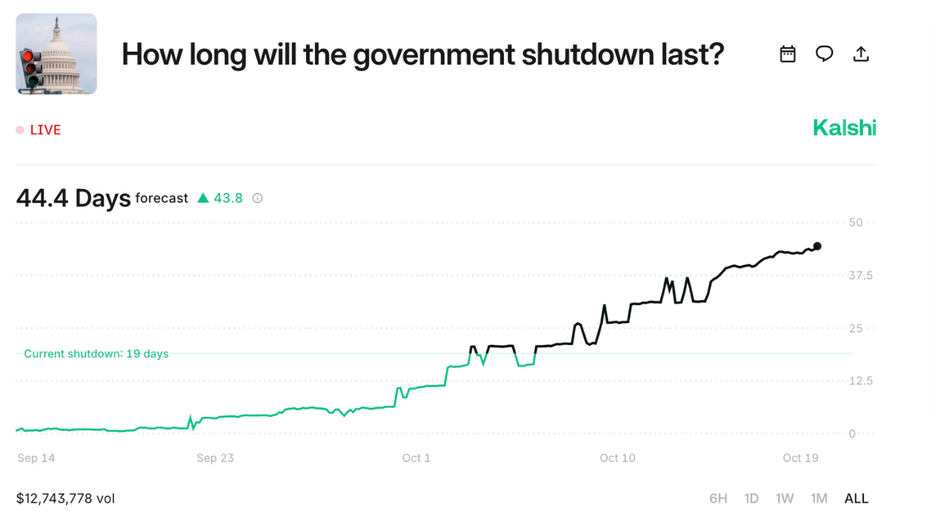
The chaos of this fiscal year actually began on October 1, 2025. The 2025 government shutdown was the 11th to result in federal employees being furloughed and the longest government shutdown in U.S. history, lasting 43 days. It ended November 12, 2025, after a deal was struck, but only with a short-term continuing resolution, kicking the full budget fight down the road.
The first 2026 shutdown lasted four days, from January 31 to February 3, affecting about half the departments of the federal government. It was caused by delays in approving a funding package that would allow time for immigration reform negotiations. The second shutdown began on February 14 and only affects the Department of Homeland Security.
Who Is Actually Affected
This isn't abstract politics. Real people are paying the price. Out of more than 260,000 DHS personnel, tens of thousands of employees have been feeling financial strain after working over a month without pay. That includes workers at the Transportation Security Administration, FEMA, the Coast Guard, the Secret Service, and the Cybersecurity and Infrastructure Security Agency.
One month into the partial shutdown, hundreds of TSA workers going without full pay quit, while others took unscheduled time off, prompting travel headaches at airports across the country. Travelers at Hartsfield-Jackson Atlanta International Airport and Houston's George Bush Intercontinental Airport faced wait times occasionally stretching up to nearly two hours.
There is also a cascading effect beyond TSA. About 10,000 FAA workers were furloughed; air traffic controllers continued to work without pay. About 8,000 of the 27,000 direct-hire State Department employees were furloughed. The National Flood Insurance Program shut down, and FEMA's broader operations were curtailed. Although federal employees are guaranteed back pay once a shutdown ends, missing paychecks still causes immediate financial hardship. Rent doesn't wait for Congress to make a deal.
Why Shutdowns Keep Happening: The Broken System
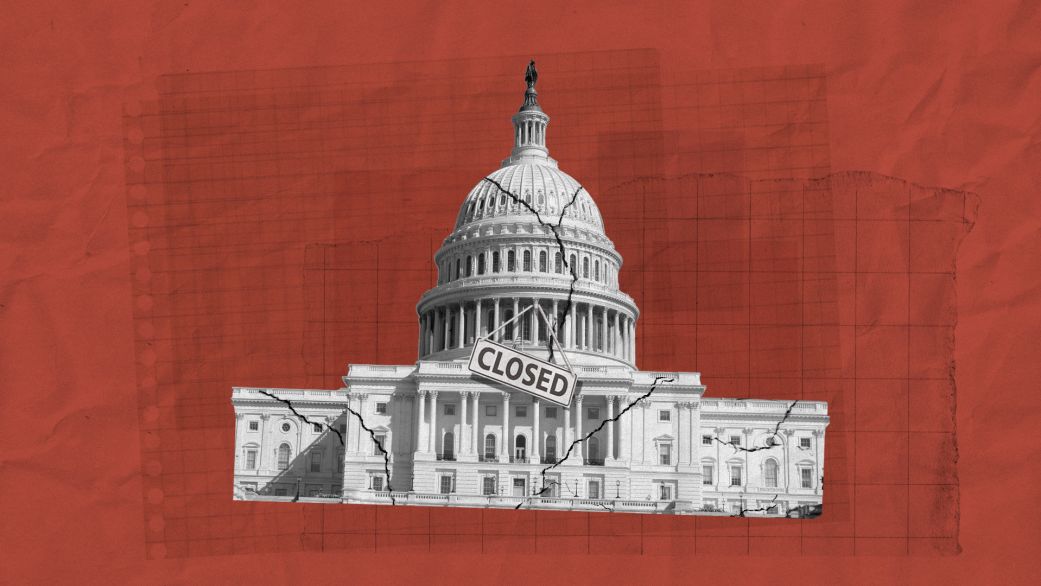
To understand why shutdowns are a recurring feature of American political life — and not just a symptom of any particular party or president — you have to understand the system itself.
Article I, Section 9 of the Constitution grants Congress the power of the purse, requiring that "No Money shall be drawn from the Treasury, but in Consequence of Appropriations made by Law." The Antideficiency Act is the central legal framework protecting that authority. It prohibits spending funds beyond the amount approved by Congress, obligating funds before they are approved, and using volunteer or unauthorized employment except in emergency situations.
Here is the part most people don't know: government shutdowns as we know them are not as old as the Constitution. Before 1980, many federal agencies continued to operate during funding gaps, minimizing nonessential operations and obligations. In 1980 and 1981, Attorney General Benjamin Civiletti issued two opinions that more strictly interpreted the Antideficiency Act, stating that with some exceptions, the head of an agency could avoid violating the act only by suspending operations until an appropriation was enacted. In other words, the shutdown mechanism — the actual shuttering of agencies, the furloughs, the closed national parks — was born from a lawyer's opinion, not from the original intent of the law or the Constitution.
Each year, Congress is required to pass 12 separate appropriations bills before the fiscal year begins on October 1. The most recent year when all full-year appropriations bills passed before the fiscal year began was fiscal year 1997. That's nearly three decades ago. Instead, Congress has routinely relied on continuing resolutions — short-term stopgap measures that fund the government at roughly the prior year's levels — creating a perpetual cycle of manufactured crises.
In the Senate, most legislation requires 60 votes to overcome a filibuster. This gives the minority party enormous leverage: the ability to block all government funding unless their demands are met. It transforms what should be routine budget management into a high-stakes hostage negotiation.
A History of Major Shutdowns
What has changed most dramatically over the past three decades is the willingness of both parties to use shutdowns deliberately as leverage. The most significant historical shutdowns include the 21-day shutdown of 1995 to 1996 over opposition to major spending cuts, the 16-day shutdown in 2013 over implementation of the Affordable Care Act, the 35-day shutdown of 2018 to 2019 over border wall funding, and the record 43-day shutdown that began October 1, 2025, over health insurance subsidies. The current DHS shutdown grows from a fight over immigration enforcement accountability — a different issue, but the same broken mechanism.
How Other Countries Handle This
This is not how the rest of the democratic world operates. Government shutdowns do not occur in peer countries because their governments do not react to a lapse in funding bills by shutting down operations. In Germany, if the legislature does not enact a budget before the start of the fiscal year, funding continues at the previous year's amount to maintain institutions, meet obligations, and continue construction projects, benefits, and services. Under parliamentary systems used in most European nations, if a budget fails, an election is typically triggered. The type of shutdowns experienced by the United States are nearly impossible in other forms of government.
The Economic Cost
Shutdowns are not free. During the 43-day 2025 shutdown, at least 670,000 federal employees were furloughed, while roughly 730,000 continued to work without pay, with withheld federal wages reaching approximately $14 billion. The White House Council of Economic Advisers projected an economic loss of approximately $15 billion per week. EY-Parthenon estimated the shutdown shaved roughly 0.8 percentage points off quarterly GDP growth — equivalent to roughly $55 billion in lost output in just its first weeks. The CBO estimated that approximately $11 billion in real GDP from a six-week shutdown would not be recovered. Unlike a hurricane or a recession, much of this economic damage is permanent.
Can This Be Fixed?
The answer is yes, though reform faces its own political obstacles. Members of Congress of both parties have proposed legislation to end the practice of government shutdowns. The most bipartisan approach is automatic continuing appropriations at prior funding levels when deadlines are missed. One version would also require Congress and the Office of Management and Budget to remain in Washington until new appropriations legislation is enacted. September 2025 polling found 76 percent support for that approach, with only 6 percent opposed.
Some states have already figured this out. Wisconsin and Rhode Island have longstanding provisions for automatic continuing appropriations, and North Carolina and Kansas passed similar legislation in 2016 and 2025.
The current DHS shutdown is the product of a specific political fight — a genuine and serious dispute about whether federal immigration agents should face greater accountability after killing two U.S. citizens. But the mechanism that allows that disagreement to shut down the government, to strand TSA workers without paychecks, to close FEMA programs, to cost billions in lost economic output, is not inevitable. It is a product of a legal opinion from 1980, a Senate filibuster rule, a Congress that has not passed a budget on time in nearly 30 years, and a political culture in which the threat of shutdown has become an ordinary negotiating chip.
Other wealthy democracies don't face this problem — not because their politicians are less partisan, but because their systems don't allow one side to hold government services hostage as a negotiating tactic. The United States has simply not chosen to fix it.
Sourced from Wikipedia, CNN, NPR, CNBC, TIME, Federal News Network, Harvard Law School, Brookings Institution, Bipartisan Policy Center, Peter G. Peterson Foundation, Congressional Research Service, Committee for a Responsible Federal Budget, U.S. Government Accountability Office, KCUR, Houston Public Media, and other verified sources.
Kai Tutor | The Societal News Team