The Drone Wars: How UAVs and UGVs are Reshaping Modern Warfare
Ukraine as the World's Drone Laboratory
The rapid proliferation of unmanned systems in current conflicts signals a profound shift in the nature of warfare, where human combatants may soon be replaced on the front lines by autonomous machines. The Russia-Ukraine war has served as a live laboratory for drone innovation, and experts observe that drones are not merely augmenting traditional military operations but fundamentally reshaping them.
In Ukraine, unmanned aerial vehicles (UAVs) and unmanned ground vehicles (UGVs) have evolved from niche tools to indispensable assets, accounting for up to 85% of frontline engagements by 2025. This transformation, driven by necessity amid asymmetric warfare against a larger enemy, offers a glimpse into a future where wars are waged predominantly by swarms of drones, from agile first-person-view (FPV) quadcopters to heavily armed ground robots, minimizing human risk while maximizing operational efficiency.
FPV Drones: The Kamikaze Workhorse
At the heart of this evolution are FPV drones, originally adapted from commercial racing models, which have become versatile platforms for a multitude of combat roles. These small, inexpensive quadcopters, often costing as little as $400, enable operators to conduct precision strikes beyond the line of sight, functioning as kamikaze weapons that hunt enemy personnel and vehicles with improvised explosives.
In the dense, contested battlefields of eastern Ukraine, FPV drones have been modularly equipped with interchangeable payloads, allowing them to switch between reconnaissance, bombing, and signal relay missions. By attaching sensors or release mechanisms, a single FPV unit can drop munitions on fortified positions or pursue retreating soldiers, effectively turning the tide in localized skirmishes without exposing Ukrainian forces to direct fire. This adaptability has led to monthly engagements numbering in the tens of thousands, where FPV drones not only neutralize threats but also create no-fly zones for adversaries through relentless aerial harassment.
Mavic Drones: Eyes of the Artillery
Complementing the FPV hunters are Mavic drones, consumer-grade quadcopters militarized for intelligence, surveillance, and reconnaissance (ISR) tasks. In Ukraine, Mavics serve as the eyes of artillery units, providing real-time adjustments that enhance strike accuracy while minimizing collateral damage.
Their endurance allows for prolonged monitoring of enemy movements, enabling Ukrainian defenders to anticipate assaults and fortify positions. Beyond spotting, Mavics have been used to drop grenades or guide larger strikes, coordinating with ground forces to hunt isolated Russian patrols in forested terrain. This integration has fostered a layered defense strategy where Mavics detect infiltrations early, allowing human troops to respond from safer distances and preserving manpower in a war of attrition.
UGVs: The Unmanned Ground Assault
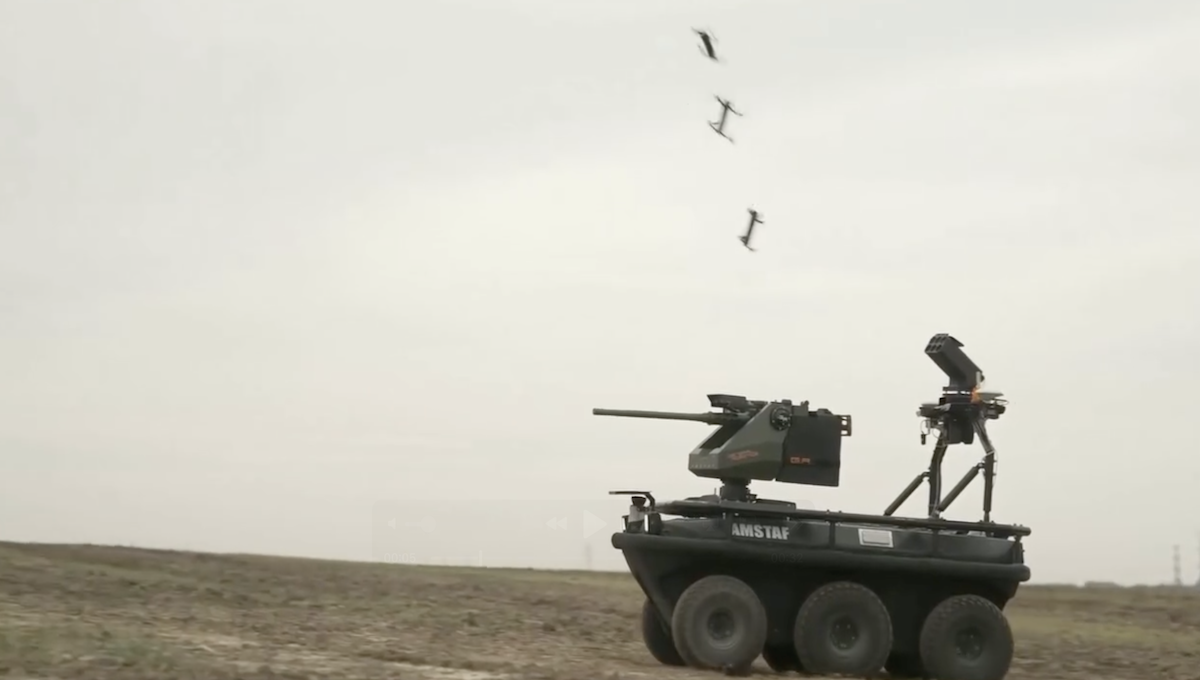
On the ground, UGVs represent the next frontier, embodying the fusion of robotics and armored warfare. These tracked or wheeled machines, such as the Ratel-S and Ironclad models, have been deployed in Ukraine for high-risk tasks that would otherwise endanger soldiers, including dragging mines across contested zones and laying explosive traps.
In one documented operation near Kharkiv in December 2024, UGVs equipped with machine guns and munitions conducted a fully unmanned assault, performing mine clearance and direct fire support while FPV drones provided overhead cover. Russian bunkers were destroyed without a single Ukrainian infantryman involved. These vehicles also excel in kill zones saturated with drone surveillance, evacuating wounded personnel, delivering supplies, and in at least one recorded instance forcing three Russian soldiers to surrender after a Droid TW-7.62 UGV breached their position.
Their resilience against electronic warfare, thanks to innovations like fiber-optic controls, allows UGVs to operate effectively in jammed environments where radio-controlled systems fail.
UCAVs and the Coming Swarm Era
Unmanned combat aerial vehicles (UCAVs) promise to redefine aerial dominance, evolving from current models like the Bayraktar TB2 used for deep strikes to fully autonomous systems integrated with AI for swarm operations. In future conflicts, these platforms could serve as loyal wingmen to manned fighters, conducting interdiction, electronic warfare, and air-to-air combat without risking pilots.
Ukraine's experience with long-range strike drones, capable of reaching over 2,000 kilometers to target strategic infrastructure, foreshadows an era where UCAVs swarm en masse, overwhelming defenses through sheer numbers and coordinated autonomy. The modular nature of these systems allows for rapid adaptation at scale, potentially rendering traditional air forces obsolete in high-intensity conflicts.
Four Drone Classes and Their Battlefield Roles
Autonomy, AI, and the Ethics of Machine Warfare
As autonomy advances, propelled by AI modules that enable target recognition and navigation without constant human input, the vision of drone-dominated warfare moves closer to reality. In Ukraine, partial autonomy has already boosted strike success rates from 20% to 80% by countering jamming and reducing operator dependency.
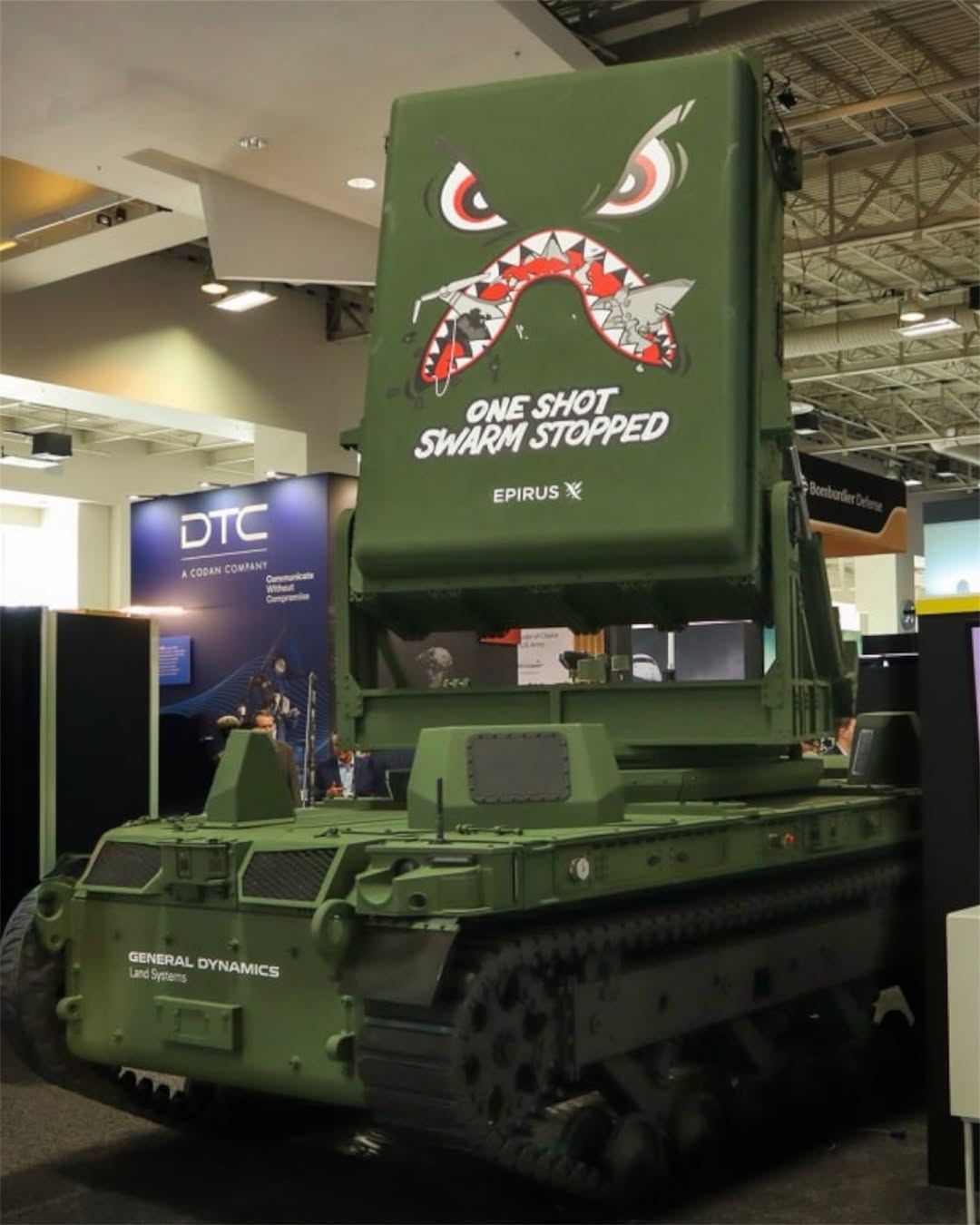
Future battlefields may see multidomain swarms combining aerial drones, ground robots, and maritime unmanned vessels executing complex operations, from mine clearance in contested waters to hunting high-value targets across vast distances. This shift favors nations that master scalable production and integration of these technologies.
Yet ethical considerations are real. As the line between human oversight and machine independence blurs, questions about accountability in an increasingly automated theater of war become pressing. Current international law was not designed for systems capable of selecting and engaging targets without a human in the decision loop, and the speed of swarm operations may make meaningful human control practically impossible in high-intensity conflict.
The Trajectory Is Clear
The lessons from Ukraine illuminate a trajectory where drones eclipse conventional forces, driven by cost-effectiveness, adaptability, and lethality. With annual production reaching millions and innovations accelerating, the day when wars are fought entirely by drones appears not as science fiction but as an impending strategic reality. This evolution challenges militaries worldwide to adapt or risk obsolescence in the drone age.
Kai Tutor | The Societal News Team
Follow Us!
It helps decentralize our presence across the web and it's completely free!
Instagram ➤
Youtube ➤
Substack ➤
X.com ➤
Telegram ➤
TikTok ➤