How the US Government Secretly Drugged Its Own Citizens — CIA Project Artichoke
A Bureaucratically Organized Program - Not a Conspiracy Theory
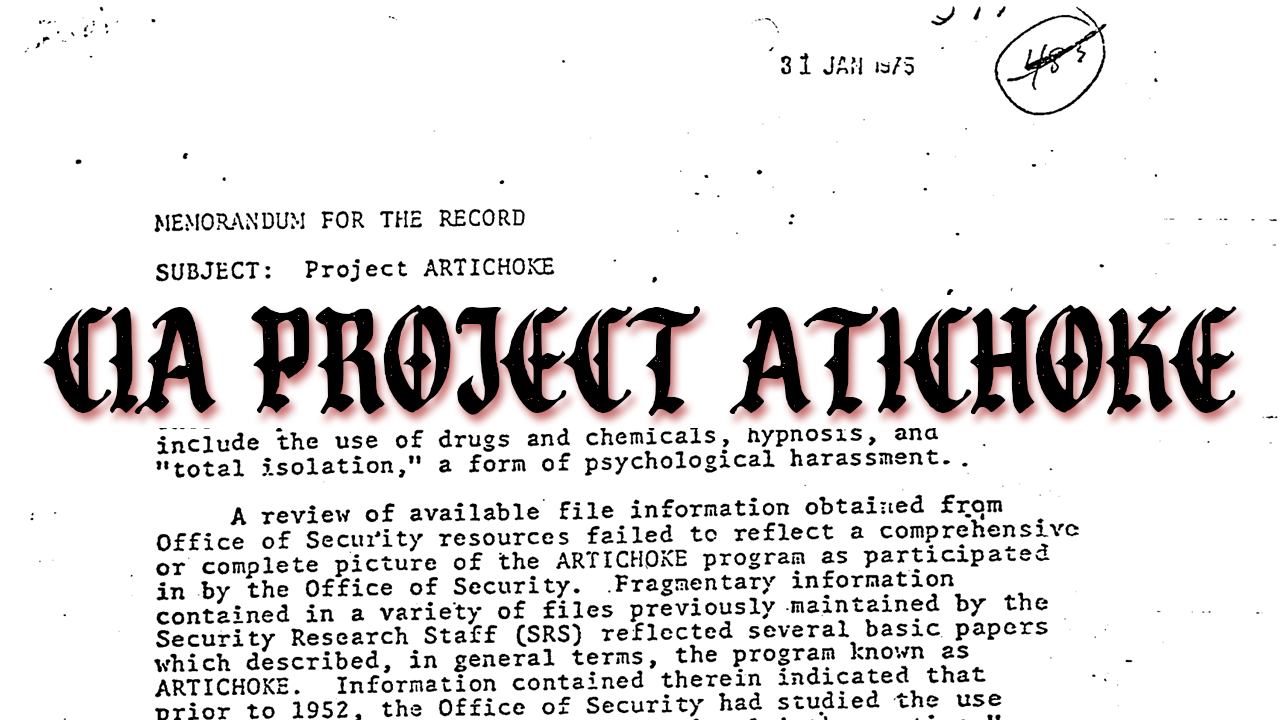
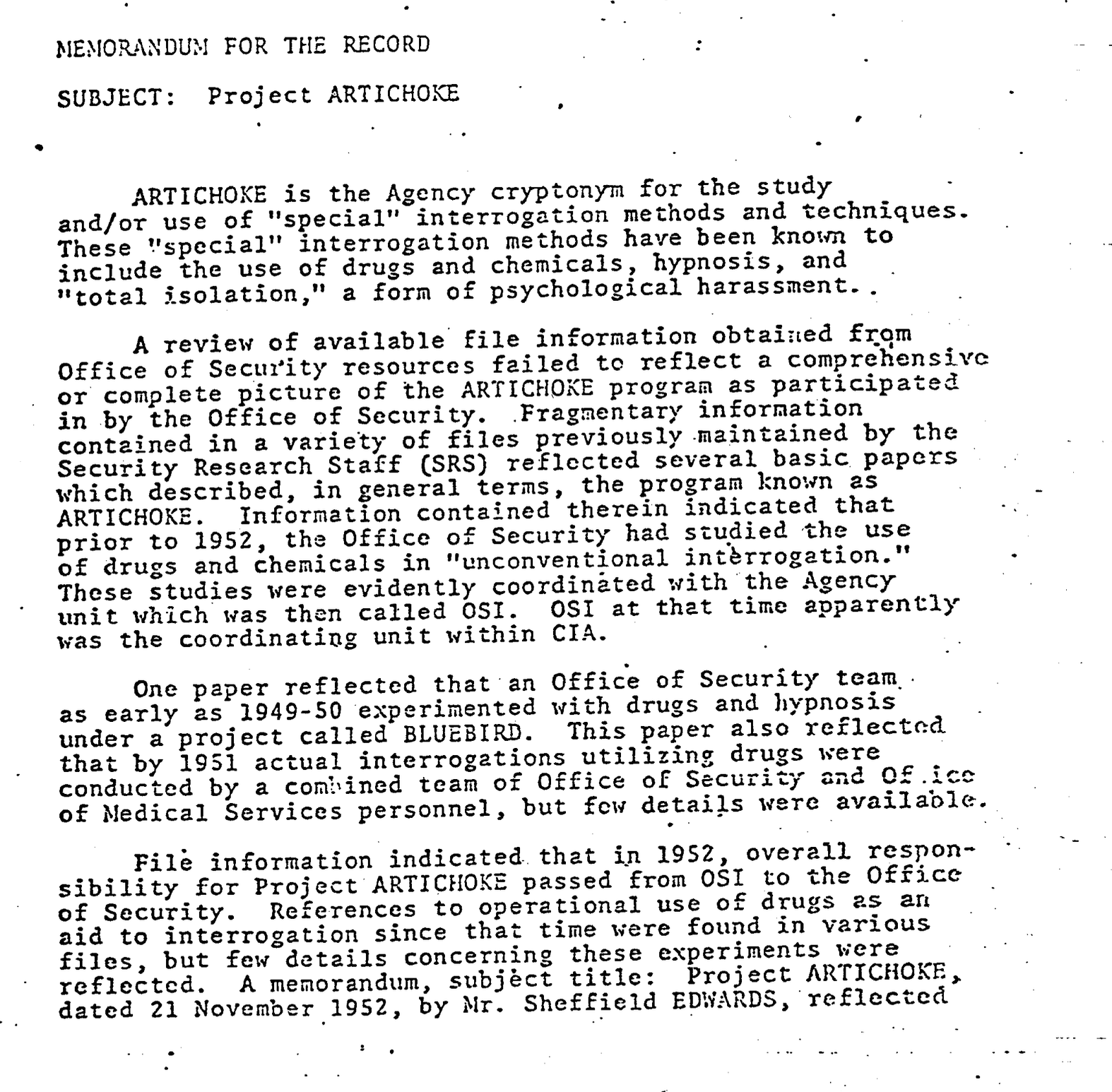
Project Artichoke isn't a fringe conspiracy or a rumor - it was a bureaucratically organized, institutionally approved government program. The planning documents show a deliberate, methodical effort to research how to alter human consciousness without detection. The Church Committee confirmed those plans were carried out.
What makes this uniquely disturbing isn't just the acts themselves, but the goals and mindset behind them. The people running this program did not view ordinary citizens, prisoners, or even their own agents as people with rights. They viewed them as variables in an experiment. The language in the documents is cold and clinical precisely because the subjects were never really considered human beings in the context of the work. That is not an accident of tone — it reflects the actual ethical framework operating inside the program.
Beyond Interrogation - The Goal Was Population Management
The goal of inducing lethargy, depression, and hopelessness is particularly worth considering. Interrogation of enemy combatants or foreign agents is one thing — brutal, legally questionable, but at least coherent as a national security rationale.
But the proposals to administer behavior-altering substances covertly through food, water, vaccines, cigarettes, and consumer goods like Coca-Cola describe something categorically different. That is population management. The researchers were explicitly interested in producing passive, compliant, cognitively dulled people. That objective has nothing to do with extracting information from a prisoner and everything to do with controlling a civilian population.
You don't need to hide drugs in Coca-Cola to interrogate a Soviet spy in a basement in Berlin. You need that capability if your target is a large number of people going about their daily lives, unaware that anything is happening to them. The research into mass covert delivery through food and water supplies was about the domestic population.
A Direct Inversion of American Constitutional Principles
The United States was founded on a specific set of ideas - that individuals possess inherent rights, that government derives its legitimacy from the consent of the governed, and that the state exists to serve the people, not the other way around. Project Artichoke represents a direct operational inversion of every one of those principles.
Informed consent is the bedrock of both medical ethics and personal freedom. You cannot be free in any meaningful sense if your own government is covertly altering your neurological state without your knowledge. Freedom of thought, freedom of will, freedom of choice - all of these become hollow abstractions if the chemical environment of your brain can be manipulated without your awareness or agreement.
This Was Not a Rogue Operation - It Was a Sanctioned One
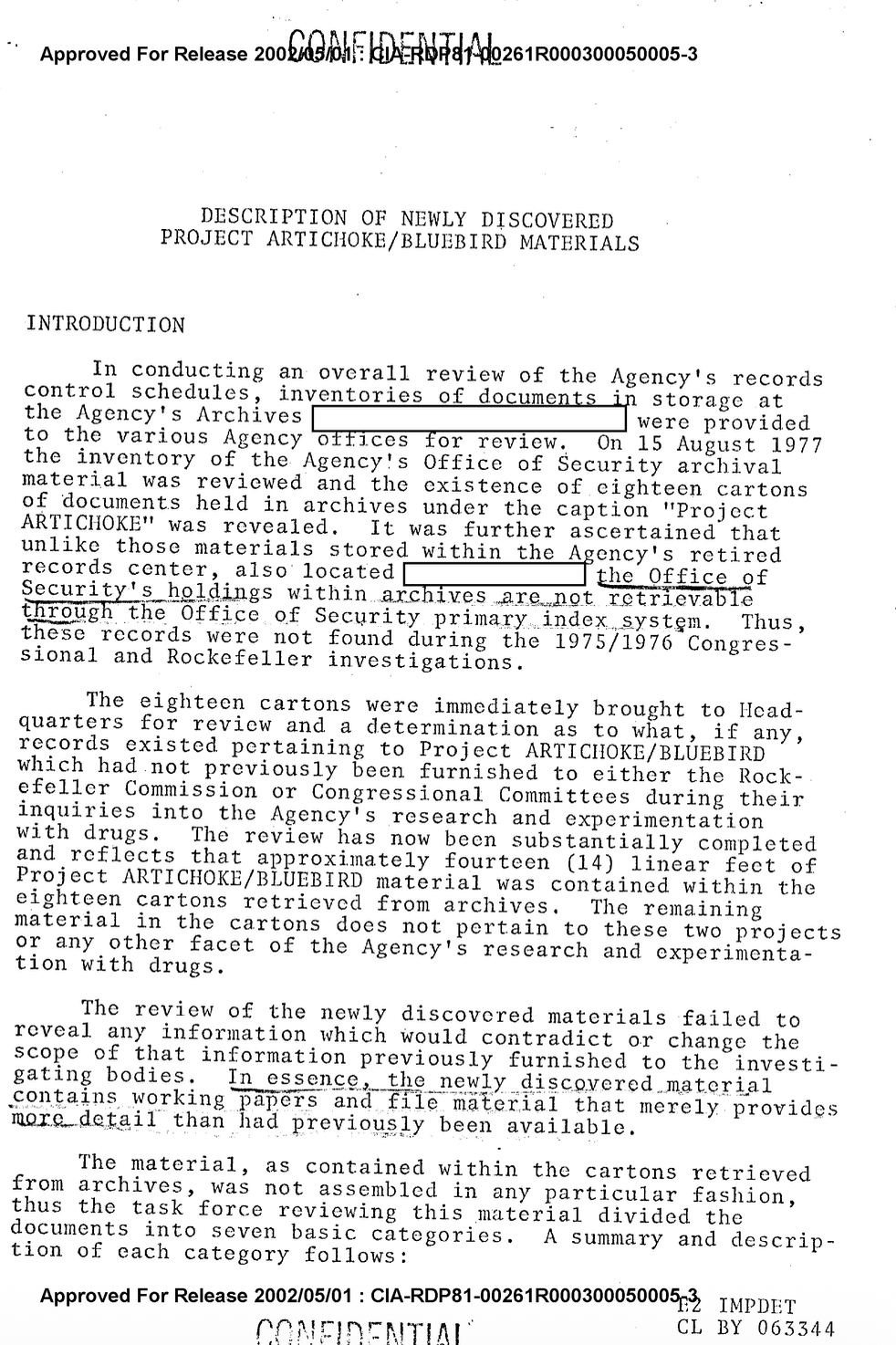
The most unsettling part of this history is not the specific acts, as horrifying as they are. It's what the acts reveal about how institutions operate when there is no oversight. The Church Committee found that these programs ran for years, involved multiple agencies - the CIA, the Army, the Navy, the Air Force, and the FBI — and were funded through legitimate government budgets, reviewed by senior officials, and staffed by credentialed scientists and doctors.
This was not a rogue operation. It was a fully sanctioned one. The people involved were not outliers or madmen. They were bureaucrats and scientists operating within a system that had simply decided certain rules didn't apply to it.
Richard Helms and the Destruction of the Files
Richard Helms destroying the files in 1973 tells you everything you need to know about whether the people running these programs believed what they were doing was defensible. You don't incinerate records because you're proud of your work. You incinerate them because you know that exposure means accountability, and you'd rather there be no accountability than face it.
Congress was coming, and the first instinct of the institution was to destroy the evidence. That reflex - the cover-up, not just the crime - is what should alarm people most, because it indicates that the participants understood perfectly well that what they had done was wrong and chose to do it anyway.
What Project Artichoke Reveals About the Social Contract
Project Artichoke forces a reconsideration of the relationship between the American citizen and the American state. The social contract assumes a government that, even when overreaching, is operating within some framework of accountability. What these programs revealed is that there exists within the permanent national security apparatus a capacity and a willingness to operate entirely outside that framework — to treat citizens not as the source of governmental authority but as a resource to be managed, studied, and if necessary, chemically subdued.
The Church Committee Reforms - and What They Required
The Church Committee reforms - the creation of congressional intelligence oversight committees, the Foreign Intelligence Surveillance Act, the executive order banning assassination - were genuine attempts to draw new lines. Those reforms were only possible because documents survived the shredding and journalists and senators forced the issue into the open.
The lesson isn't necessarily that the government is always doing this right now. The lesson is that it did do this, that it did so for years with institutional support, that it tried to destroy the evidence, and that the only thing that stopped it was external pressure from a free press and legislators willing to use their oversight authority. Remove any one of those elements and there is nothing in the architecture of the system that would have stopped it on its own.
That is what it means to be a "free" citizen in a country that has done this. Freedom, it turns out, is not a condition that governments grant and maintain automatically. It's one that has to be actively defended and fought for - even against the government, and those who govern. The only way to maintain freedom is through a free and independent press corps, supported by the public.
Kai Tutor | The Societal News Team
Follow Us!
It helps decentralize our presence across the web and it's completely free!
Instagram ➤
Youtube ➤
Substack ➤
X.com ➤
Telegram ➤
TikTok ➤