Your Car Is Watching You: The Federal Kill Switch Mandate and Ford's Biometric Patents
The Law Already on the Books
Buried more than a thousand pages deep inside the 2,702-page Infrastructure Investment and Jobs Act that President Biden signed into law in November 2021 sits a provision that is now reshaping what it means to own a car in America. Section 24220, quietly titled "Advanced Impaired Driving Technology," directs the National Highway Traffic Safety Administration (NHTSA) to mandate advanced drunk and impaired driving prevention technology as standard equipment in every new passenger vehicle sold in the United States. The target enforcement window is 2026 to 2027. This is not a proposal. It is not a pilot program. It is federal law.
What Section 24220 Actually Requires
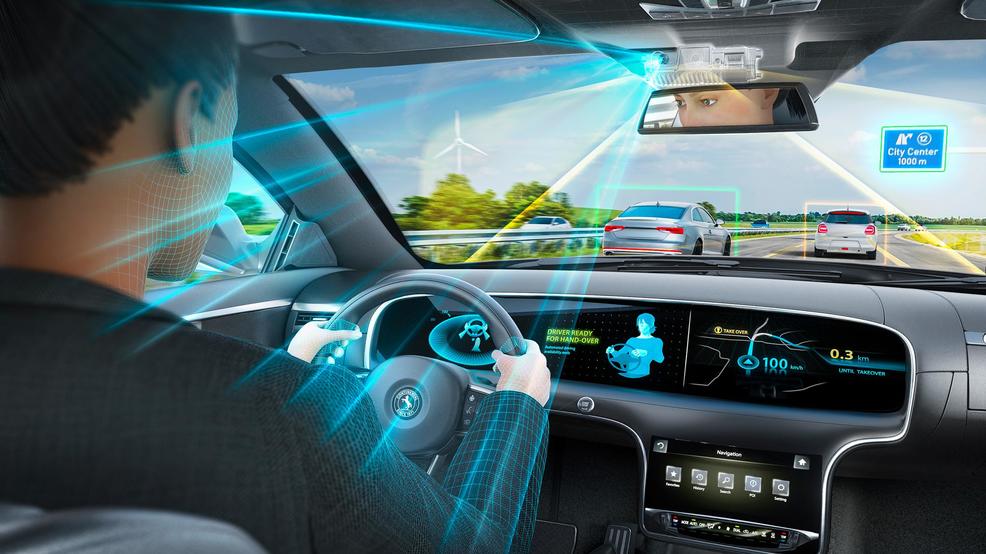
The statutory language is precise. The technology must passively monitor a driver's performance to identify signs of impairment, passively detect blood alcohol concentration at or above the legal limit of 0.08%, and prevent or limit vehicle operation if impairment is detected. The keyword is passive. No breathalyzer tube. No police officer. No court order. A sensor array watches you constantly, and an algorithm decides whether you are fit to drive. If the system says no, before you leave the driveway or while you are moving at highway speed, the car can refuse to start or restrict operation entirely.
What makes this particularly alarming to critics is the absence of any defined appeals process. There are currently no federal rules defining how a driver gets out of that lockout. The car makes the call. NHTSA published an Advance Notice of Proposed Rulemaking in January 2024 and received more than 3,000 public comments. As of mid-2026, the agency is still finalizing the technical standards, but the mandate itself remains law.
The Technology Being Developed
Two primary approaches are being developed through DADSS (the Driver Alcohol Detection System for Safety), a public-private partnership between NHTSA and automakers. Breath-based systems use sensors in the steering column to passively sample the air near the driver and measure alcohol concentration in real time, designed to filter out passenger breath. Touch-based systems embed infrared sensors in the steering wheel or start button to measure blood alcohol levels through the skin.
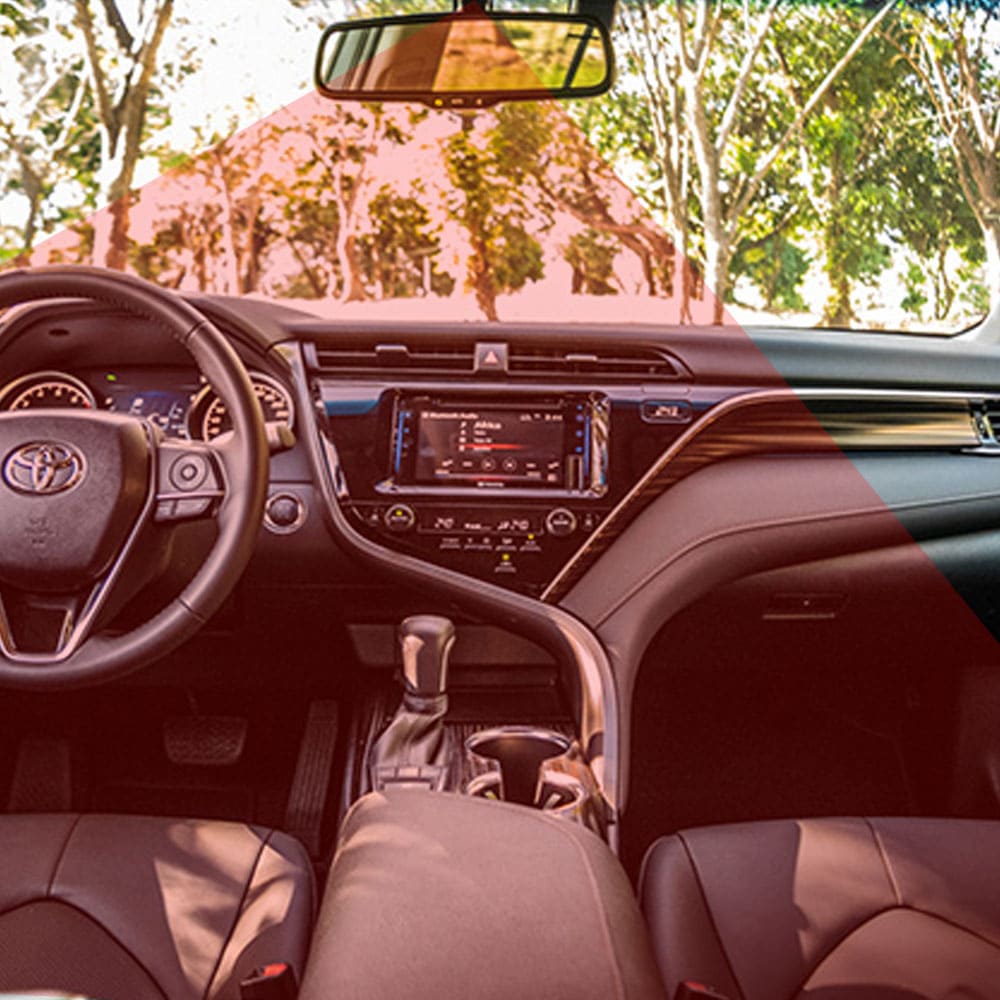
Beyond alcohol detection, the law's broader language covering impairment generally opens the door to cameras monitoring eye movement, head position, and driving behavior patterns. GM's Super Cruise and Ford's BlueCruise already use driver-facing cameras for attention monitoring. Under Section 24220, some version of this technology could become mandatory in every new vehicle. Automakers and analysts have warned the technology is not yet uniformly reliable, raising serious concerns about false positives. A driver swerving to avoid a pothole, showing fatigue-related eye movement, or operating under a legal prescription medication could theoretically trigger a lockout.
The Congressional Fight
The mandate has not gone unchallenged. Representative Thomas Massie of Kentucky has been the most vocal opponent, calling the technology Orwellian and warning on the House floor that the car itself will monitor your driving, and if it decides you are not performing adequately, it will disable itself, making the dashboard your judge, jury, and executioner. In January 2026, Massie introduced an amendment to defund NHTSA's implementation of Section 24220. It failed 268 to 164, with 57 Republicans crossing the aisle to vote against defunding the mandate. A separate bill, the No Kill Switches in Cars Act (H.R. 1137), seeks to repeal the mandate entirely but remains stalled in committee.
Supporters, including Mothers Against Drunk Driving, argue the technology will save more than 10,000 lives each year and insist it does not introduce new privacy risks beyond the data already generated by modern vehicles. Critics counter that this framing sidesteps the core issue. Once cameras and sensors are embedded in your vehicle collecting biometric data in real time, who has access to that data is not controlled by safety advocates. It is controlled by automakers, insurers, data brokers, and ultimately the courts.
Ford's Biometric Patents
While the federal mandate is still winding through rulemaking, Ford Motor Company has filed a series of patents that show exactly where the industry is heading with or without government pressure.
The Data Problem
All of these technologies produce data, and modern cars are already data collection machines. According to a February 2026 CNN investigation, 90% of new cars track driving behavior every three seconds, monitoring speed, braking, phone use, and GPS location. Automakers earn up to $100 per vehicle annually by selling this data to companies like LexisNexis, which packages it for insurance companies.
Layer in biometrics including eye movements, pupil dilation, heart rate, emotional state, and lip movements, and the data profile becomes something altogether different. The law currently does not prohibit manufacturers from transmitting biometric data to corporate servers. And because these systems are software-defined, over-the-air updates can expand monitoring capabilities after you have purchased the vehicle. A car bought under one set of rules can be silently updated to operate under a different set.
The Questions Nobody Is Answering
Supporters frame this as a straightforward public safety equation. Drunk driving kills roughly 10,000 Americans per year, and technology can stop it. That argument is not without merit. But it does not answer what happens when the system generates a false positive at 65 mph on a dark highway, when a driver having a medical emergency cannot start their car, when a legal prescription drug triggers an impairment flag, or when biometric data collected in your vehicle is sold to your insurer, subpoenaed by law enforcement, or exposed in a cyberattack.
The law as written answers none of those questions. Those answers will be written by NHTSA in its forthcoming final rule, by automakers in their end-user agreements, and by courts in cases that have not yet happened. What is not in question is this: the car you buy in 2026 or 2027 will know more about your body, your habits, and your state of mind than any vehicle in history. Whether that knowledge is used to save lives or to surveil them depends entirely on guardrails that do not yet exist.
Kai Tutor | The Societal News Team
Follow Us!
It helps decentralize our presence across the web and it's completely free!
Instagram ➤
Youtube ➤
Substack ➤
X.com ➤
Telegram ➤
TikTok ➤