A Complete Beginner's Guide to Eastern Orthodox Christianity
What Is Eastern Orthodoxy?
Eastern Orthodox Christianity is one of the oldest and largest branches of Christianity in the world, with somewhere between 260 and 300 million members globally. It traces its roots directly to the earliest Christian communities founded by the Apostles themselves, and Orthodox Christians believe their Church is the original, unbroken continuation of the Church established by Jesus Christ and described in the New Testament.
The word "Orthodox" comes from the Greek words orthos (correct) and doxa (belief or glory), meaning roughly "correct belief" or "right worship." The Eastern Orthodox Church split formally from the Roman Catholic Church in 1054 AD in an event called the Great Schism, though Orthodox Christians would argue it was Rome that departed from the original faith, not the East. Prior to that split, Christianity had been held together as one body, and the Orthodox Church considers itself the continuation of that undivided Church.
Orthodox Christianity is not a single denomination in the way Western Christianity is divided into many denominations. It is a family of self-governing, or "autocephalous," churches that share the same faith, sacraments, theology, and liturgical tradition, while each having its own leadership and often its own cultural expression.
A Brief History
Christianity began in Jerusalem and spread rapidly throughout the Roman Empire. The earliest Christian communities were centered in major cities Jerusalem, Antioch, Alexandria, Rome, and Constantinople. These cities became the great patriarchates, centers of Christian leadership and theology. The Eastern half of the Roman Empire, centered in Constantinople (modern-day Istanbul), became the heartland of what we now call Eastern Christianity.
Over the first several centuries, the Church held a series of Ecumenical Councils, gatherings of bishops from across the Christian world, to define correct doctrine and address heresies. The Orthodox Church recognizes seven of these Ecumenical Councils, held between 325 and 787 AD, as authoritative. These councils produced the Nicene Creed and clarified foundational Christian beliefs about the nature of Christ, the Trinity, and the veneration of icons.
The Great Schism of 1054 divided Christianity between Rome in the West and Constantinople in the East. The split involved disputes over papal authority, the addition of the filioque clause to the Nicene Creed by the Western Church, and various cultural and political tensions. After the Schism, Eastern Christianity continued to flourish and spread, particularly into Eastern Europe and Russia, while the Western Church evolved into Roman Catholicism and later Protestantism.
The fall of Constantinople to the Ottoman Turks in 1453 was a devastating blow, but the Orthodox faith survived and in many ways thrived, especially in Russia, which became a major center of Orthodoxy and eventually established its own Patriarchate in Moscow.
Core Beliefs and Theology
Eastern Orthodox theology is rich, ancient, and in some ways quite different from what most Western Christians are familiar with. Here are the foundational beliefs.
The Holy Trinity
Like all Christians, Orthodox believers hold that God is one Being in three Persons: the Father, the Son (Jesus Christ), and the Holy Spirit. These three are co-equal, co-eternal, and of one essence. The nature of the Trinity was defined and defended at the early Ecumenical Councils, and Orthodox theology treats this as the very foundation of all Christian thought.
Jesus Christ
The Orthodox Church affirms that Jesus Christ is fully God and fully human, two natures in one Person. He was born of the Virgin Mary (who is called Theotokos, meaning "God-bearer"), lived, taught, suffered, died on the Cross, and rose bodily from the dead on the third day. His resurrection is the very center of Orthodox faith and life. As the common Orthodox proclamation goes: "Christ is risen from the dead, trampling down death by death, and upon those in the tombs bestowing life."
Salvation and Theosis
This is one of the most distinctive aspects of Orthodox theology. In the West, salvation is often described in legal terms humanity sinned, broke God's law, and Christ paid the penalty. While the Orthodox affirm that Christ saves, they describe salvation less in legal terms and more in terms of healing and transformation.
The Orthodox understanding of salvation is centered on the concept of theosis (also called deification or divinization). Theosis is the process by which a human being becomes increasingly united with God not becoming God in essence, but partaking in His divine life and energy. St. Athanasius of Alexandria put it famously: "God became man so that man might become god." Sin in Orthodoxy is understood primarily as a disease, a corruption of human nature, rather than simply a legal transgression. Christ came to defeat death itself, not merely to satisfy a legal debt. This is why the Resurrection, rather than the Crucifixion alone, is the absolute center of Orthodox faith.
The Nature of the Church
The Orthodox Church does not see itself as one denomination among many. It understands itself as the one, holy, catholic, and apostolic Church confessed in the Nicene Creed. The Church, in Orthodoxy, is the Body of Christ, not an institution in a merely organizational sense, but a living organism through which believers are united to God and to one another. At the same time, Orthodoxy is careful not to declare definitively who is outside of salvation. The Church's boundaries are clear on the inside, but the question of what God does with those outside is largely left to His mercy.
Sacred Scripture and Holy Tradition
Orthodox Christianity holds that Scripture and Holy Tradition are not two separate sources of authority, but rather two expressions of the same divine revelation. The Bible did not fall from the sky as a completed book it was the Church that recognized, preserved, and interpreted Scripture. Therefore, the Church's living Tradition, including the writings of the Church Fathers, the decrees of the Ecumenical Councils, liturgical texts, canons, and iconography, is authoritative alongside Scripture. The Orthodox use a version of the Old Testament based on the Septuagint (the ancient Greek translation used by the early Church), which includes several books not found in the Protestant Bible, known as the Deuterocanonical books or Apocrypha.
The Holy Spirit and Mysticism
Orthodox Christianity has a deeply mystical character. There is a rich tradition of mystical theology in Orthodoxy, most notably the tradition of hesychasm a form of contemplative prayer aimed at direct experience of God's divine light and presence. The great 14th-century theologian St. Gregory Palamas defended the reality of this experience, teaching that while God's essence is unknowable, His divine energies can be truly experienced by humans.
Worship and the Divine Liturgy
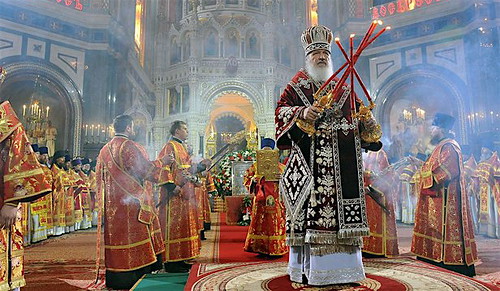
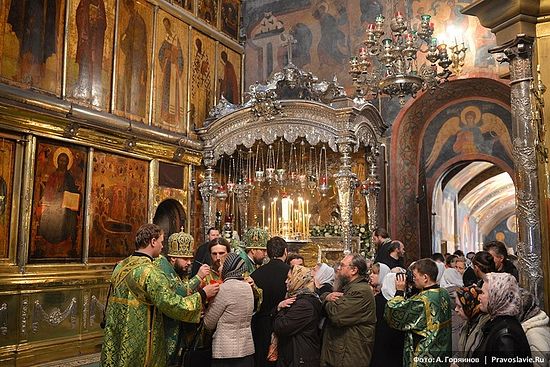
If there is one thing that most strikes newcomers to Orthodoxy, it is the worship. Orthodox liturgical services are ancient, beautiful, and profoundly immersive. They engage all the senses incense, chanting, icons, candles, the sign of the cross, prostrations, and the spoken and sung prayers of the community.
The Divine Liturgy
The central act of Orthodox worship is the Divine Liturgy, which is the Orthodox name for the Eucharist or Communion service. The most commonly used form is the Divine Liturgy of St. John Chrysostom, written in the 4th century. There is also the longer Divine Liturgy of St. Basil the Great, celebrated on certain occasions, and the ancient Liturgy of St. James.
The Divine Liturgy is not considered a mere memorial of the Last Supper. The Orthodox believe that in the Liturgy, the bread and wine truly and really become the Body and Blood of Christ a transformation called the metabole, understood as a genuine miracle wrought by the Holy Spirit. The Liturgy is structured in two main parts: the Liturgy of the Catechumens (centered on Scripture readings and preaching) and the Liturgy of the Faithful (centered on the Eucharistic prayer and Communion).
The Church Building
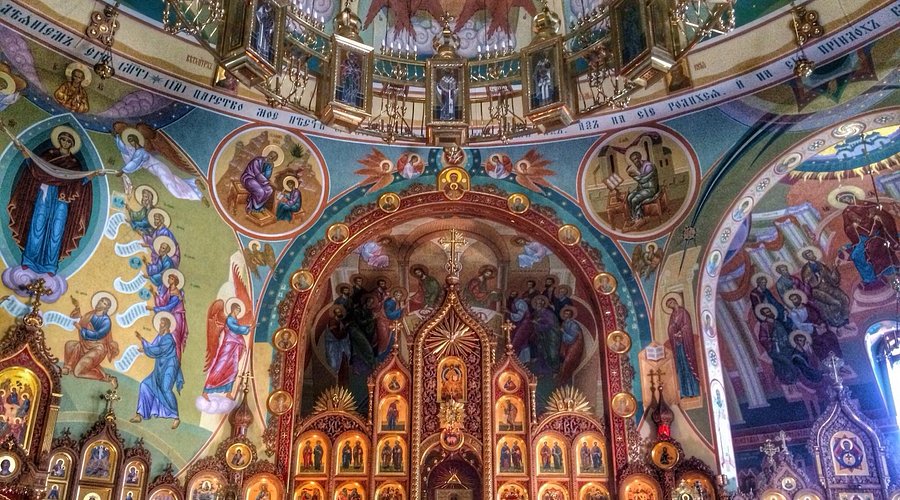
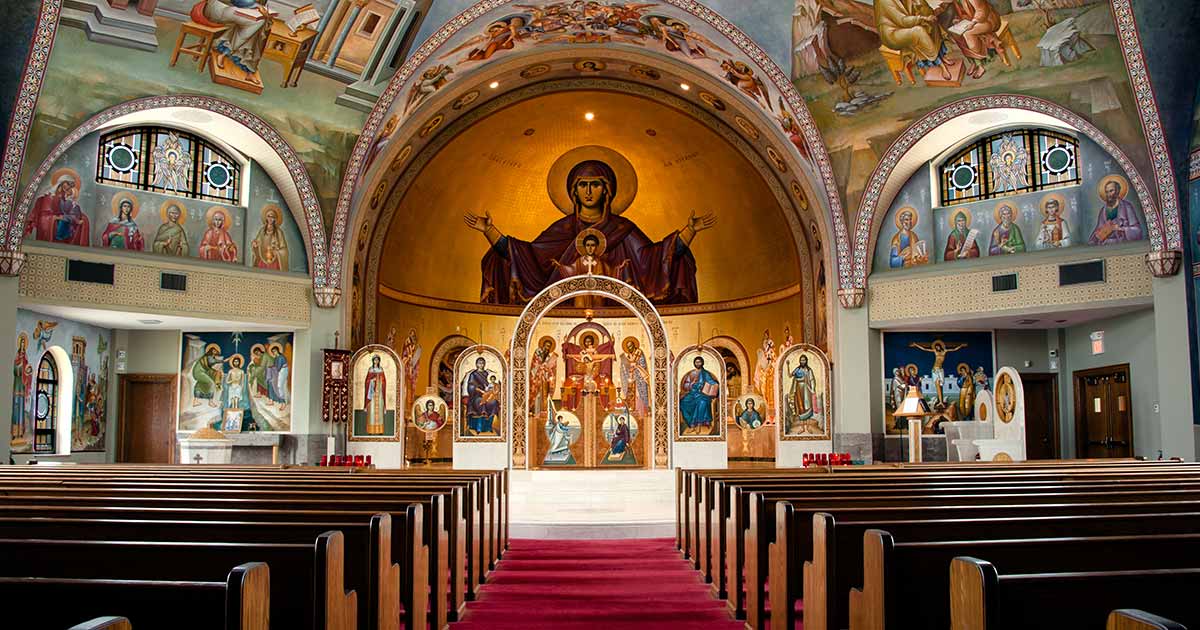
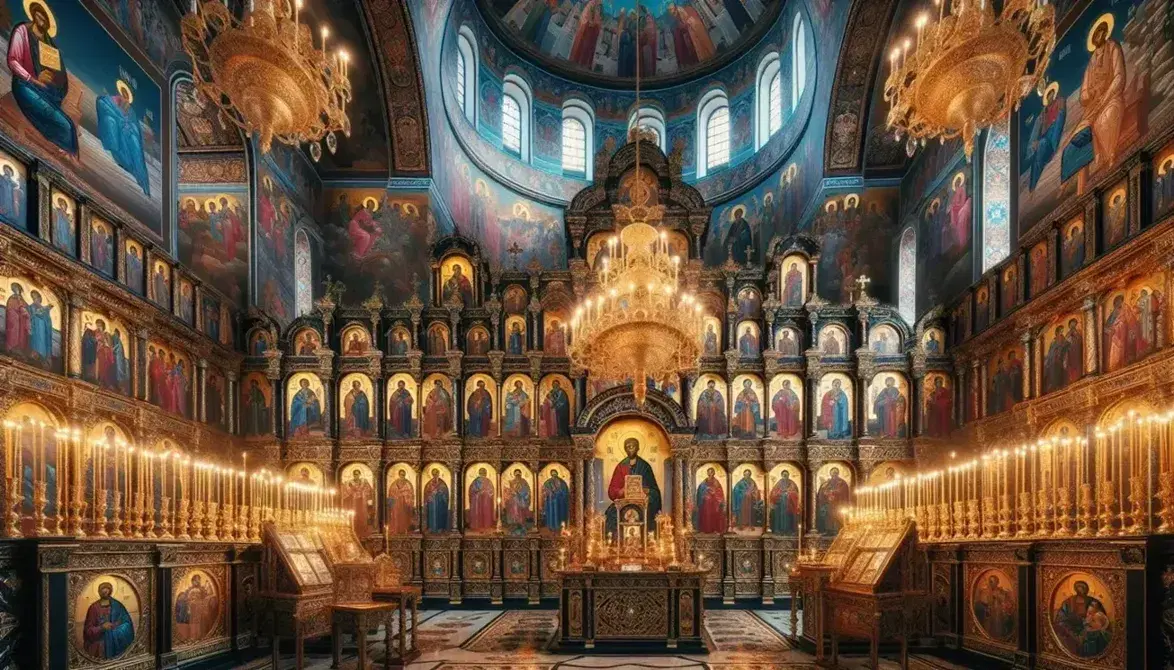
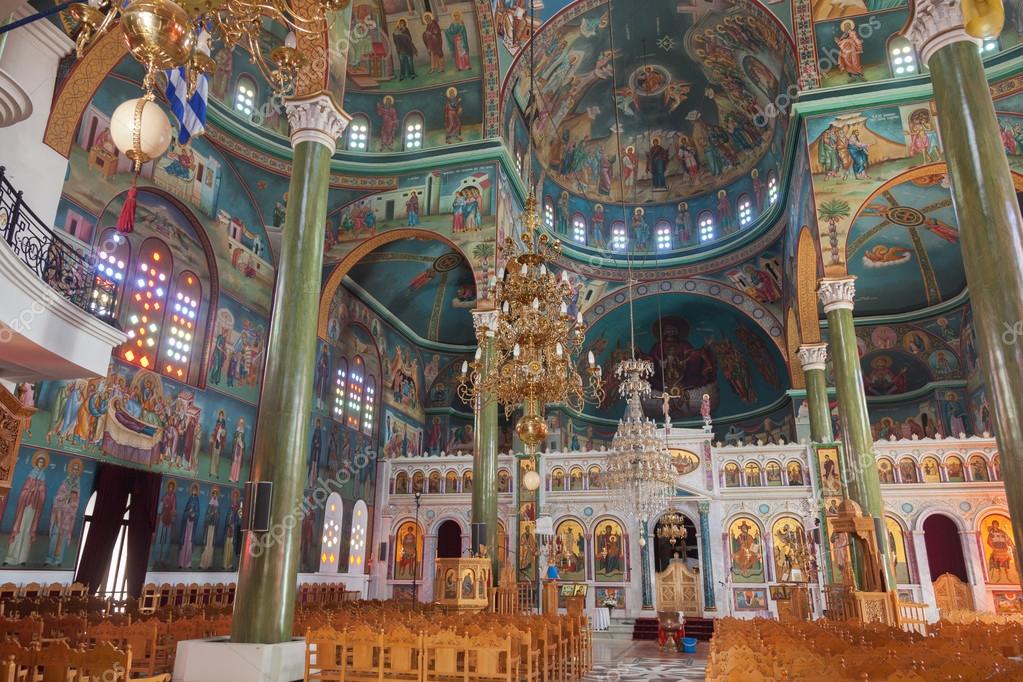
An Orthodox church building is itself a theological statement. The Narthex is the entry vestibule, a transitional space between the outside world and the sanctuary. The Nave is the main body of the church where the congregation stands, standing is the traditional posture of Christian prayer in the East, signifying the resurrection. The Iconostasis is a screen covered with icons separating the nave from the altar, representing the boundary between heaven and earth. The Altar behind it is where the priests serve the Liturgy.
Icons cover the walls, ceiling, and iconostasis. In Orthodox theology, an icon is a window into heaven a sacred image through which believers venerate the holy persons depicted. When an Orthodox Christian kisses an icon or bows before it, they are venerating the person depicted, not the physical object itself.
The Church Calendar
The Orthodox Church follows a rich liturgical calendar. Most Orthodox churches use the Julian calendar, which currently runs 13 days behind the Gregorian calendar. The moveable cycle is anchored by Pascha (Easter), calculated differently from Western Easter. The great feasts include the Twelve Great Feasts among them Christmas, Theophany, the Transfiguration, Palm Sunday, the Ascension, and Pentecost but above all these stands Pascha, the Feast of Feasts, the Resurrection of Christ.
Fasting
Fasting is a central and serious discipline in Orthodox Christianity, involving abstaining from meat, dairy, fish, oil, and wine on fasting days. Major fasting periods include Great Lent before Pascha, the Apostles' Fast, the Dormition Fast, and the Nativity Fast before Christmas. There are also fasting days every Wednesday and Friday throughout the year, amounting to roughly half the days of the year for a fully observant Orthodox Christian. Fasting is understood not as a legalistic rule but as a spiritual discipline of the body and will.
The Seven Holy Mysteries (Sacraments)
The Orthodox Church recognizes seven Holy Mysteries the preferred term over "sacraments," because the word mystery captures their sacred, beyond-rational character.
1. Baptism The door to the Church, performed by triple immersion in the name of the Holy Trinity. Through baptism, a person is united to Christ, dies to the old life, and rises to new life. It is not merely a symbol but a real transformation.
2. Chrismation Administered immediately after baptism, this is the anointing with holy Chrism oil on the forehead, eyes, nose, mouth, ears, chest, hands, and feet, with the words "The seal of the Gift of the Holy Spirit." This confers the gift of the Holy Spirit directly the Orthodox equivalent of Confirmation, given immediately after baptism, even for infants.
3. The Eucharist The Body and Blood of Christ, received under the forms of leavened bread and wine. Only baptized and Chrismated Orthodox Christians who have prepared themselves through prayer, fasting, and confession may receive Holy Communion. The Eucharist is the center of the Church's life.
4. Confession (Repentance) The penitent stands before an icon and a Gospel book or cross, confesses sins to God, and the priest acts as a witness and pronounces absolution. Regular confession, typically before receiving Communion, is expected of Orthodox Christians.
5. Holy Orders The ordination of clergy bishops, priests, and deacons, through the laying on of hands in an unbroken line of Apostolic Succession stretching back to the Apostles.
6. Holy Unction (Anointing of the Sick) The anointing of the sick with oil for healing of soul and body, available to any faithful Christian who needs healing. A special service of Holy Unction is offered to the entire congregation on Holy Wednesday during Holy Week.
7. Holy Matrimony Marriage is a mystery through which a man and woman are united in a bond reflecting the relationship between Christ and His Church. Rather than exchanging vows, the couple is crowned with crowns as they walk around the Gospel book three times, symbolizing their entrance as a new domestic church into the Kingdom.
The Major Orthodox Churches
The Orthodox Church is not one organization with a single headquarters. It is a family of self-governing churches, each with its own Patriarch or head bishop, all sharing the same faith and in communion with one another.
The Ecumenical Patriarchate of Constantinople
Considered "first among equals" in honor among all Orthodox churches, the Ecumenical Patriarch, currently based in Istanbul, Turkey, holds a place of primacy of honor, not authority over other churches. He is not an Orthodox "pope." This patriarchate has jurisdiction over much of the Greek diaspora worldwide.
The Greek Orthodox Church
One of the most well-known Orthodox churches in the Western world due to Greek immigration. In the US, Greek Orthodox parishes fall under the Greek Orthodox Archdiocese of America, which is under the Ecumenical Patriarchate. Worship is conducted in Greek, though many American parishes use significant amounts of English, and the tradition carries a distinctly Hellenic cultural character.
The Russian Orthodox Church
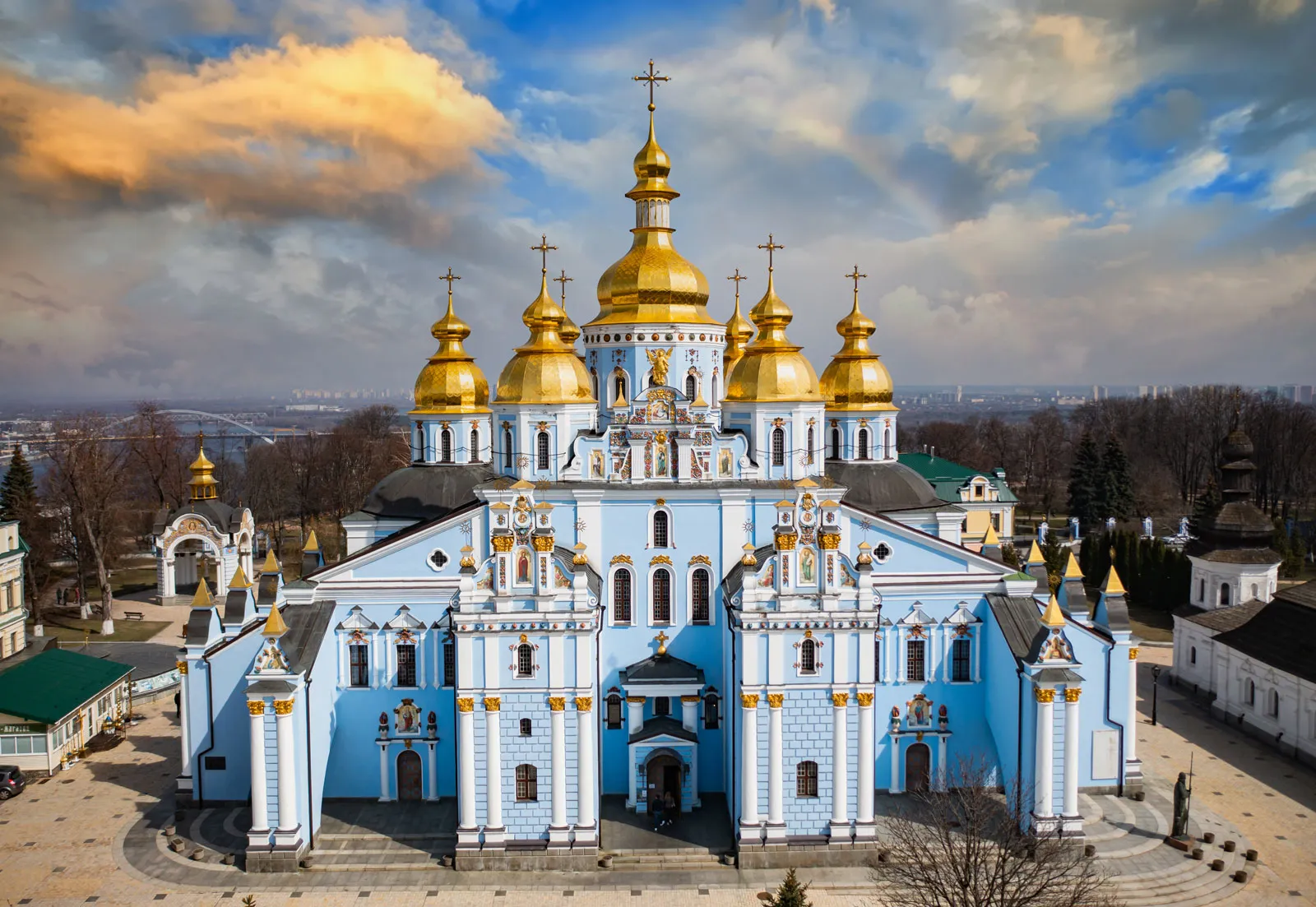
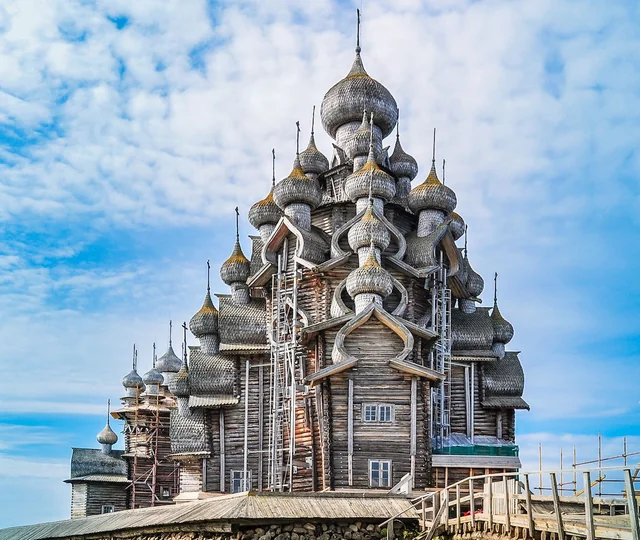
By far the largest Orthodox church by membership, with roughly 100–150 million faithful primarily in Russia, Ukraine, Belarus, and across the former Soviet Union. Led by the Patriarch of Moscow. The Russian tradition is known for its deeply moving choral singing, distinctive onion-domed architecture, and its rich tradition of iconography.
The Antiochian Orthodox Christian Archdiocese
One of the most significant Orthodox jurisdictions in the English-speaking world. The Patriarchate of Antioch traces its history to the church in Antioch where believers were first called Christians (Acts 11:26). The Antiochian Archdiocese in North America received a large group of converts in the 1980s and 1990s, including many former Evangelical Protestants, and is known for being particularly welcoming to converts and for conducting services largely or entirely in English. Many converts to Orthodoxy in America find their home in Antiochian parishes.
The Orthodox Church in America (OCA)
Granted autocephaly (self-governance) by the Moscow Patriarchate in 1970, the OCA is notable for being the first Orthodox jurisdiction to conduct services primarily in English and for having a significant number of converts. It is strongly oriented toward being a native North American church rather than an ethnic immigrant church.
The Serbian Orthodox Church
Serves Serbs and those of Serbian heritage, with significant diaspora communities in the US, UK, Canada, and Australia. It has a rich monastic tradition and was heavily persecuted during the communist era in Yugoslavia.
The Romanian Orthodox Church
The second largest Orthodox church by membership, serving Romanians in Romania and throughout the diaspora. Romania has the distinction of being a largely Orthodox country with a Latin-based language, a legacy of both Roman colonization and Byzantine Christianity.
The Bulgarian and Georgian Orthodox Churches
The Bulgarian Orthodox Church has a long history stretching back to Saints Cyril and Methodius, who created the Cyrillic alphabet to bring Scripture and worship to Slavic peoples. The Georgian Orthodox Church is the ancient church of one of the oldest Christian nations in the world, Christianity became the state religion of Georgia in 337 AD, and has a deeply distinct liturgical tradition intertwined with Georgian national identity.
A Note on Oriental Orthodoxy
The Coptic Orthodox Church and the Ethiopian Orthodox Church are part of what is called Oriental Orthodoxy a related but technically distinct family of churches that separated after the Council of Chalcedon in 451 AD over a Christological dispute. They are not in full communion with the Eastern Orthodox family described above, though warm dialogue exists. A newcomer should be aware of this distinction.
Orthodox Christianity in America
In the United States, Eastern Orthodoxy has historically been organized along ethnic lines Greek, Russian, Antiochian, Serbian, Romanian, and so on, as a legacy of immigration patterns in the 19th and early 20th centuries. There has been a growing movement toward creating a unified American Orthodox Church that transcends ethnic identity.
For the inquirer, this means you will encounter a variety of jurisdictions and cultures. The practical differences are mostly cultural the language used in worship, the style of music, the degree of use of English, and the cultural traditions around the feasts. The theology, sacraments, and faith are identical across all legitimate Orthodox jurisdictions. In recent decades, Orthodoxy in America has seen a significant influx of converts from evangelical, Protestant, Catholic, and non-religious backgrounds, and certain parishes are particularly welcoming and accessible to those unfamiliar with Orthodox tradition.
The Saints, the Theotokos, and the Communion of Saints
One of the most distinctive aspects of Orthodox Christianity for Western newcomers is the role of the saints. The Orthodox Church has a rich tradition of veneration of the saints not worship (which is reserved for God alone), but veneration, honor, and the requesting of their prayers. The saints are understood to be alive in Christ, present before the throne of God, and able to intercede for those still on earth.
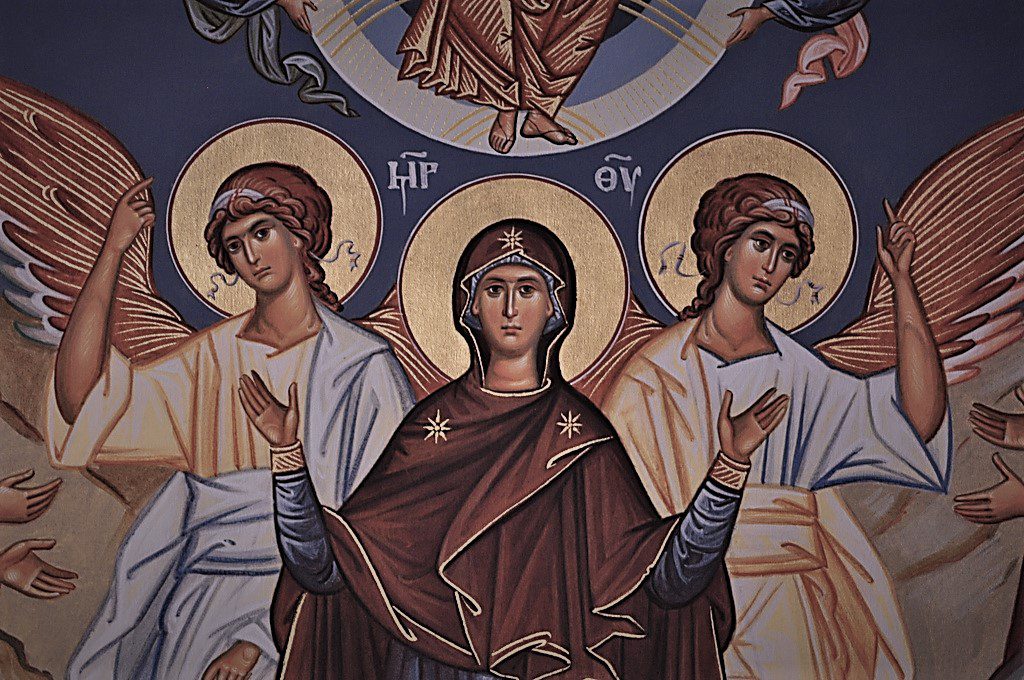
Foremost among the saints is the Theotokos, the Virgin Mary, who holds the highest place of honor among all created beings. She is not worshipped as divine, but is venerated as the Mother of God and the greatest of the saints. The Orthodox tradition of iconography is intimately tied to this theology icons are present throughout Orthodox worship, homes, and life, and venerating an icon is a concrete way of expressing connection with the person depicted and asking for their intercession.
Prayer Life and Spiritual Practice
The Jesus Prayer
"Lord Jesus Christ, Son of God, have mercy on me, a sinner" this is the most important prayer in the Orthodox tradition of personal devotion. Short, simple, and endlessly deep, monks and laypeople alike pray this prayer continuously, often using a prayer rope (a knotted wool rope called a chotki or komboskini) to count repetitions. The goal is not merely to say words but to let the prayer descend from the mind into the heart, becoming a constant interior attitude before God.
Daily Prayer Rule and the Icon Corner
Orthodox Christians typically pray morning and evening prayers drawn from the prayer books of the Church. These are formal, structured prayers, unlike the extempore conversational prayer common in evangelical Christianity, though personal prayer is also encouraged. Most Orthodox will have an icon corner in their home (a dedicated space with icons, candles, and perhaps incense) where they say their daily prayers. Beyond the Sunday Divine Liturgy, the Orthodox Church has a cycle of daily services: Vespers, Matins, the Hours, and Compline. Attending Vespers on Saturday evening is common practice.
Monasticism
Monasticism has always been at the heart of the Orthodox Church. Monks and nuns are considered the Church's great spiritual athletes and intercessors, tracing their roots to the Desert Fathers and Mothers of Egypt and Syria in the 3rd and 4th centuries. The great center of Orthodox monasticism is Mount Athos in Greece, a peninsula with twenty ancient monasteries that has been an unbroken monastic community for over a thousand years. Only men may visit (by special permit), and it is considered the spiritual garden of the Theotokos.
Monastics in Orthodoxy often become great spiritual fathers and mothers startsy or gerontas in the tradition, to whom laypeople come for spiritual counsel and confession. Finding a spiritual father or mother is considered very important for serious Orthodox Christians.
How to Explore and Eventually Join the Orthodox Church
Step One: Visit a Parish
The best first step is simply to attend a Sunday Divine Liturgy at a local Orthodox parish. You do not need to announce yourself or have any prior knowledge. You are welcome to come, observe, stand with the congregation, and absorb the experience. Do not worry about doing everything correctly, no one expects a visitor to know all the responses or practices.
A few practical things to know: dress modestly (women often cover their heads in some parishes, though this varies); arrive on time if you can; and do not approach for Communion, Orthodox Communion, is reserved for baptized and Chrismated members who have prepared through fasting and confession. No one will make you feel bad for not receiving.
Step Two: Speak with the Priest
After you have visited a time or two, introduce yourself to the priest and express your interest in learning more. Orthodox priests are generally very open to inquirers. Most parishes with experience receiving converts will have formal or informal inquiry classes or catechesis.
Step Three: The Catechumenate
When a person formally begins the journey toward Orthodoxy, they enter a period called the Catechumenate a formal process of instruction in the faith. In the ancient Church, this lasted up to three years. In modern practice it typically takes at least a year, often longer. There is a saying in Orthodox circles: "Take your time, but don't waste time."
During the catechumenate, the catechumen attends services, receives instruction in Orthodox theology and practice, develops a personal prayer life, begins fasting, and typically develops a relationship with a spiritual father. Topics covered include: the history of the Church, the Ecumenical Councils, the Divine Liturgy, the Holy Mysteries, Orthodox theology and the Church Fathers, the liturgical calendar, the life of prayer, Orthodox ethics, and practical aspects of Orthodox life.
Step Four: Baptism and Chrismation
When both the priest and the catechumen discern that the person is ready, they receive the Holy Mysteries of Initiation. If the person has never been baptized, they receive Baptism by triple immersion, followed immediately by Chrismation and first Holy Communion, all in one service. This typically takes place at Pascha (Orthodox Easter), continuing the ancient tradition of baptizing new members at the Paschal Vigil.
If the person was previously baptized in the name of the Trinity (as in most Catholic or Protestant traditions), many Orthodox jurisdictions will receive them through Chrismation alone. The Antiochian Archdiocese and the OCA often receive former Catholics and some Protestants this way; the Greek Orthodox Church historically tends toward baptism for all converts. These are matters of pastoral and canonical practice that your priest will guide you through. A person being received into Orthodoxy typically takes a saint's name, the name of an Orthodox saint who becomes their patron and intercessor.
A Note on Pace
Orthodoxy does not rush conversion. The faith expects a genuine, whole-life commitment, not a one-time decision. Many people spend months or even years as inquirers before formally entering the catechumenate, and then a year or more in the catechumenate before baptism. This is not gatekeeping, it is pastoral care. The goal is to make disciples, not just members.
What to Expect as a New Orthodox Christian
After reception, the journey continues. Orthodox Christians are expected to attend the Divine Liturgy every Sunday and on major feasts; make regular confession (several times a year at minimum, ideally more frequently); receive Holy Communion regularly; observe the fasting seasons and days according to their ability; maintain a daily prayer rule; seek guidance from a spiritual father; and live the faith in daily life in relationships, work, ethics, and care for others. The Church does not expect perfection but sincerity and effort. As the saying goes: "Orthodoxy is not a lifestyle; it is a life."
Common Misconceptions
"Orthodoxy is just Eastern Catholicism." Orthodoxy and Catholicism share common roots before 1054, but have developed distinctly over nearly a thousand years. The Orthodox Church does not recognize the authority of the Pope and disagrees with several Catholic doctrines developed after the Schism. Eastern Catholicism (Byzantine Rite Catholics in union with Rome) is a separate thing entirely.
"Orthodox Christians worship Mary and the saints." Orthodox Christians venerate Mary and the saints, they ask for their prayers and honor them, but they do not worship them. Worship (latreia in Greek) is reserved for God alone.
"Orthodoxy is only for Greeks and Russians." While Orthodoxy has historically been associated with Eastern European and Middle Eastern cultures, it is a universal faith. The growing number of converts of every background in the West demonstrates that the faith transcends ethnicity.
"The services are too long and complicated." The services are long by the standards of most contemporary Western Christianity, but Orthodox Christians generally do not experience them as burdensome, they are understood as an offering of time and attention to God. Understanding grows over time, and newcomers are not expected to follow everything immediately.
Resources for the Inquirer
The writings of Metropolitan Kallistos Ware particularly, The Orthodox Church and The Orthodox Way, are considered the best introductory texts in English and are almost universally recommended to inquirers.
Ancient Faith Radio (ancientfaith.com) is a podcast network with hundreds of hours of content about Orthodox theology, history, and practice, all free and in English.
The Orthodox Study Bible provides the complete Old and New Testaments with Orthodox commentary and the Septuagint-based Old Testament text.
Bread and Water, Wine and Oil by Archimandrite Meletios Webber is an excellent introduction to Orthodox spiritual life for a Western audience.
Orthodox Wisdom on Spotify I really enjoy these reading of the Saints of Holy Orthodoxy, they are very pure.
A Final Word
Eastern Orthodox Christianity is not a novelty or a trend. It is a two-thousand-year-old living tradition that has formed saints, shaped civilizations, survived persecutions, and transmitted the faith of the Apostles from generation to generation. It is demanding, ancient, and countercultural in many ways.
But for those who feel drawn to it, drawn by the beauty of the worship, the depth of the theology, the seriousness with which it takes the spiritual life, or simply a sense that here is something true and whole, the invitation is genuine and the door is open.
If you are curious, go and see. Visit a parish. Light a candle. Stand before an icon. Let the incense rise and the chanting wash over you. You are not expected to have it all figured out before you walk through the door. You are simply expected to seek.
Glory to God for all things.
Кай Тутор | Команда Societal News
Follow Us!
It helps decentralize our presence across the web and it's completely free!
Orthodoxy Instagram ➪
Instagram ➪
Youtube ➪
Substack ➪
X.com ➪
Telegram ➪
TikTok ➪