
When a Nation Stops Trusting Its Rulers And What Happens Next
"In 1958, 73% of Americans trusted the federal government. By 2024, that number had collapsed to 22%. This is an unraveling of the American social contract."
Institutional trust isn't personal affection for a politician. It's the belief that your society's governing systems are legitimate, fair, and broadly oriented toward the common good. Political scientists call this "diffuse support" support for the system itself, not specific leaders.
When diffuse support holds, democracies absorb enormous shocks, unpopular leaders, lost wars, economic downturns, without fracturing. When it collapses, citizens disengage, evade, and seek alternatives outside legitimate channels. The feedback loop by which democracies self-correct breaks down.
Tax compliance erodes. Courts lose authority. Public health guidance is ignored. As the American Academy of Arts and Sciences notes, institutions "cannot fulfill their missions if they have lost legitimacy in the eyes of the people they are meant to serve".
History's is consistent. Rome under Commodus, the Ming Dynasty consumed by court corruption, the Soviet Union's implosion each illustrates that when leaders subvert the institutions they inherited, the collapse is often swift and total.
Post-Soviet Russia didn't become liberated it became a playground for oligarchs who seized assets in the vacuum. Anthropological research across 30 pre-modern societies found that "good governance" regimes, those providing genuine public goods, collapsed more completely when betrayed, because their citizens had grown dependent on complex institutional infrastructure.
Aristotle identified the core dynamic 2,400 years ago, oligarchs use ruling structures solely for personal advancement, shrinking the parts of the state that serve the common good while expanding the parts that protect their own power. It is not merely unjust, it is a structurally self-defeating system.
The American Crisis
The collapse of American institutional trust is one of the most thoroughly documented social trends in the history of polling:73% trusted the federal government in 1958 -> 22% by 2024
66% believe the federal government is incompetent (up 10 points in two years)
80%+ say elected officials don't care what ordinary people think
71% say democracy is not working in the United States
This distrust has spread across every institution and both parties though directed at different targets.
Republicans and Democrats now rate the same institutions in mirror-opposite ways. This is not healthy democratic skepticism. It is the atomization of shared reality.
Princeton political scientists Gilens and Page found that in the U.S., "the majority does not rule, at least not in the causal sense".
When ordinary citizens disagree with economic elites, "they generally lose". Citizen influence registers at "a non-significant, near-zero level".
America, they concluded, functions as a functional oligarchy, a peer-reviewed finding, not a fringe claim.
The richest 10% hold 67% of household wealth, the bottom half holds 2.4%. CEO-to-worker pay has gone from 31:1 in 1978 to 281:1 today. The top marginal tax rate dropped from 70% to 37%. In 2025, 13,000 lobbyists spent $5 billion influencing Congress.
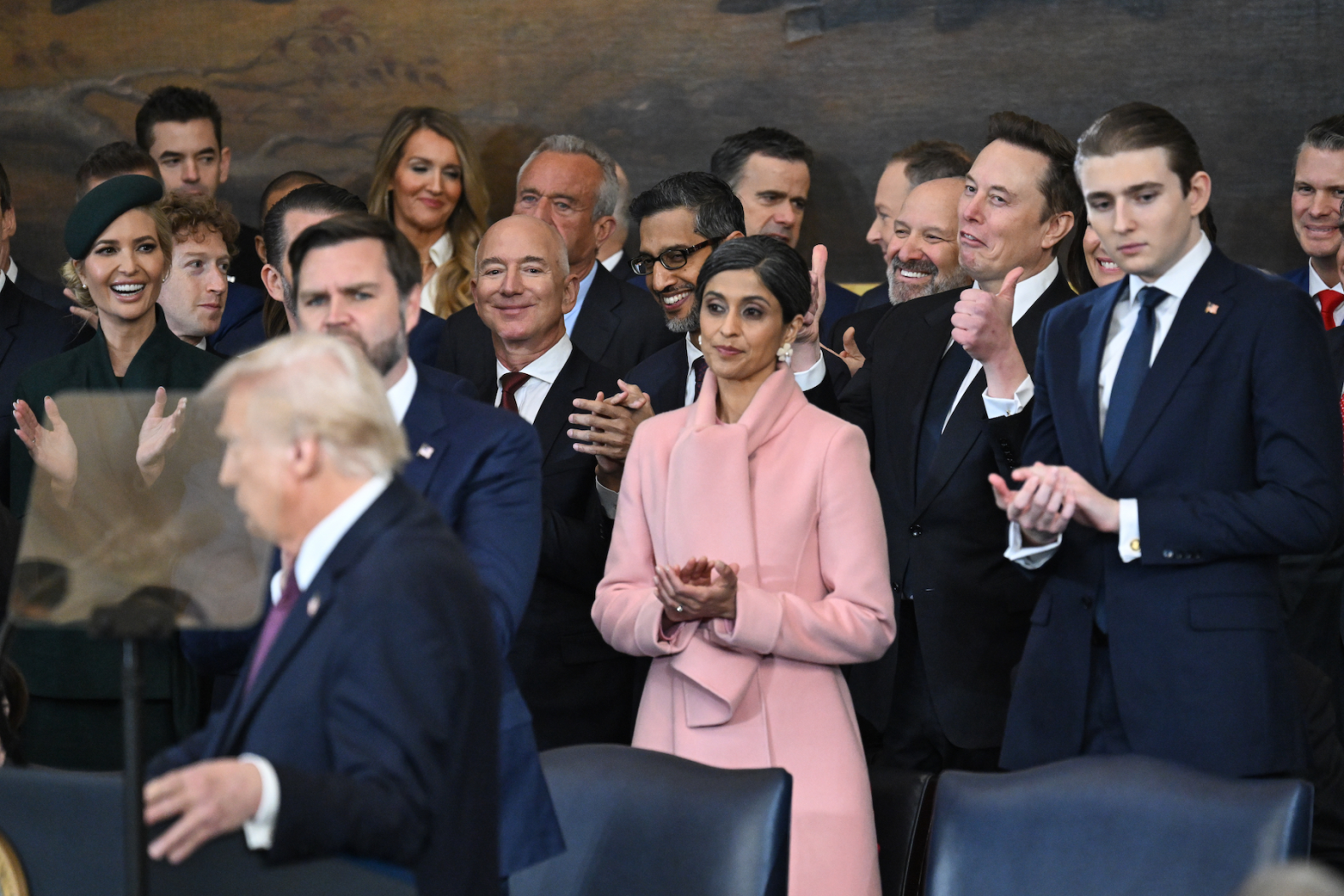
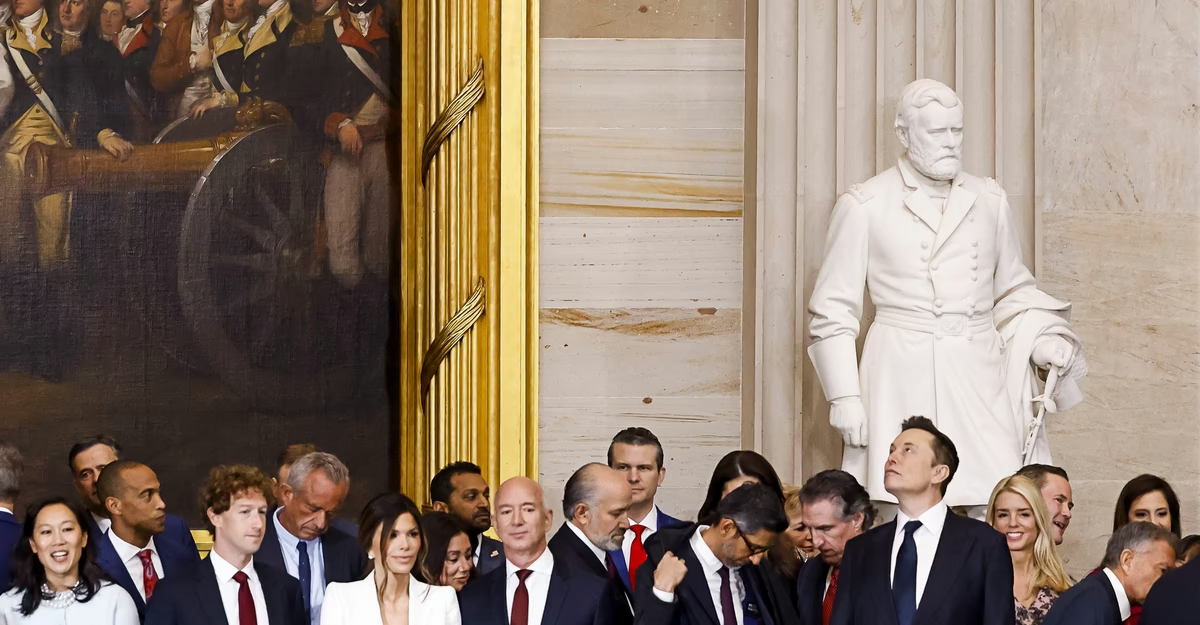
Elon Musk became the largest single donor in the 2024 election and was given extraordinary power to reshape the federal executive.
Oxfam's 2026 report found billionaire wealth jumped 16% in 2025 alone to $18.3 trillion globally. Billionaires are 4,000 times more likely to hold political office than ordinary citizens.
They own more than half the world's largest media companies. When the same people who fund campaigns also write the laws, own the press, and now hold government positions, the conclusion that the system is rigged is not paranoia, it is pattern recognition.
A relatively unified national media from the 1930s through 1970s, coinciding with peak institutional trust, has been replaced by thousands of competing information ecosystems optimized not for accuracy but for engagement, which means outrage, confirmation, and tribalism. Restoring trust in shared institutions now requires first restoring agreement about shared facts, and no institution currently has the credibility to do that.
Vietnam. Watergate. The Iraq War. The 2008 financial crisis. COVID-19. The opioid epidemic. Iran War. And the countless other lies.
Each taught a generation that government either couldn't tell the truth or didn't prioritize their wellbeing over elite interests.

Surveillance
When persuasion fails and legitimacy erodes, governments historically reach for control. Aristotle noted that oligarchs "actually increase deficits and the size and power of law enforcement and the military to protect their global business interests and ensure domestic social control. The parts of the state that serve the common good wither. The parts that promote oligarchic power expand."The United States is living this pattern in real time.
The Pentagon's 1033 Program has transferred over $6 billion in military surplus, armored vehicles, assault rifles, grenade launchers, to local law enforcement.
By 1996, nearly 95% of policing agencies maintained military equipment. SWAT deployments, originally for rare hostage scenarios, are now routine for drug raids and mental health crises.
A 2017 study found that receiving military equipment made police more likely to have violent encounters regardless of local crime rates. A 2018 study found militarized units were disproportionately deployed to Black communities even after controlling for crime.
In 2024, over 2,500 protesters were arrested at campus encampments. Sixty-one protesters opposing Atlanta's $90 million "Cop City" facility were charged with racketeering and domestic terrorism.
In September 2025, National Security Presidential Memorandum 7 directed the DOJ to investigate civil society organizations and activists, with a "particular focus on the political left and pro-democracy organizations".
The infrastructure, Palantir and Babel Street databases, was already in place. In April 2026, ICE confirmed to Congress it is deploying Graphite spyware capable of infiltrating encrypted phones without the user clicking anything.
Meta disclosed this tool had already been used against 90 journalists and civil society members via WhatsApp. License plate readers, facial recognition (with proven higher error rates for Black and brown faces), and StingRay cellphone interceptors are being deployed across jurisdictions. In California alone, $242 million has been committed through 2027 for surveillance technology.
Accountability mechanisms shrink while enforcement capabilities expand. The National Law Enforcement Accountability Database, created after George Floyd's killing, was quietly deactivated. The state becomes better at watching citizens, and worse at being watched by them.

What This Means
Civic withdrawal deepens as participation feels futile, creating a vicious cycle, less engagement means more elite-captured governance, which means less engagement.Militarized policing produces measurable psychological distress and reduced cooperation with authorities.
The surveillance chilling effect erodes free expression without a single arrest being made. And because trust is the lubricant of economic activity, as it erodes, so does the capacity to build the public goods, infrastructure, healthcare, and education that create broadly shared prosperity.
The authoritarian response to non-compliance, tighter control rather than addressing root causes, is both historically documented and self-defeating. Coercion substitutes for consent, but coercion is expensive, brittle, and unsustainable at the scale required to run a complex modern society.
The government becomes simultaneously more repressive and less effective, which historically accelerates rather than halts its legitimacy crisis.
Levitsky and Ziblatt's How Democracies Die documents that backsliding doesn't happen through coups, it happens incrementally, through what one scholar called "salami tactics" thin slices of democratic norm removed one at a time, each defensible, collectively devastating.
Larry Diamond's twelve-step framework, demonizing opponents, undermining judicial independence, attacking independent media, deploying regulatory power against political enemies, replacing civil servants with partisan loyalists, criminalizing protest is not an abstract concern.
It describes actions already taken or explicitly proposed in the United States. The endpoint, visible in Hungary, Turkey, and Venezuela, is competitive authoritarianism were elections continue but are structurally tilted so that meaningful opposition cannot succeed.
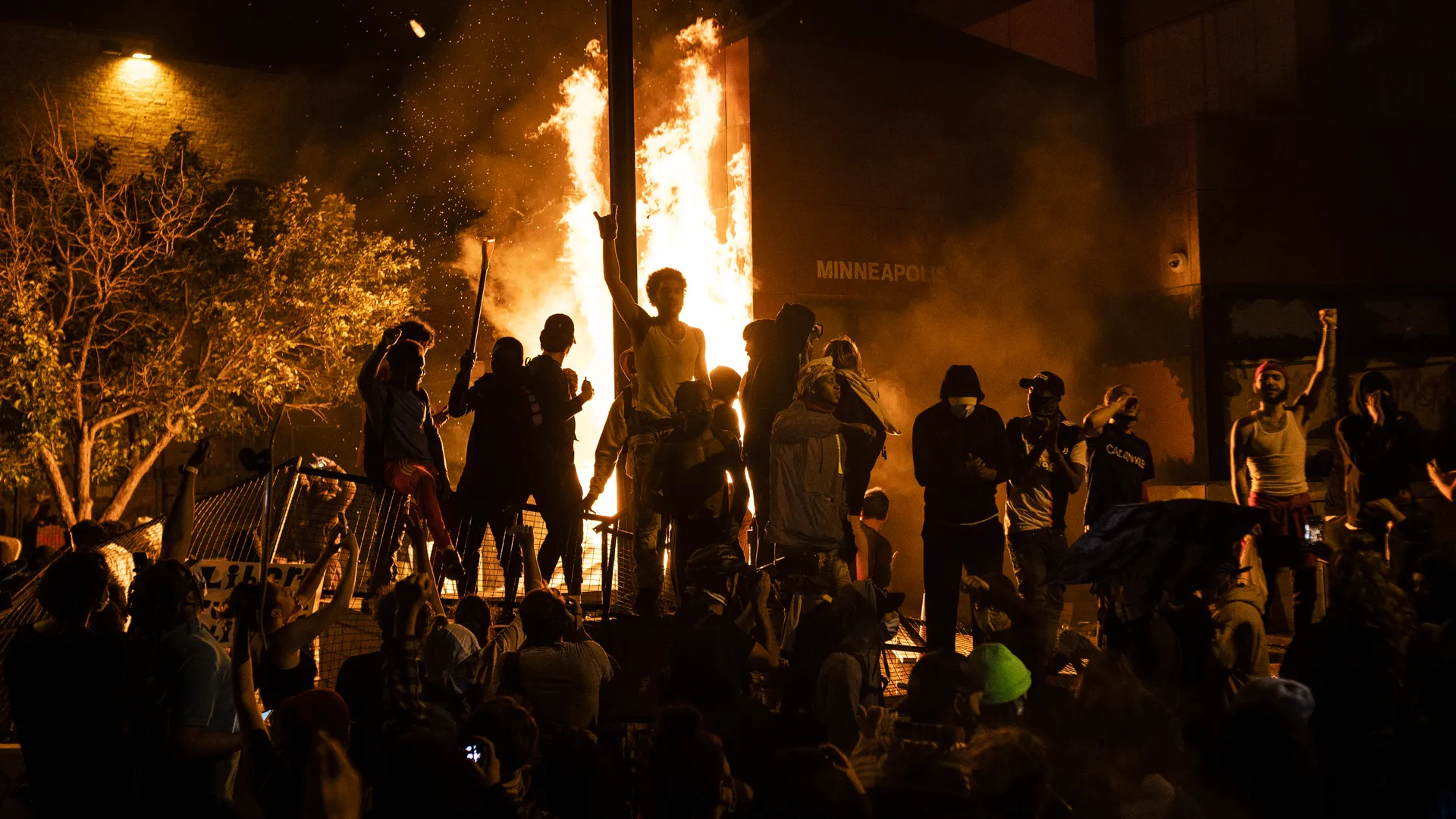
Possible Futures
The most likely trajectory. The U.S. slides into competitive authoritarianism, elections persist but tilt structurally toward incumbents, courts become captured, media consolidates under billionaire ownership, surveillance expands while accountability shrinks. Freedoms erode gradually, each individual step too small to name clearly. America remains technically a democracy but becomes functionally what Gilens and Page argue it arguably already is.History shows that the tolerance of the governed is not infinite. The combination of economic stagnation, visible oligarchic capture, aggressive surveillance, and collapsed trust in any legitimate grievance channel can produce not withdrawal but eruption. The danger is that disorder then creates conditions in which authoritarian "strong leader" solutions become attractive, history's most effective authoritarians have seized power not in stable times but in chaotic ones.
Historically rare but not unprecedented. The Gilded Age of the 1870s-1890s produced comparable wealth concentration and political corruption. The eventual response, trust-busting, labor protections, financial regulation, the progressive income tax,took decades of sustained movement pressure and ultimately a catastrophic economic crisis to achieve. What it would require today: meaningful campaign finance reform, breaking up media and technology monopolies, strengthening civil service protections, robust surveillance oversight, electoral reform, and sustained cross-partisan civic mobilization. None are impossible. All face opposition from interests that have never been more entrenched.
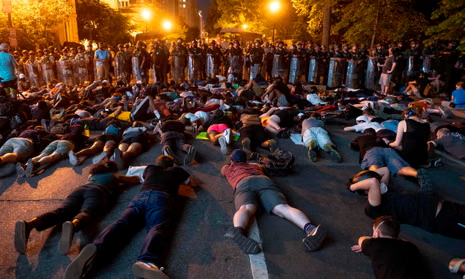
The United States is not in a historically unique crisis. What is unique is the combination economically stagnant working conditions alongside astronomical elite wealth accumulation, a media environment optimized for outrage, a surveillance apparatus of unprecedented technological sophistication, and institutional norms under sustained enough attack that their erosion is now measurable.
What is also unique is the global stakes. Freedom House records sixteen consecutive years of democratic retreat worldwide. Autocracies now outnumber democracies globally 92 to 87 as of 2026. If the world's most powerful democracy slides fully toward oligarchic authoritarianism, the effects will be profound and long-lasting.
The Founders understood that republics could be corrupted and that concentrated power was dangerous. Samuel Adams warned in 1748 that when a man's wealth becomes "immeasurably or surprisingly great" particularly at public expense the community "ought to make strict enquiry". Justice Brandeis was more direct"We can either have democracy in this country, or we can have great wealth concentrated in the hands of a few. But we cannot have both."
The legitimacy gap between what Americans experience and what they are told they have is now wide enough, and documented clearly enough, that it cannot be dismissed as cynicism.
It is the accurate perception of a system that has drifted far from its stated principles. The question is not whether this gap will produce a reckoning, it will. The question is what kind reform, managed authoritarian consolidation, or something more dangerous.
That answer will be written not only in the decisions of the powerful, but in the choices of ordinary citizens whether to withdraw or engage, to despair or organize, to accept the drift or resist it.
The United States has stood at the edge of its better principles before. The question is whether it still has the civic muscle to pull back or whether, this time, it will go over.
Sources: Pew Research Center; Gallup; Partnership for Public Service; Oxfam International (2026); Freedom House; Gilens & Page, Princeton/Northwestern (2014); Levitsky & Ziblatt, How Democracies Die; Larry Diamond, Stanford; ACLU; World Inequality Report 2026; American Academy of Arts and Sciences; and others.
Кай Тутор | Команда Societal News
Follow Us!
It helps decentralize our presence across the web and it's completely free!
Instagram ➤
Youtube ➤
Substack ➤
X.com ➤
Telegram ➤
TikTok ➤