The Roundup/Glyphosate Problem America Isn't Talking About
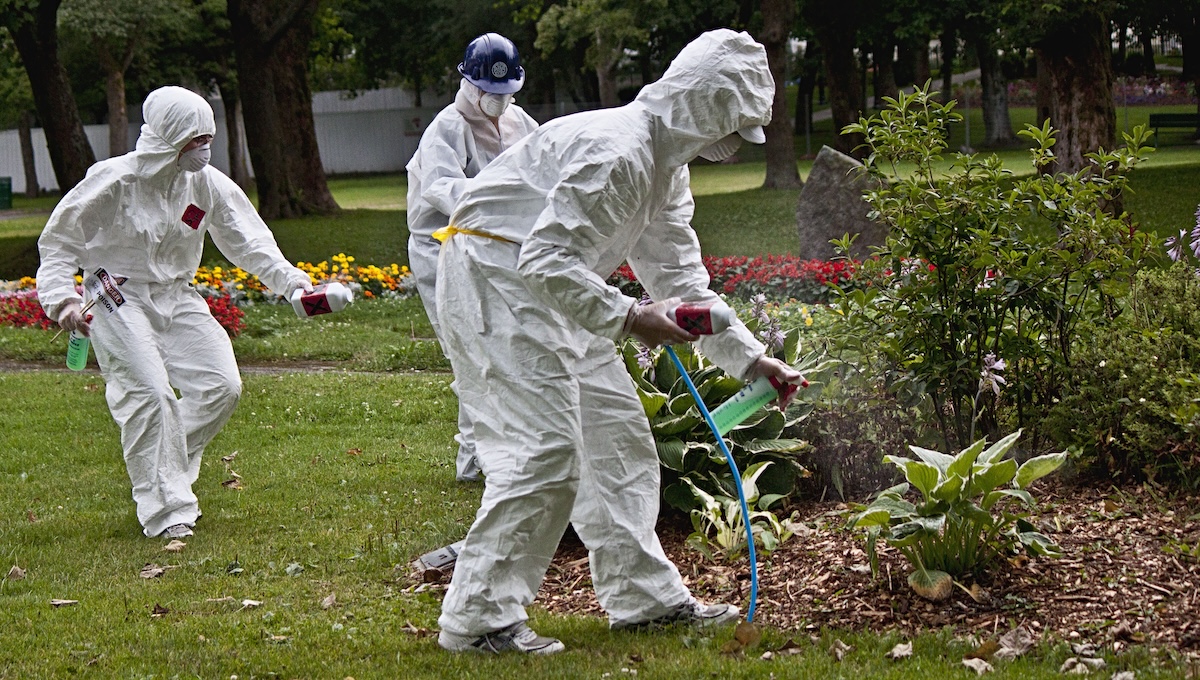
In 2015, the World Health Organization's International Agency for Research on Cancer classified glyphosate as 'probably carcinogenic to humans' (Group 2A), based on elevated Non-Hodgkin Lymphoma rates in farm workers and sufficient animal evidence.
Glyphosate, the active ingredient in Roundup., is the most heavily used agricultural chemical in human history.
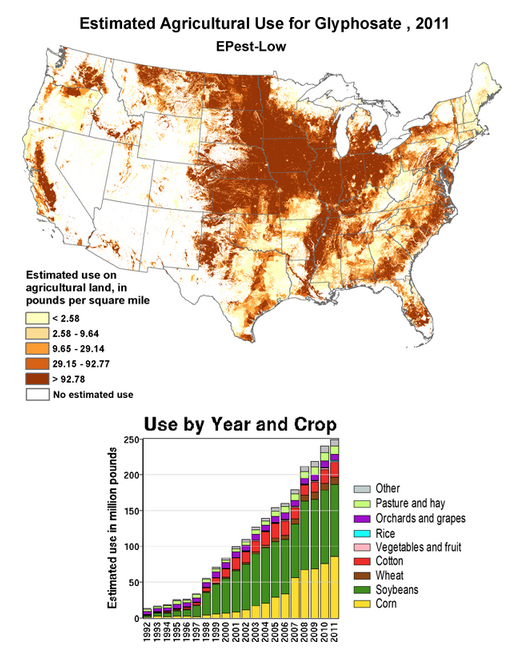
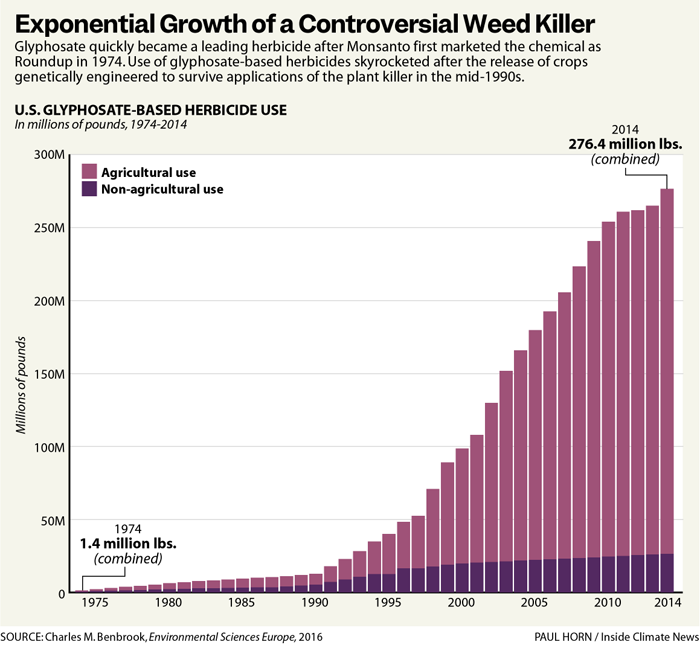
The United States applies roughly 280–300 million pounds per year.
More than 80% of Americans have detectable levels in their urine.
Yet most have never heard of it, and federal regulators continue to assure the public it is safe. T
he evidence increasingly suggests they are wrong, or at least that they cannot possibly know.
This is essentially An Experiment on 330 Million People.
Since Roundup Ready GMO crops were commercialized in 1996, cumulative U.S. glyphosate application has exceeded 3.5 billion pounds, more than 10 pounds for every American alive today.
Urinary biomonitoring data shows mean glyphosate levels roughly doubled between 1993 and 2016, with children showing higher concentrations than adults on a body-weight basis.
The highest-residue foods in the American diet are not exotic imports.
They are breakfast staples include oatmeal, granola bars, cereals, chickpeas, wheat bread, lentils.
The reason is a practice most Americans don't know exists, pre-harvest desiccation, where glyphosate is sprayed directly onto crops like wheat and oats days before harvest to dry them uniformly.
Residue levels from this practice often exceed those in GMO commodity crops.
It was never part of the original safety conversation.
"The American food supply contains an ensemble of chemicals, for which long-term safety data at combined real-world exposures doesn't exist, and for which the evidentiary bar for action has been set so high that action is almost structurally impossible."
The standard industry defense rests on a single fact, glyphosate kills plants by inhibiting the shikimate pathway, which humans lack.
Therefore, it cannot harm us.
This argument was always incomplete.
Human gut bacteria heavily rely on the shikimate pathway.
Glyphosate functions as a broad-spectrum antimicrobial against these organisms, selectively killing Lactobacillus and Bifidobacterium species while enriching Clostridium and Salmonella.
The gut microbiome is not a peripheral system.
It synthesizes neurotransmitter precursors, regulates immune function, and governs metabolic health.
Beyond the microbiome, glyphosate demonstrates estrogen-mimicking activity in cell studies, disrupts thyroid hormone levels in animal models, and chelates essential minerals, zinc, manganese, iron, reducing their bioavailability in food grown on treated soil.
Multiple studies show it induces oxidative stress and reduces glutathione, the body's primary antioxidant, in liver and gut cells.
Critically, regulators tested glyphosate in isolation.
They did not test Roundup, the commercial formulation whose adjuvants, particularly polyethoxylated tallow amine, are often more acutely toxic than glyphosate itself.
This is not a technicality. It is a foundational gap in the entire safety record.
In 2015, the World Health Organization's International Agency for Research on Cancer classified glyphosate as 'probably carcinogenic to humans' (Group 2A), based on elevated Non-Hodgkin Lymphoma rates in farm workers and sufficient animal evidence.
The EPA and the European Food Safety Authority reached different conclusions, relying primarily on industry-submitted data that IARC excluded for transparency reasons. Bayer has since paid over $11 billion to settle Roundup cancer lawsuits in the U.S., without admitting liability.
The Agricultural Health Study, a large U.S. government cohort of farmers and spouses, found elevated NHL risk in the highest-exposure category.
This was not activist research.
It was funded by the National Cancer Institute. The signal is real, the debate is about magnitude and mechanism at dietary versus occupational exposure levels.
The American food supply doesn't expose consumers to glyphosate alone.
It exposes them to a simultaneous cocktail of agricultural and industrial chemicals, none of which are tested in combination:
Atrazine, America’s second most-used herbicide and banned across the European Union since 2004, contaminates Midwestern drinking water and disrupts estrogen signaling at concentrations of 0.1 parts per billion. The U.S. still applies over 70 million pounds annually.
PFAS, ’forever chemicals' found in food packaging, non-stick cookware, and agricultural irrigation water, are now detectable in virtually every American's bloodstream. They are associated with thyroid disruption, immune suppression, and kidney and testicular cancer. The FDA has found PFAS in commercial vegetables and meat.
Synthetic food dyes (Red 40, Yellow 5, Yellow 6) remain in U.S. food products that carry mandatory warning labels in Europe.
The FDA banned Red 3 in January 2025, 35 years after banning it in cosmetics. The neurobehavioral impacts on children from the Southampton study have been replicated multiple times.
Antibiotics in meat account for 80% of U.S. antibiotic use, primarily for growth promotion in factory-farmed animals, a practice banned or severely restricted across the EU.
This is the primary driver of antibiotic-resistant bacteria and a significant disruptor of gut microbiome diversity in consumers.
"The EU bans or restricts. The U.S. continues. This isn't because European science is better, it's because American regulatory agencies are structurally oriented toward industry interests in ways their European counterparts are not.”
Documents released during Roundup litigation revealed an explicit Monsanto strategy, ghostwriting scientific papers attributed to independent researchers, cultivating academic allies through funding and consulting arrangements, and coordinating with EPA officials to shape regulatory assessments.
The 'Monsanto Papers' are not allegations, they are disclosed court evidence.
The EPA official who oversaw glyphosate's 2015–2016 reassessment, and who argued internally that it was 'not likely to be carcinogenic,' subsequently moved to Monsanto's lobbying operation.
The EPA raised allowable glyphosate limits in 2013, as usage was increasing. The agency has never required testing of Roundup formulations, only the isolated active ingredient.
The allowable daily intake standard was set using studies conducted in the 1980s and 1990s, funded by Monsanto, using glyphosate alone, without consideration of microbiome effects, endocrine disruption, or cumulative exposures from other food chemicals.
It has not been fundamentally revised since.
This is not the first time the U.S. regulatory system has failed to protect the public from a pervasive industrial chemical.
Leaded gasoline was introduced in 1923, the harm was suspected within years by independent researchers.
Industry counter-research, academic allies, and regulatory delay pushed the ban back to the 1970s and 80s.
The IQ damage to multiple American birth cohorts, and the now-established link between childhood lead exposure and elevated violent crime rates 20 years later, represent one of the largest preventable public health disasters in American history.
DDT was declared safe at launch, then accumulated through food chains in ways original testing couldn't detect.
PFAS were marketed as harmless for decades.
Tobacco companies funded uncertainty-manufacturing research for 50 years.
The pattern is identical each time, industry-managed science, regulatory delay, retrospective recognition of catastrophic harm.
The question with glyphosate is not whether this pattern applies, it's whether we are in the middle of it or near its end.
The most likely near-term scenario is a prolonged stalemate.
Litigation economics will drive incremental product reformulations.
High-income Americans will shift toward organic food, lower-income Americans will continue full exposure.
Research will slowly accumulate. A definitive causal study establishing population-level harm from dietary glyphosate will probably not arrive , not because the harm isn't real, but because such a study is too expensive and politically unfundable without industry involvement.
The realistic best case involves EPA mandating independent long-term biomonitoring, restriction of pre-harvest desiccation as the highest-residue practice, and growing market pressure pushing manufacturers to reformulate consumer products.
The worst case involves epigenetic transmission effects, documented in animal models across multiple generations, manifesting in the children and grandchildren of the first heavily-exposed cohorts, with no regulatory response until the signal becomes unmistakable.
Why does the United States systematically permit chemical exposures that comparable wealthy nations prohibit.
The answer is structural, not conspiratorial, a regulatory framework built on industry-submitted data, chronically underfunded for independent research, operated by agencies with genuine revolving-door employment between regulators and the industries they regulate, in a political system where agriculture-state senators control the appropriations that fund those agencies.
The harm from glyphosate, if it is as widespread as the emerging evidence suggests, will be recognized in retrospect, as lead, DDT, and PFAS were before it. The question is how many years, and how many people, that recognition will cost.
Kai Tutor | The Societal News Team
Follow Us!
It helps decentralize our presence across the web and it’s completely free!
Instagram ➪
Youtube ➪
Substack ➪
X.com ➪
Telegram ➪
TikTok ➪